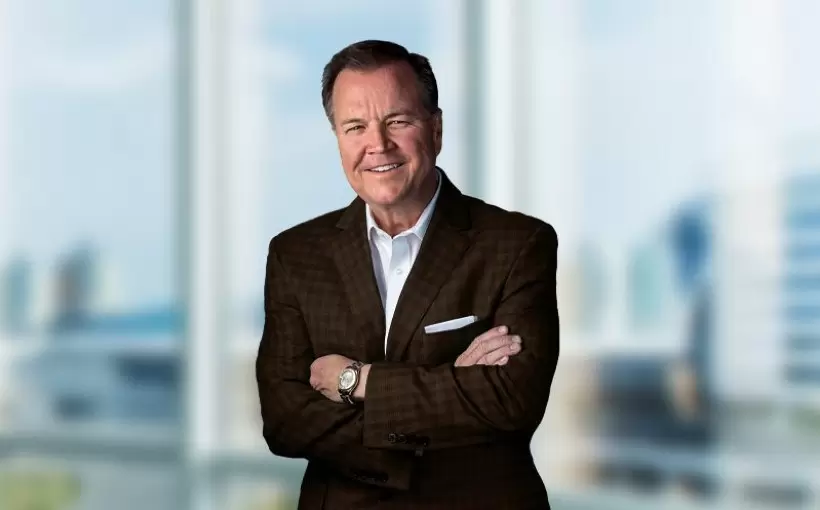
Inspiring Leaders in Our Changing Industry: Hessam Nadji, Marcus & Millichap

This summer, Connect CRE is producing a series titled, “Inspiring Leaders in Our Changing Industry” as a follow-up to last summer’s “Leading in Tough Times” series. We’ve selected leaders around the U.S. and across the commercial real estate spectrum to discuss significant changes in the industry and their organizations. In this installment, you’ll hear from Hessam Nadji, president and CEO of Marcus & Millichap.
Charting a New Course: How do you navigate the transition from established practices to pioneering new frontiers within your organization?
First, we have a leadership team that has embraced the need for innovation, change and renewal of the business model. Our management team is encouraged to bring new ideas to the table for technology, research, branding, policy changes, market segment expansion and ways to enhance our support for our clients and our salesforce. This ground-up and top-down simultaneous push for change creates creative friction, prioritization and action. However, change for the sake of change without thinking about ROI and/or underestimating unintended consequences on the downside can make change into mistakes instead of forward motion. All of this requires process and patience, but the investment of time and capital is worth it. For us, recent examples of strategies that manifested from this approach include a suite of new technologies, investment in an auction services platform and venture investments in EquityMultiple and Archer.
Catalysts for Change: What are the essential elements for achieving significant progress within your organization and the industry as a whole?
Many changes abound in the industry, including consolidation, technology, workforce changes, demographics and other megatrends. AI is probably the most visibly impactful in the shortest amount of time. I believe AI has a high degree of hype and unrealistic expectations, as well as some extremely real, hard-hitting points of impact for commercial real estate. Defining the difference between the two is up to each company, whether it’s a principal, lender or service provider like Marcus & Millichap. It is dangerous to suggest that AI will replace most processes, spit out an accurate NOI, tell investors when it’s time to sell or buy, etc. Real estate is far from a one-dimensional commodity—even single-tenant, net lease assets are multifaceted. Therefore, much of the foundational work can and should be driven by AI, which can bring massive efficiency to real estate services. However, it cannot replace the nuances of each asset, street, submarket, seller and buyer pool.
Guiding the Next Generation: As we acknowledge the industry’s rising stars, what guidance can you offer them to become catalysts for positive change?
The generational shift is perhaps the most critical macro force to impact the real estate industry. It starts with the $80 billion-plus anticipated wealth transfer over the next three decades as baby boomers age and leave the largest accumulated wealth in history to the next generations. This means countless existing commercial real estate owners will reposition, recapitalize or liquidate assets and portfolios. It also means massive volumes of new capital and players will enter commercial real estate for the first time. For owners, brokers, lenders, and appraisers alike, all of this means monumental demand for real-time data, asset-specific analytics and strategies for optimal execution. Regardless of “job function” within real estate, this points to unprecedented demand for sophisticated training, education, professionalization of the industry, and embracing of technology, particularly the application of AI. This wave can destroy value for unprepared participants while creating the most value in history for those who embrace market and industry changes and proactively adapt. Culturally, the next generation will demand change from the real estate “old guard” as work/life balance, flexibility and mobility drive attraction to the industry. Companies and groups of all functions and sizes are already facing these cultural shifts and most are struggling to balance them with established frameworks. At the same time, embracing key age-old characteristics of extreme hard work, accountability and self-drive that are common traits of successful individuals and companies in the real estate industry would serve 20- and 30-somethings who are entering the business.
Click here to see the full Inspiring Leaders in Our Changing Industry series.
Related Leadership Stories