Inspiring Leaders in Our Changing Industry: Dave Cheatham, X Team Retail Advisors
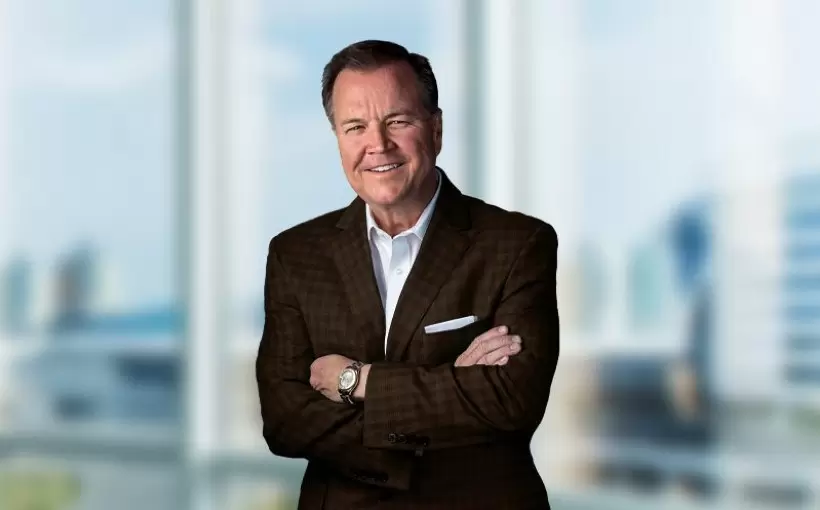
This summer, Connect CRE is producing a series titled, “Inspiring Leaders in Our Changing Industry” as a follow-up to last summer’s “Leading in Tough Times” series. We’ve selected leaders around the U.S. and across the commercial real estate spectrum to discuss significant changes in the industry and their organizations. In this installment, you’ll hear from Dave Cheatham, president of X Team Retail Advisors and Velocity Retail Group.
Catalysts for Change: What are the essential elements for achieving significant progress within your organization and the industry as a whole?
One of the biggest changes that has occurred in business has really been a shift to culture-focused business practices. This change may have been a net result of the pandemic era or arrived as part of a generational change. But is a transition away from the way businesses operated traditionally, where the emphasis was just on pay, productivity and leading the charge. Now, companies must place a major emphasis on creating and fostering a work culture in which people can flourish. That’s really been one of our focuses for the last year, even to the point that we engaged a consultant to help us determine the best way to change. The outcome has affected everything in our office from completely redesigning the space to include a gathering place and creating a bistro-like area in the center, which feels and acts much like an open kitchen in a home. It becomes the place where everybody hangs out and everything is focused around. Offices now have gathering places where people can sit, talk, and have a really good cup of coffee. Upgraded coffee and other beverage offerings, as well as food, is another change that has arrived in today’s offices.
Another cultural change is the creative approach to work hours. For collaborative organizations such as ours, work from home practices didn’t work as well. But we’ve made adjustments that are significantly more flexible to allow people to schedule doctor’s appointments or to leave early on Fridays. We’re also more social than ever before. That is largely being driven by younger Millennials and Generation X’s who have a higher expectation for connectivity at the workplace, compared to the Baby Boomer generation.
One of the things that’s changed in our work culture is the addition of care partners that people can talk to. We’ve found they need that social connection at work now since there is less of that happening with their neighbors or churches. The office is becoming a more important place for those connections to happen. Gender appropriate care partners are there to just talk about anything from issues someone is going through like a death in the family, marriage stress or personal challenge. That is a change in the workplace that organizations didn’t consider 20 years ago.
Another change in the retail industry is the workforce itself. The industry was hard hit and faced challenges that pushed some workers away from the sector. That, in turn, has made it tough to find or attract workers in a tight labor market. But one of the biggest shifts occurring is the use of technology or artificial intelligence to fill the gap. That could involve a wide array of adjustments like using technology to take orders, or using an app on the way to a store, restaurant or coffee shop to place an order. That requires fewer people and some parts of it are easily replicated.
The Road Ahead: Looking forward, what critical changes do you foresee for the industry in the coming years? What advancements do you hope for?
There’s finally been transformation and the realization by the world that retail wasn’t doomed and has in fact proved resilient since the Great Recession. So many predictions included the demise of malls, projections that brick and mortar stores were fading away and advice that retail redlined as an investment option. Now, even institutional investors are attracted to retail because they realize the asset class is not going anywhere. Quality malls are in demand, and brick and mortar retail is a viable option. There is an understanding that retail is simply a sector constantly undergoing change that will always continue to morph. Retail is alive and well.
Consolidation in the industry is a constant occurrence. Right now we’re seeing some retailers struggle or are going out of business. They may be the weaker players, but they still could have hundreds of well-located stores. That’s presenting opportunities for stronger retailers to snap up the best locations. Since there’s been very little creation of new retail supply, those sites become valuable real estate for retailers who are trying to execute aggressive growth and expansion plans now.
Industry Inspiration: What recent industry development excites you the most, and why?
It is inspiring to me that the retail industry is celebrated in a way that it hasn’t been since before the Great Recession. It excites me to tell and re-tell that retail success story as I bring opportunities to retailers and investors. The prognosticators had it wrong about retail and we’ve gone from being perceived as an asset class to avoid to one that is now viewed as resilient and viable. The sector has survived, in some cases very well, and through the challenges retail is proving vibrant as it constantly regenerates and reinvents itself. That is the retail process of transformation, which I believe is going to accelerate in the future because of technology.
The exciting thing I see ahead is the adoption and refinement of technology, artificial intelligence and big data. Retailers will continue to find innovative and actionable ways to efficiently use the information to reach and customize targeted offerings for consumers. AI and robotics will be used in ways we can’t even imagine yet, which will likely automate processes and reduce the need for humans to handle certain aspects.
The retail industry will continue to make progress through technology. We’re going to experience more consolidation where the weaker retailers disappear and the stronger ones are going to use technology, and artificial intelligence to gain market share. That will reduce the number of competitors, as weaker retailers fall out. The benefit of that process is new players will enter the marketplace, which has been a trend we’re tracking over the past five to 10 years. We’ve seen the rise of direct to the consumer (DTC) retail, just like big box retailers emerged in the 1990s. We’re going to see even more creative content that arises from the expanded use of technology.
Click here to see the full Inspiring Leaders in Our Changing Industry series.
Related Leadership Stories