



National CRE News In Your Inbox.
Sign up for Connect emails to stay informed with CRE stories that are 150 words or less.

Warehouse Inventory Growth Means Need for More Warehouse Workers
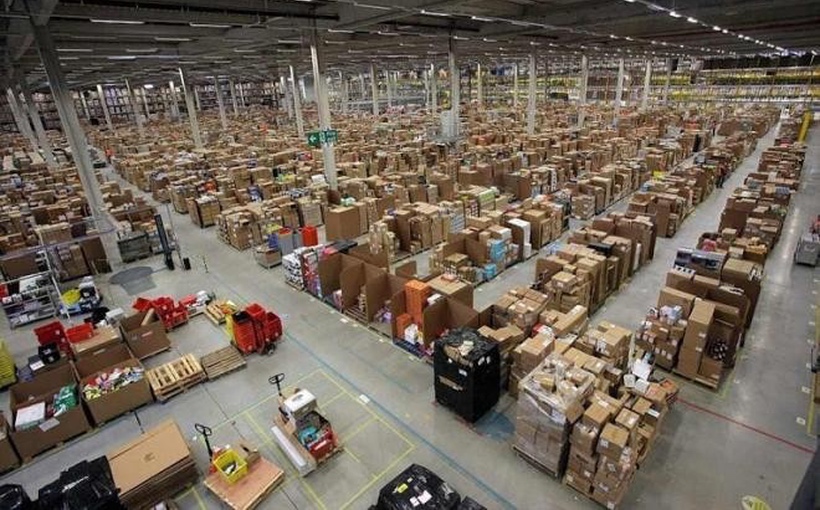
The surge in warehouse space demand is spurring development and coinciding with another increase in demand: employees to staff these properties. A record 423.7 million square feet of industrial space was under construction as of the second quarter, reports Newmark’s Lisa DeNight, and an estimated 282,470 additional workers could be needed to support activities within these new facilities.
Increasingly, DeNight reports, employees in other industries are switching jobs to work within the warehousing/transportation (W/T) sector. Approximately half of employees making this change previously worked in the retail/wholesale and administrative/support services, and this flow is likely to accelerate, she writes.
Recent national wage growth in retail/wholesale and administrative/support services lagged gains in W/T wages, which grew by 4.25% from January to June 2021, a record six-month gain for the sector.
“Additionally, COVID-19 has had a significant impact on industry demand shifts and the subsequent reallocation of labor across sectors, illustrated in part by the widespread, temporary closure of non-essential retail while e-commerce activity soared,” according to DeNight. “Retail re-hiring needs are difficult to forecast, but some of this labor reallocation to W/T is likely to remain permanent.”
In contrast to some other sectors, W/T employment has nearly recovered from pandemic-related losses. However, DeNight writes, “with strong, continuing industrial expansion, labor attraction and retention often requires a combination of strategies and considerations.
“Exploring concentrations of workers in industries other than W/T with analogous barriers to entry and job contexts is key,” she continues. “Other considerations include W/T unemployment, and re-engaging employees who previously left the sector due to wage and benefit levels, working conditions, or COVID-related health concerns.”
An often-overlooked factor is the availability of public transit to warehouse districts. The physical separation of worker residences from warehouse districts places real limitations on recruitment.
To address this mismatch, DeNight writes, communities, developers and businesses “all have an opportunity to leverage a shift in employment by partnering on public/mass transit opportunities, which are more environmentally conscious, reduce impact to public infrastructure, and create access to jobs with upward mobility in the wage stack.
“While investments in automation are shifting the nature of W/T employment by increasing worker productivity, overall demand for labor will continue to grow and be a top concern for stakeholders across the industrial sector.”
- ◦People
- ◦Recruitment


