



National CRE News In Your Inbox.
Sign up for Connect emails to stay informed with CRE stories that are 150 words or less.

Walker Webcast: ULI’s Walter and Grayson Cite “Sea Change” in Industry’s Environmental Awareness
A little less than two years ago, a once-in-a-century global pandemic set in, yet commercial real estate has rebounded far more rapidly than it did following the onset of the global financial crisis a little more than a decade ago. Pricing has now climbed past pre-pandemic levels, and “I’m not sure any of us could have necessarily predicted that,” Ed Walter, global CEO of the Urban Land Institute, said on this week’s Walker Webcast. He added, “It is a bright picture for real estate right now.”
However, Walter and Billy Grayson, executive director for ULI’s Center for Sustainability and Economic Performance, also focused on another circumstance that wouldn’t have been expected amid the pandemic-driven upheaval, and that’s what has occurred with the industry’s outlook on sustainability.
Walker & Dunlop CEO Willy Walker asked Grayson whether the pandemic had caused owners and developers to put environmental concerns on the back burner in favor of simply getting through the downturn. Perhaps surprisingly, Grayson said that didn’t happen: the metrics ULI studies have shown that interest in these matters didn’t fall off a cliff.
In fact, Walter said, “The sea change that came over the industry has been remarkable.” Far from being relegated to nice-to-have status, sustainability and the related issue of climate change have become top-of-mind considerations.
With 40% of greenhouse gas emissions attributed to the built environment, Walter said that for the industry, sustainability has become a huge challenge as well as “a huge responsibility and a huge opportunity.”
Yet, at both the property level and more regionally, the impact of climate change is another looming challenge—and Walter predicted that paying for mitigation efforts would ultimately fall to commercial real estate. In the areas of both sustainable buildings and protecting against the impact of increasingly volatile weather conditions, devising a plan of action will focus on both determining what steps the industry can take and working with government.
Within the realm of both sustainability and making higher and better uses of obsolete building stock, Grayson said he’s been seeing a great deal of creativity in adaptive reuse. Such reuse is not only good economics, but is also “a great sustainability story.”
Converting older office properties to residential use is an idea whose time is coming, the ULI experts said. However, Walker pointed out that three out of four solutions ULI has proposed to address the affordable housing shortage involve the government, and Walter said that aside from making tax credits available, government actions along these lines haven’t provided much cause for optimism.
“It’s an affordable housing problem,” said Walter. “But it starts with the fact that we’re not producing enough housing to begin with.”
Moreover, the under-production issue isn’t likely to be addressed by changing demographics. Grayson noted that it would take many years of declining birth rate and household formation before the shortage of new housing turned into a glut.
On-demand replays of the Dec. 8 webcast are available by clicking here and through Walker & Dunlop’s Driven by Insight podcast series.
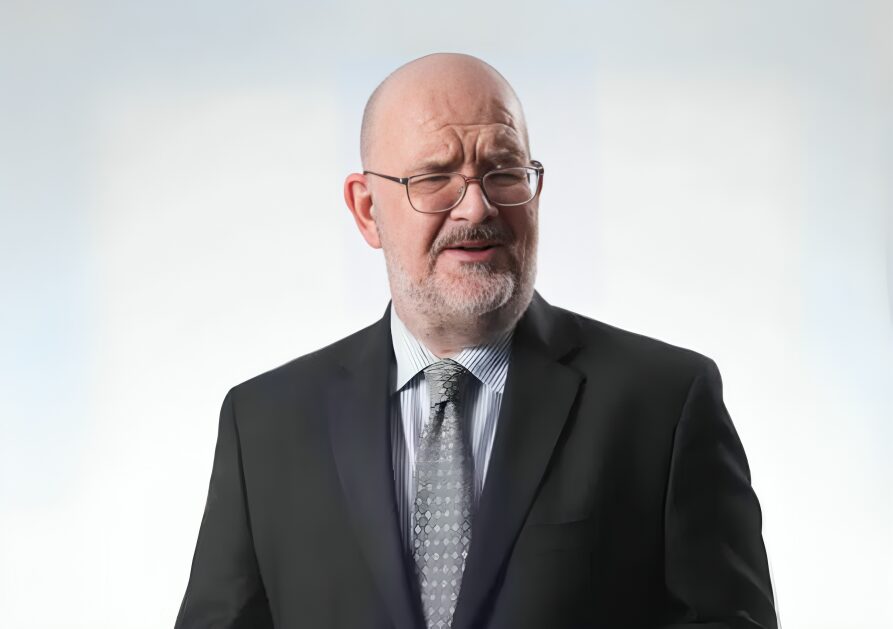
Pictured: Ed Walter.
- ◦Development
- ◦Economy
- ◦Policy/Gov't


