



National CRE News In Your Inbox.
Sign up for Connect emails to stay informed with CRE stories that are 150 words or less.
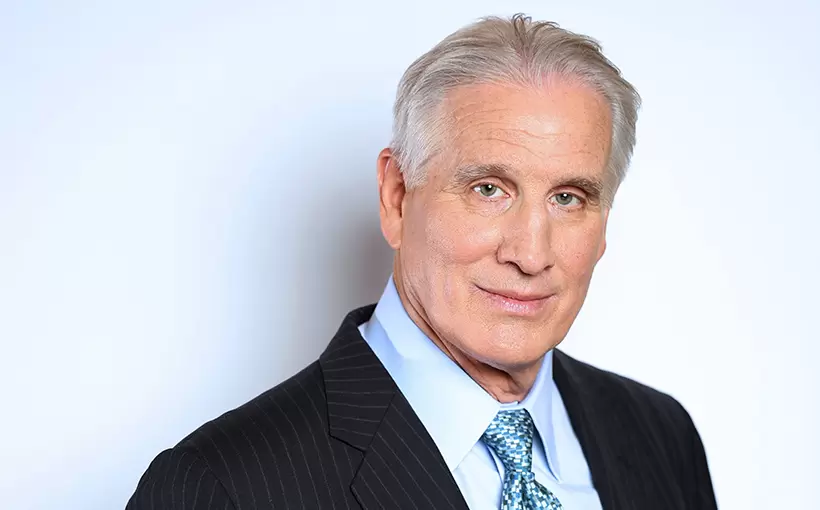

Walker Webcast: Peter Linneman Discusses Rate Cuts, Fed Mistakes, Cap Rates and Capital Flows
The last time economist Peter Linneman appeared on the Walker Webcast (June 2024), the Effective Federal Fund Rate stood stubbornly at 5.25%, with no cuts in sight. Despite the Federal Reserve’s apparent reluctance to lower the EFFR, Linneman stuck to his prediction that there would be three rate cuts by year-end.
Linneman might have been on to something. As the guest on the Oct. 2 Walker Webcast (after the Fed reduced the EFFR by 50 basis points), the Founder and President of Linneman Associates was adamant that the Fed would make two more cuts by the end of the year.
He then added that the Fed should be highly embarrassed by hesitating to raise rates in a timely fashion and taking its time to lower them again.
That comment led to a brief skirmish between Linneman and webcast host Willy Walker, Chairman and CEO of Walker & Dunlop. Walker pointed out that something needed to be done with the high inflation rate. Linneman then explained that the cause of the inflation was the post-COVID supply chain rather than an overall above-trend economy.
“Historically, when you look at the rationale of short-term rate increases, you generally find that one or more of the following three sectors are way above the trend,” he said. “Single-family housing, auto and manufacturing.” But none of these sectors were anywhere near above trend when the Fed began its rate hikes in 2022. “None of these three sectors needed cooling,” Linneman said. He acknowledged that keeping the EFFR near zero wasn’t feasible, and a rate hike or two was necessary. But if the Fed had been more cautious with its fed funds rate boost, “we would have had an economy closer to recovery,” Linneman said.
He explained that a faster-recovering economy would have meant healthier employment growth rather than a slowdown in hiring. It also would have continued supporting investor demand for commercial real estate. “The interest rate wouldn’t have been so ridiculous,” he added. “It wouldn’t have been zero; it might have been around 2 ½% or 3%.”
The Real Estate Cycle and Capital Flows
Linneman said that when the Fed began its fast rate increase, it “wrongfooted the capital markets.” Because commercial real estate is highly dependent on capital, when capital disappears, “it gets ugly,” Linneman observed. “It doesn’t matter why capital disappears; when it does, it’s a problem.”
On the other hand, when capital returns, it will start to flow. However, “we’re still in a period that’s lasted longer than I thought,” Linneman said. He pointed out that he also overestimated the extent to which dry powder on the sidelines would return to the market.
During the June 2024 webcast, Linneman pointed out that private equity and banks aren’t willing to risk investment when others aren’t investing, a sentiment he reiterated in the current webcast. “But it’s self-reinforcing on the other end,” he commented. “As they start to invest in the other direction—and I think you’re going to see that—money will flow and cap rates will fall.” Specifically, dry powder will return to the market, especially as inflation rates fall, short-term interest rates go down, and investors start looking for long-range investment opportunities.
Cap Rates Aren’t Created Equal
Linneman anticipated that multifamily cap rates could fall by ten basis points over the next 12 months. But office has a different story, with Linneman predicting that cap rates will increase.
“In addition to dealing with rent and occupancy, office is in the penalty box,” he explained. “I think it stays in the penalty box longer than the historic norm.” One reason is that investors have commercial real estate options that aren’t quite so problematic.
But Linneman didn’t count office out as an investment possibility. “Those that can get the financing to make a play in that space will see a massive cap rate reduction over the entire hold period,” he observed. “At some point, the numbers will revert.”
With the likelihood of additional EFFR cuts, Linneman offered advice to his listening audience, especially those financing with floating rate debt. “Make sure the lender is actually lowering your payment and that it’s not on cruise control, where you’re sending in the same amount as last month,” he said.
On-demand replays of the Oct. 2 Walker Webcast are available through the Walker Webcast channels on YouTube, Spotify and Apple. Subscribe to get invites, replays and articles for new Walker Webcast episodes every week.
- ◦Sale/Acquisition
- ◦Financing
- ◦Economy
- ◦Policy/Gov't


