



National CRE News In Your Inbox.
Sign up for Connect emails to stay informed with CRE stories that are 150 words or less.

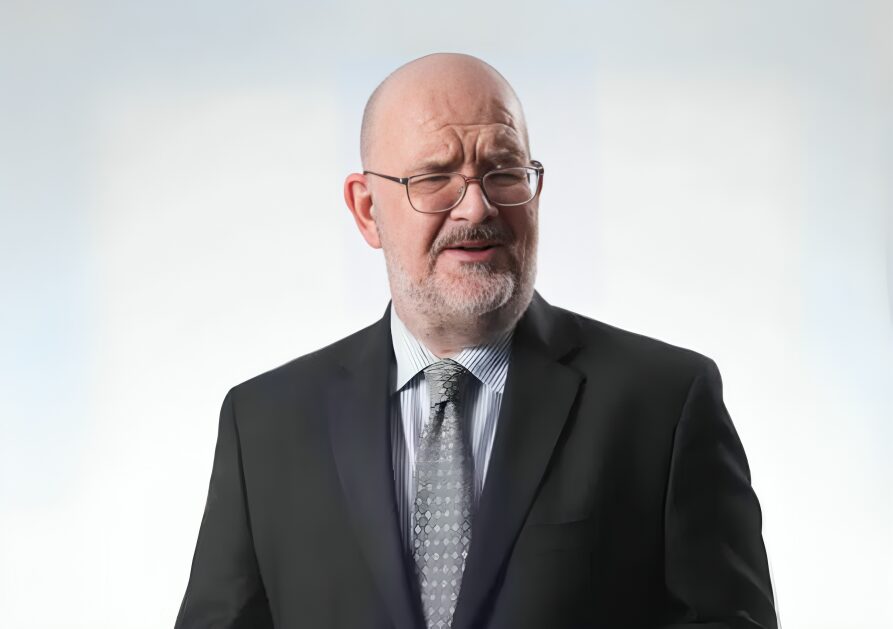
Walker Webcast: Peter Linneman Asks Why the Fed Keeps Raising Rates
Real estate economist Peter Linneman begins the latest edition of his quarterly Linneman Letter asking why the Federal Reserve’s continued increases in the short-term interest rate target range haven’t slowed the economy. The short answer: approximately 80% of the U.S. economy isn’t sensitive to short-term interest rates.
“For years, the Keynesian model never worked, and yet they’re constantly surprised it doesn’t work,” Linneman explained on this week’s Walker Webcast, live from the New York Stock Exchange. The founder of Linneman Associates has been a quarterly guest on the series, hosted by Walker & Dunlop CEO Willy Walker, since 2020.
Linneman charted components of GDP that aren’t sensitive to movement in the federal funds rate, such as government hiring and healthcare spending, as well as those that are sensitive, such as automobile sales and, to an extent, real estate.
Walker pointed out that housing finance is largely unaffected by inflation, because so many homebuyers locked in lower rates prior to the Fed’s round of rate increases. What is going up, on the other hand, is the cost of buying a home.
“And that’s going up because of a fundamental shortage of housing,” Linneman replied. “You know that we have had a 3.5% shortfall of production over the last 15 years or so. That’s not going to go away.”
As he has on previous quarterly appearances on the Walker Webcast, Linneman reiterated that actual inflation is lower than we’re being told, “and I’m looking at the same data” everyone else is. That begs the question he also raised in his latest Linneman Letter: why is the Fed continuing to increase rates?
“While they held rates steady in September, the Fed’s July 2023 increase brought the target range to an absurdly high 5.25 [to] 5.5%,” Linneman wrote. “With annualized monthly inflation generally running 2-3%, short-term rates should be no more than 3.5%.”
Given that scenario, Linneman previously predicted that the Fed would probably have begun cutting rates by now. In fact, the current thinking is that the process of bringing rates back down probably won’t begin until well into 2024.
“If interest rates were determinant of inflation, please explain to me how for eight years through the 2010s, the short-term rate was zero and we did not have runaway inflation,” Linneman said on this week’s webcast.
Monetary policy missteps notwithstanding, Linneman downplayed the impact of government on the U.S. economy over the long haul. “We’ve had good presidents, bad presidents, good Congresses, bad Congresses,” he said. “We’ve had high taxes, low tax rates, Republicans, Democrats—over my lifetime. And the one thing is we grow. We don’t grow every minute, but we grow. And real estate is a long-term asset and I’m going to bet on that growth.”
The hour-long discussion between Walker and Linneman also encompassed the yield curve, the economics of office-to-residential conversions and the relative fortunes of global economies compared to 30 years ago, among other topics.
On-demand replays of the Oct. 11 Walker Webcast are available through the Walker Webcast channels on YouTube, Spotify and Apple.
- ◦Economy


