



National CRE News In Your Inbox.
Sign up for Connect emails to stay informed with CRE stories that are 150 words or less.
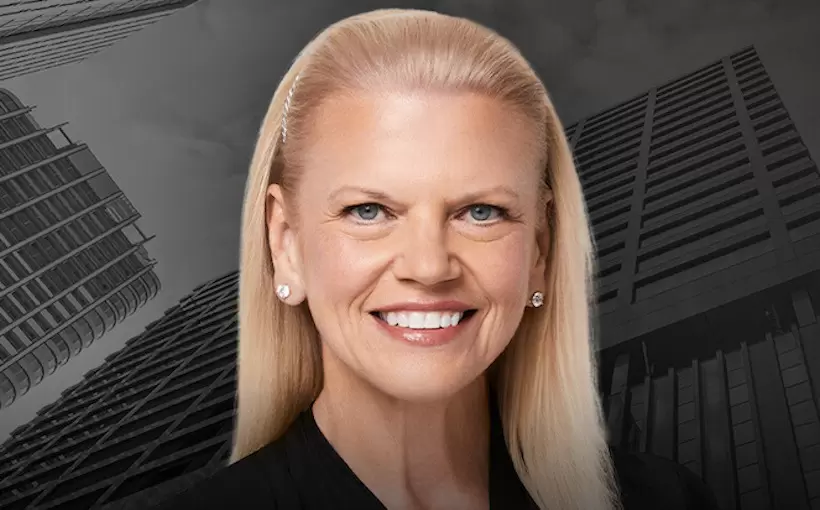

Walker Webcast: IBM’s Ginni Rometty Highlights Career and “Skills-First” Philosophy
Virginia Marie Rometty, who prefers “Ginni,” is best known for her various leadership positions at IBM, including President, CEO and Executive Chairman. During her period with IBM, she helped lead that company’s transition from hardware and software to data and consulting.
Yet she comes from a somewhat hardscrabble background. Her father abandoned her, her mother and her siblings as a teenager. Her mother’s efforts to support the family and Rometty’s eventual successes are one of many topics outlined in her book, “Good Power: Leading Positive Change in Our Lives, Work and World.”
But she doesn’t want pity. “The book starts on this point, which is not to make anyone feel sorry for me and not to regard me as a victim,” Rometty told Walker & Dunlop Chairman and CEO Willy Walker during the Sept. 20, 2023, Walker Webcast. What people should take away from the story, she said, “is that only you get to define who you are.”
Another life lesson learned during her career rise? Growth isn’t comfortable.
Rometty shared a story about her earlier years with IBM and a potential promotion. She was scared and nervous about straying from what she knew and was comfortable with. She told herself many reasons why she wasn’t qualified for the job.
“I went to the interview,” Rometty explained. “I got offered the job. And my reaction was not what most people would think. My reaction was, ‘I’d like to go home and talk to my husband.’” Rometty added that she could still see the interviewer’s surprised reaction. So she talked to her husband, Mark Rometty, who asked her: “Do you think a man would have answered the question that way if offered a job?”
Rometty told Walker that the incident wasn’t a gender story, as much as it lit the lightbulb in her that growth and comfort don’t co-exist. Additionally, “for anyone to grow, you’ve got to equate risk with growth, not risk with downside,” she pointed out. Rometty explained that throughout her career, she’d make risky decisions and might feel discomfort. “I would start to associate anything I felt comfortable with knowing I was learning something,” she explained. “That’s a very freeing feeling.”
Something else she learned in her experience? Access and aptitude are two different things. “My mom was bright,” Rometty said. “But she didn’t have access to anything.”
She explained that this is especially true when slotting smart people into well-paying jobs. Rometty pointed out that 65% of Americans don’t have a college degree – and 80% of Black Americans don’t have a college degree, either. “Yet in most companies, 100% of good jobs require a college degree,” Rometty said.
She explained that during her tenure at IBM, the company “went through a decade-long piece of work re-credentialing jobs.” Jobs were listed based on skill sets versus degrees. The company hired employees with associate degrees from community colleges in underrepresented areas. The workers, she said, were just as productive as those with college degrees. They were also more loyal, leading to a higher retention rate.
Rometty is an advocate of SkillsFirst, a movement that promotes skills-based hiring. “I bet if you rewrote jobs based on a skill and not just the degree, you’d be surprised how many people would qualify to get started,” she added.
To that end, Rometty is co-chair of OneTen, an organization promoting skills first. OneTen works with companies and communities to build opportunities for Black talent and other underrepresented groups that don’t have four-year college degrees.
“It’s amazing to see the people in this country who have skills and who, when given a chance, can change your whole (corporate) culture,” she said.
On demand replays of the Sept. 20 Walker Webcast are available through the Walker Webcast channels on YouTube, Spotify and Apple.
- ◦People
- ◦Recruitment


