



National CRE News In Your Inbox.
Sign up for Connect emails to stay informed with CRE stories that are 150 words or less.


Urban Retail is Back, Baby
A little more than three years ago, urban retail was all but dead. The lockdown resulting from the COVID-19 pandemic forced stores to close in urban centers, and customers took their time returning.
Fast-forward to today, and the news is very different. JLL’s City Retail 2024 report indicated that urban retail is back, thanks to consumer spending growth and a boost in domestic and international tourism. As a result, foot traffic recovered “to pre-pandemic levels in half of the prime corridors surveyed.”
Defining Urban Retail
The report defines urban retail (or a “prime urban corridor”) as “a nationally recognized shopping district that is noted for its mix of high-street, national and international tenants.” Think Chicago’s Michigan Avenue, Los Angeles’ Beverly Hills Triangle or New York City’s Fifth Avenue.
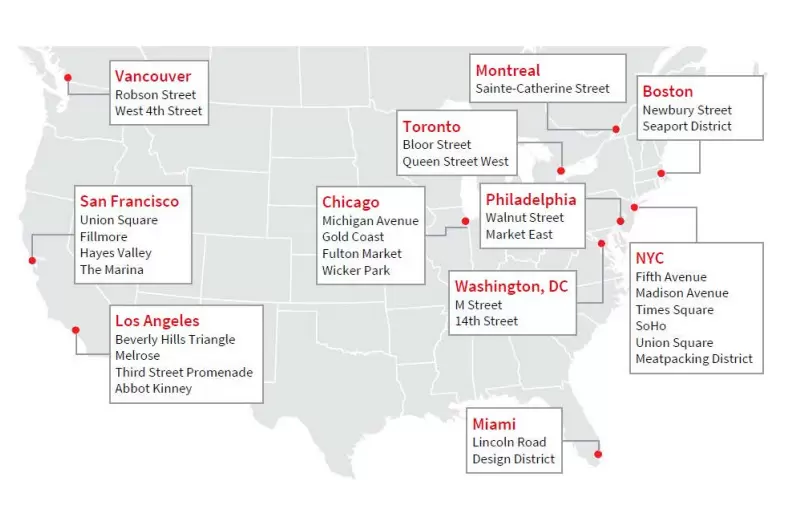
The JLL analysts note that these prime urban corridors are organic as opposed to the product of a single master developer (like malls or outdoor shopping centers). These urban districts are typically named after well-known streets within the corridors. They also tend to include prominent retail spaces and “current and future points of interest,” the report noted.
Takeaways from the Research
JLL researchers analyzed numerous North American prime urban corridors in developing its report. The researchers indicated that “office populations have surpassed 50% across all major metros, hotel occupancy is at pre-pandemic levels, and residential population outflows from major cities have stabilized.”
Additionally:
Apparel leaders dominated. Consumers anxious to return to the action following the pandemic want to look good. As a result, they’re buying clothes. It’s probably no surprise that JLL researchers reported “a noticeable uptick in apparel leasing in prime corridors.” The report said that apparel retailers made up 48% of overall prime corridor leasing in 2023 versus the 35% reported in 2022. Athleisure retailers made up 21% of new apparel leases in connection with “the emergence of hybrid and remote work,” the report indicated.
Luxury retailers held their own. The gradual return of tourism and hybrid office workers also helped increase the prevalence of luxury retailers. Said the report: “Luxury tenants know full well the value of an in-store offering that cannot be replicated at home.” Manhattan’s Times Square and Chicago’s Michigan Avenue are also situated near CBDs, which appeals to luxury tenants. These factors led to 45% of luxury leasing activity in the prime urban corridors.
Jewelers and food users experienced growth. The JLL analysts noted that “occasion dressing” wasn’t restricted to apparel. Jewelry and accessories retailers comprised 11% of prime urban corridor leasing. Food users and restaurants also expanded in these locations, comprising approximately 15% of total leasing velocity. “These operators were eager to capitalize on consumers’ desire to dine out,” the report indicated. As a result, food and beverage store sales increased by 8% year over year.
- ◦Lease
- ◦Economy


