



National CRE News In Your Inbox.
Sign up for Connect emails to stay informed with CRE stories that are 150 words or less.
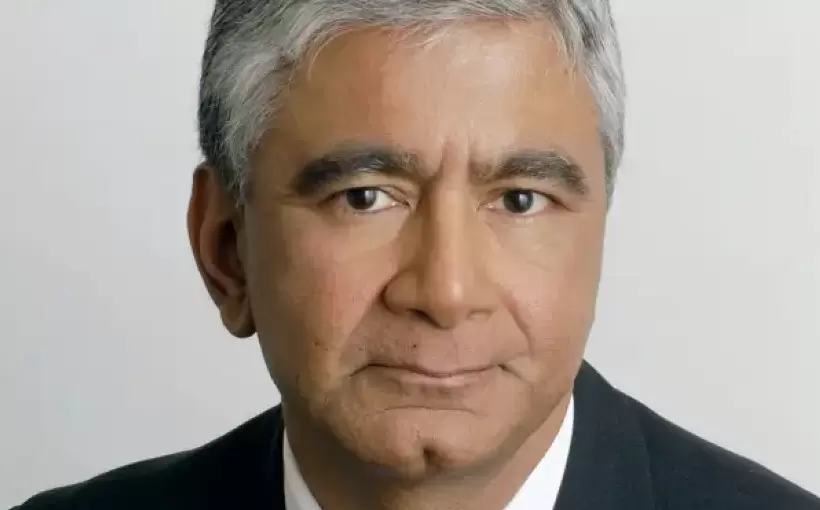
Upcoming Berkadia Economic Update Webinar Features Komal Sri-Kumar
The economy, both domestic and global, has been a topic of especially keen interest for commercial real estate investors in 2024, and that interest isn’t likely to wane any time soon. To help industry members get their bearings, Berkadia has scheduled a webinar, Beyond Insights 2024 Mid-Year U.S. Economic Update, for Thursday, July 25. CEO Justin Wheeler and SVP – Securities Trading Josh Bodin will be joined by Dr. Komal S. Sri-Kumar, president of Santa Monica-based Sri-Kumar Global Strategies, who will provide perspective into the current economic landscape and the anticipated impact on commercial real estate in the second half of the year.
In advance of Thursday’s webinar, Connect CRE sounded out Sri-Kumar to set the stage for the discussion. Here’s what he told us:
Q: The Fed’s most recent dot plot projected one rate cut in 2024, a downgrade from the three cuts previously projected. Is one rate cut your base case? Have you seen any indicators that might change that base case?
A: Due to recent inflation and labor market prints, the market is currently pricing in a rate cut in September and an additional cut coming later in the year. Our base case is for at least one rate cut in 2024, with a high probability of an additional cut in December should inflation figures continue to decline towards the Fed’s 2% goal.
Q: The U.S. economy has been touted lately as the engine that will drive global growth. Do you see the economy as able to live up to that promise? Where are the most significant weaknesses?
A: The U.S. economy has indeed been positioned as a key driver of global growth. There are several factors that support this view, including strong consumer spending, technological innovation, and a resilient labor market. The economy’s ability to adapt and grow despite various challenges is commendable.
However, there are headwinds that could hinder the commercial real estate landscape. Volatility in interest rates remains a concern, which continues to impact investors across the US, regardless of region. While a possible cooling of interest rates could lead to an uptick in investment and borrowing activity through the second half of the year, the bid-ask spread differential and going in negative leverage on deals remains a concern that could drag the CRE recovery. For deals to get traction and staying power, we need to see a few months of interest rates trading in a tighter band.
Q: In terms of leading sectors of the economy, where does commercial real estate currently stand with regard to stability? From an investment standpoint, do you see CRE currently as more of a safe haven or as an opportunity to find bargains?
A: CRE currently occupies a complex position in terms of stability. Across the industry, high interest rates have increased borrowing costs, forcing many investors to adopt a “wait and see” mentality. While the multifamily and industrial sectors remain resilient with transactions still being completed, other sectors such as Office have seen challenges – since the pandemic gave rise to remote work, the sector has faced significant headwinds.
CRE could be viewed as a safe haven for investors due to many factors such well-leased properties in prime locations in industrial and multifamily sectors and other strong operating fundamentals, especially areas with high absorption but limited supply coming online.
For investors with a higher risk tolerance, there are opportunities to find great investments with distressed assets or regions experiencing temporary downturns. These investments offer a significant upside potential for when market conditions improve.
While macro-economic factors have undoubtedly introduced a degree of uncertainty and volatility, we are optimistic for the industry as whole.
Q: Finally, we’re about four months away from what could be the most consequential U.S. election in decades. What current economic themes do you see continuing regardless of who is elected President?
A: Regardless of who is elected president this year, several key economic themes are likely to continue in the coming months with the most important being inflation. Be it through tariffs, profligate spending, or both, higher levels of supply of Treasuries could keep a floor on how low Treasury yields can fall when the Federal Reserve does finally begin cutting rates. The Federal Reserve’s actions to manage interest rates and inflation will be closely watched following the election.
The recent trend higher in unemployment is concerning. With inflation trending towards the Fed’s objectives, more conversations have been about the employment side of the Fed’s dual mandate, so balancing the needs of the labor market against the need to tame inflation could define the short term, regardless of which administration controls the White House.
Lastly, supply chain resilience and diversification will remain critical theme for the next president. Efforts to strengthen domestic manufacturing and reduce dependency on foreign supply chains are likely to continue.
- ◦Economy


