



National CRE News In Your Inbox.
Sign up for Connect emails to stay informed with CRE stories that are 150 words or less.


Trump Administration Tax Changes and Potential Real Estate Effects

Presidential election years can put commercial real estate activities on hold as buyers and sellers alike wait for results and hoped-for policy clarity. According to a recent report released by Deloitte, clarity might still be required on the Trump administration’s potential tax policy changes.
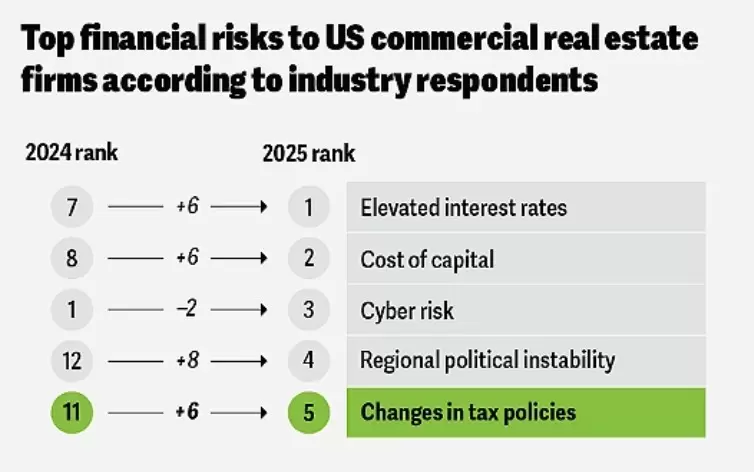
Those changes ranked fifth on Deloitte’s 2025 “Top Financial Risks to U.S. Commercial Real Estate Firms According to Industry Respondents” list, preceded by interest rates, cost of capital, cyber risk and regional political instability.
“This year’s rising concern about tax policy doesn’t mean it wasn’t at all a concern in prior years, just a lower priority behind issues like workforce management, public health mandates or supply chain disruptions, to name a few,” Tim Coy, real estate research manager with the Deloitte Center for Financial Services told Connect CRE.
Coy added that North American respondents to the Deloitte 2023 outlook survey also reported that tax policy changes were a top concern. “We asked some follow-up questions from that year, and the reason behind the tax concern was predominately related to issues with transfer pricing/profit sharing, potential increases in tax rates, and the elimination of or reduction in tax allowances and benefits,” Coy explained.
Meanwhile, in 2025 . . .
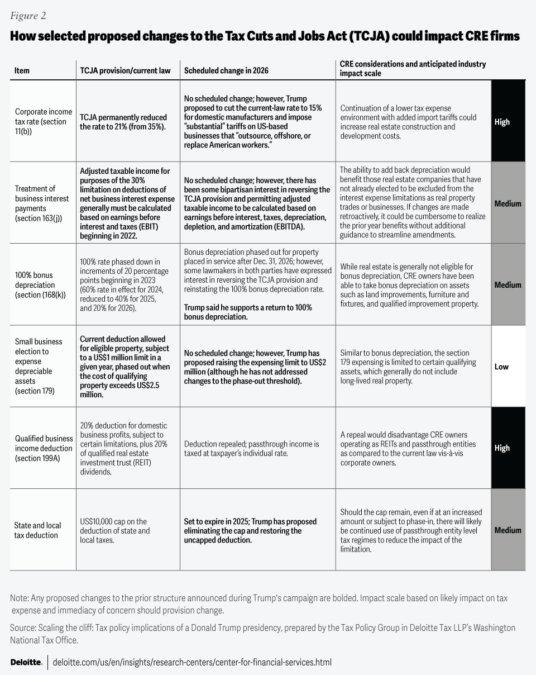
What 2025 has that 2023 didn’t is the expiration of some provisions of the Tax Cuts and Jobs Act of 2017. “We see changes to corporate tax rates and qualified business income deductions within any TCJA renewal discussions that could impact the industry the most,” Coy said. Even if those and other items were beneficial to the CRE community in the past, promised expansions and revisions could mean adjustments. “Renewal will likely not be a simple copy/paste,” Coy noted.
Three other factors are indicating more focus on tax policy by CRE leaders this year:
- Increasing implementation of Pillar Two, the 15% global minimum tax. This isn’t signed into U.S. law, but multinational headquarters in the United States could face top-up levies.
- The outcomes of international elections “may hold long-ranging implications for fiscal policy,” the report said.
- Expiration of key pieces of the U.S. tax code by the end of 2025, meaning “a strong likelihood that major tax legislation will move through Congress this year,” the report explained.
Other issues pending for Congress and the administration include continued sustainability credits and incentives (enacted as part of the Inflation Reduction Act of 2022) and the if the Opportunity Zone program (set to expire on December 31, 2026) will be extended.
How to Prepare
The report suggested that CRE leaders prepare for upcoming changes by:
- Remaining focused on long-term growth
- Staying informed about the latest Capitol Hill developments
- Planning proactively to avoid potentially costly surprises
Coy added that the administration’s tax policy will be on the table before the end of 2025, meaning CRE leaders should consider taking steps now for every potential scenario.
“While it may seem too early or lower priority now, there will be changes coming with the TCJA expiration,” he added. “Get ahead on planning and preparation now for all scenarios, so there isn’t a year-end scramble to adapt.”
- ◦Financing
- ◦Policy/Gov't

