



New York & Tri-State CRE News In Your Inbox.
Sign up for Connect emails to stay informed with CRE stories that are 150 words or less.

Treasury’s Kowalski Focuses on the Future of Opportunity Zones
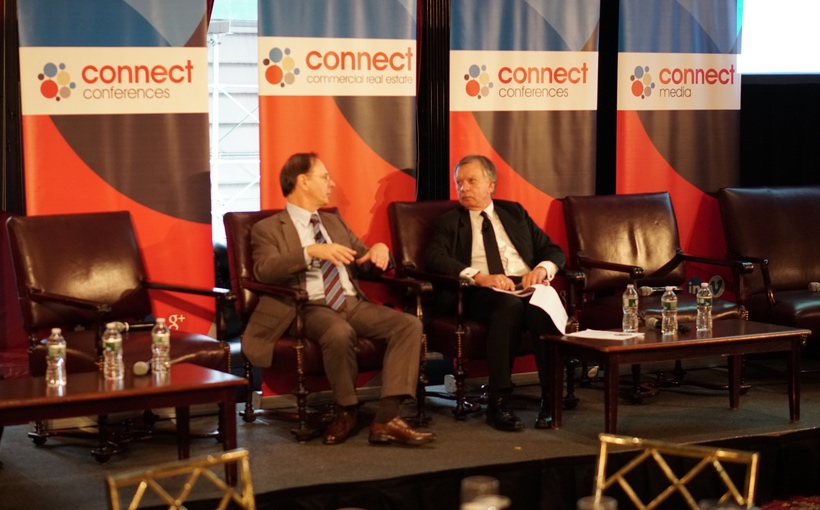
The man who has been called the architect of the Opportunity Zones program, Daniel Kowalski, focused on the program’s future rather than its history in a one-on-one Q&A at Connect Conferences’ first-ever event on the sector, held recently at the Harvard Club in Midtown Manhattan.
Taking questions from Polsinelli partner Dan Flanigan, the counselor to the secretary at the U.S. Treasury Department detailed what audience members should expect, and not expect, in terms of clarification to the IRS’ O-Zone guidelines.
Flanigan’s opening question focused on the timing of final O-Zone regulations being issued. “This is the question I get the most,” Kowalski said. “The answer I’ll give you is ’soon,’ and I have to stop there.”
Kowalski explained that the proposed regs must go through review, and the timing on completing that review process was difficult to determine. He added, though, “I have full confidence that we’ll have something by the end of the year.”
Asked whether Qualified Opportunity Zone businesses (QOZBs) might be able to sell assets—currently the purview of QOZ funds and investors only—Kowalski offered a glimmer of hope. “There may be a reason for QOZBs to be able to sell assets,” he said. “We’re working on it.”
Another question focused on the “blackout” period in effect for QOZ investments, a result of the current draft regulations’ requirement that investments can only be made within a 180-day period after Dec. 31 of any given year. That effectively means no investing can occur between June 28 and Dec. 30.
Without delving into specifics on how this might be remedied, Kowalski said regulators are “very sensitive” about trying to match the investment period to the business cycle rather than the tax cycle.
Kowalski also discussed the O-Zone program’s success to date and its long-term potential. Noting that the program was in its very early innings, Kowalski said, “We need to be patient with Opportunity Zones. It’s not easy, and it’s not for every investor.”
Early adopters of the program, he said, are taking greater risks in pushing ahead with a program that’s still in the formative stages. In breaking new ground, “they’re doing some of the spade work that others can use later,” Kowalski added.
Pictured, from left: Daniel Kowalski and Dan Flanigan.
For comments, questions or concerns, please contact Paul Bubny
- ◦Sale/Acquisition

