



Texas CRE News In Your Inbox.
Sign up for Connect emails to stay informed with CRE stories that are 150 words or less.
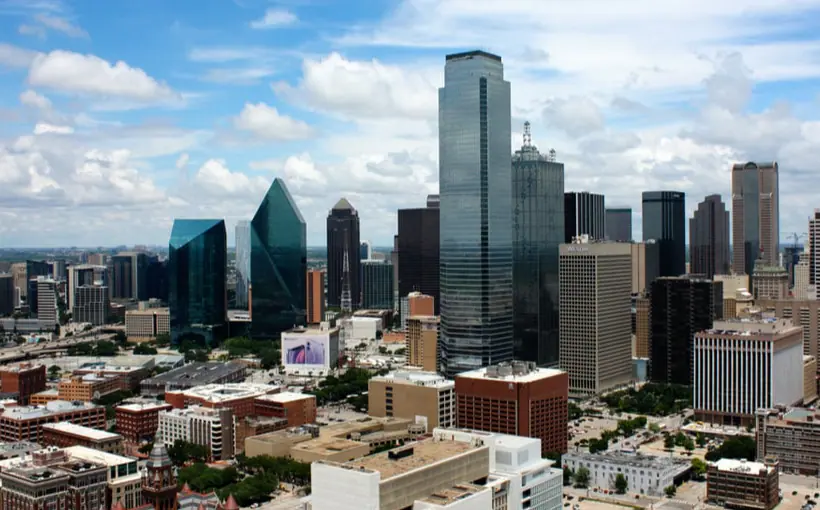

Thorofare Capital’s Jonathan Hart: Non-Bank Capital Still Focuses on Texas
At the upcoming Connect Texas Multifamily event scheduled for August 22 in Dallas, you’ll hear from industry leaders on topics ranging from development to the debt and equity markets. Among the experts addressing the latter subject is Jonathan Hart, director of originations with Thorofare Capital in Dallas. Connect CRE sat down with Hart recently for an overview of the capital markets. Here’s what he had to tell us:
Q: From what sources are Texas CRE multifamily investors and developers obtaining their debt and equity these days? Why these particular sources? Are regional banks still in play when it comes to funding multifamily projects? What about private debt funds? What is the overall capital environment in Texas concerning multifamily investment and development?

A: At Thorofare, we’ve seen 345 construction loans this year with a total volume of $15 billion. We’ve been very selective on construction lending given the friction costs of closings and limited capital deployment over the loan term’s first 1-2 years. We continue to see the regional banks pull back on construction lending, and the dislocation from non-recourse groups like PacWest being out of the market for months after being very active in the first two quarters of 2022 reduced non-recourse liquidity for multifamily loans.
Regional banks were lending above 55% LTC in 2022 with recourse, but today, that’s the best case, and in most cases, you’re looking at 45-50% LTC for a non-recourse bank execution. In many cases, the banks will not lend on a construction project without deposits, which isn’t appealing or possible for most developers. Texas continues to experience robust job and population growth. Employment is up about 2% from Jan-June 2023, and the population forecasts show an increase of 500,000 people from 2022 (2% increase) and about 2,600,00 (8.5% increase) people from 2022-2027.
Dallas-Fort Worth continues to see economic diversification that we see less in places like Houston and Austin. Historically viewed as a non-cyclical market, Austin has been hit the hardest by the recent inflationary pressures as technology companies cut workers and office space, and venture capital reduces investment in private companies; profitability is a more significant focus than ever.
That said, captive non-bank capital is still looking to deploy in the Texas markets. Multiple private lenders are willing to finance at 60-65% loan-to-cost, but the 75%-85% loan-to-cost market has half, if not less, of the participants we saw a year ago. The 59,000 units (7% of inventory), and 42,000 units (18% of inventory) underway in DFW and Austin, respectively, illustrate the relative investment demand vs. Houston, which sits at about new construction of 4.5% of inventory. Houston has maintained historical occupancy closer to 10%, which has tempered some recent development activity. Many have struggled with new development in San Antonio as the wages and rents have not seen the increase in other Texas markets to support the increased construction costs; further, the lower relative rent growth has impacted operating income margins.
In the short-to-intermediate term, we expect to see tepid bank lending activity on multifamily development and continued selectivity by debt funds.
If a project has institutional sponsorship, a great location, and a submarket with relatively lower levels of new supply, there are significant capital sources, but consistent with the theme, they will be mostly debt funds.
Q: From a lender’s point of view, what are the best “stories” from sponsors who are seeking capital for investment and/or development? Is it geography (i.e., do properties in DFW have a better chance of funding than those in Houston?). Is it asset class? Is newer better, or does value-add still attract lender interest? Along those lines, what should borrowers and sponsors keep in mind when approaching funding sources for the best chance of approval?
A: We continue to focus on DFW and Austin. Our struggle with Houston recently, especially on older vintage value-add deals, is crime and vacancy rates. New supply in Houston over the last decade has kept vacancies close to 10%, while Dallas has averaged about 7% over that same period. Austin, the most robust performing market historically, continues to see supply concerns, where the vacancy today is around 200 basis points above the DFW market. On the crime side, Houston has violent crime equal to 12-13 per 1,000 residents, whereas Dallas sits at 8-9 per 1,000 residents, San Antonio at 7.5 per 1,000 residents, Austin is 5.25 per 1,000 residents, and the Texas average is around 4.55 per 1,000 residents. So Austin remains the safest market for violent crime in the top 3 targeted investment markets, and Houston sits well above the Texas mean.
We start with the sponsor and location before anything. Interest rates today make it unlikely for most non-bank loans to have 1.00x debt service coverage, so the ability to cover shortfalls if the business plan slows or the lack of underwritten rent increases is crucial to our credit process.
As we continue to see an upward drift in the reference rates, it’s tough to see a scenario over the next two years where multifamily loans have a clear takeout by agency financings without developers and owners contributing new equity to close so that the non-bank market will become more critical.
Thorofare remains asset-by-asset focused, so if there’s a comparative advantage in one asset, whether it is the proportion of specific unit types, amenities, covered parking, access, or build quality, we’ll dig in even if the submarket has some softness.
This current cycle has seen high demand for 70’s and 80’s products for value add. Our firm is pivoting to 2000 or newer assets. When looking at a 70s or 80s asset, you’re starting with 40-50 years old properties. While these properties have a natural affordability component which is helpful in a market where we’ve seen geometric rent growth in markets, the concern remains over continued capex development and the fact that there’s a significant new supply of 10-year-old or more recently delivered properties.
On the development side, there are more development opportunities than cheap capital, so it’s becoming standard to see moderate leverage (65% loan-to-cost or less) interest rates above 10%.
Q: Our final point after economics is the story of the asset. Has the sponsor acquired the land site on a below-market basis? Are material costs attractive? How much equity will they be investing as the GP?
A: The market and our firm continue to eschew heavily syndicated deals as we see more distress from both large and small syndication groups in Texas markets. Because the fixed rate market will continue to require cash-in refinancing, the syndications model is in trouble as floating rates expand, and the high-leverage non-bank loans from 2015 to the 2nd quarter of 2022 lack 3-4% fixed rate loans to refinance. Where lenders could underwrite a 6.50%-7.00% exit debt yield, today that’s closer to 9.00%. Given its economic diversification, we like markets with significant liquidity on the sale side, and we believe DFW is the best option.
Q: What is your outlook for capital availability for the rest of the year and into 2024. Will there be enough capital sources to get multifamily deals completed in Texas? Why or why not? What projects are likely to receive the most attention?
A: Capital raising has recovered substantially from the first quarter of this year, according to data by Preqin, and there is significant opportunistic capital from 2020-2022 raises, so institutional investors still expect some distress, which has been a narrative since 2020. The forecasts from other private debt lenders for volume remain at levels close to 2022, but most funds have portfolio allocation constraints for construction. The projects on faster timelines with more institutional sponsorships will see the most activity as there’s a flight-to-quality, and opportunities that require 75% loan-to-cost or higher will continue to struggle to find efficient capital as, in most cases, multiple lending partners will be required. On recently delivered assets, the significant inflation in materials and labor for those projects results in a cost basis above most comparable sales. This dynamic has created a dislocation as more lenders require cash infusions for refinance and substantial cash infusions for fixed-rate financing. From a relative value and better credit standpoint, the decline in input costs makes future developments at a better cost basis which will find liquidity.
Connect Texas Multifamily 2023 will take place on Aug. 22, 2023 at Virgin Hotel in Dallas. Click here for more information and to register.
- ◦Financing

