



National CRE News In Your Inbox.
Sign up for Connect emails to stay informed with CRE stories that are 150 words or less.


The Successful Collaboration Between CRE Developers and Non-Traditional Partners
The only thing constant about commercial real estate these days is change. Between greater demands for “green” building and new technologies, real estate developers’ efforts should go beyond foundation preparation, frame installation and cladding.
A recent McKinsey article, “Unconventional Partnerships: The Real Estate Developer’s Innovation Edge,” explained that collaborations with non-traditional partners can help developers access skills outside their core competencies.
The article defined unconventional real estate partnerships as “innovative and non-traditional collaborations that extend beyond the usual developer-contractor relationship.” Such partnerships can include technology companies (including those specializing in AI), service providers, brands, logistics experts—and even waste management companies.
Headwinds Drive Unique Collaborations
In a recent survey of 50 chief investment officers at large global real estate companies, McKinsey found that 74% believe high interest rates are a major challenge. Meanwhile, 84% of those questions pointed to cost materials fluctuations as problematic.
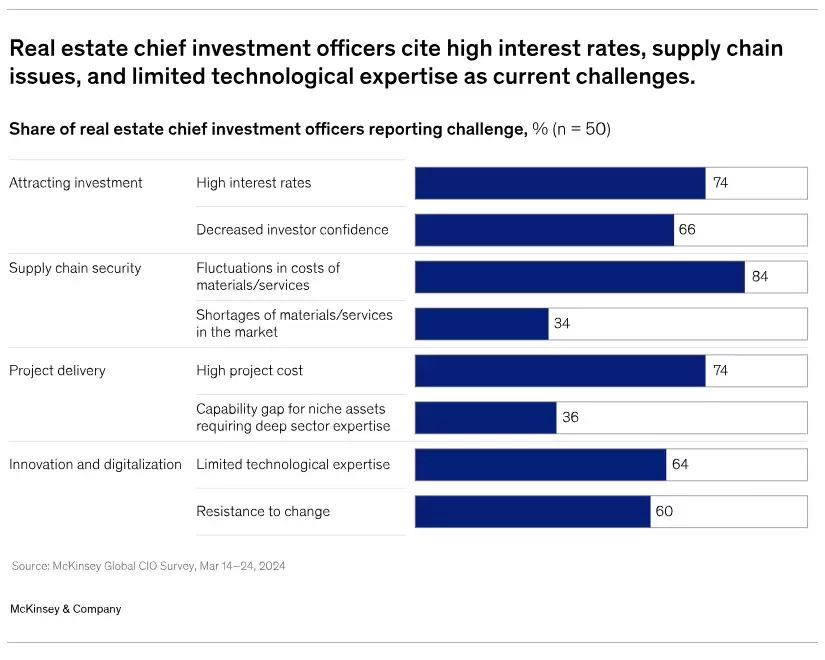
The McKinsey article explained that increasing development and renovation challenges are why more commercial real estate companies are working with different partners. These collaborations help bring much-needed outside-the-box expertise to commercial real estate development projects.
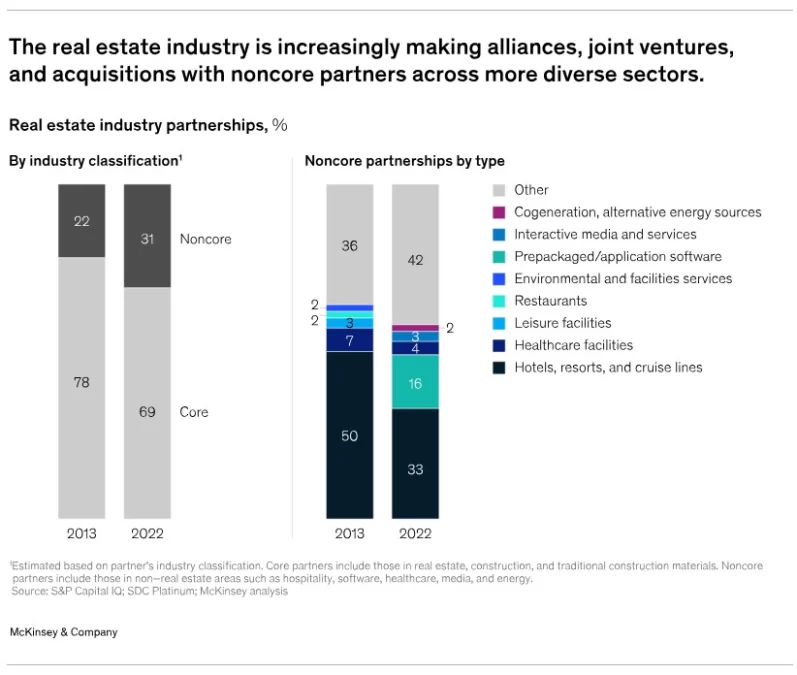
“In 2022, roughly 30% of real estate partnerships consisted of alliances, JV, and M&A with partners operating in noncore industries such as hospitality or environmental services,” the article said, noting the figure is up from 20% in 2013. “There is also a greater share of partnerships with companies operating in tech or alternative energy sources.”
Steps to Thriving Partnerships
The article laid out five steps to success when considering nontraditional ventures:
- Perform specialized due diligence. As unconventional partnerships involve different models from traditional real estate ventures, in-depth research is essential. Examples include conducting a tech infrastructure assessment, using a valuation methodology to ensure fair market value, or auditing intellectual property rights.
- Determine effective partnership formats. Acquisitions, joint ventures and strategic alliances are the most common formats. The article suggested that “clearly defining roles, equity stakes and profit sharing approaches can ensure clarity and align interests.
- Understand shared objectives. Aligned objectives become important when both parties aren’t familiar with one another’s operations or “have historically pursued different paths,” the article said. For example, developers might ask partners to help create AI-generated decarbonization plans for real estate portfolios using an algorithmic approach.
- Develop a strong governance development model. This process would include clearly defining the objectives and purposes of a management team, recognizing and bridging cultural and industry differences and focusing on risk management in areas including regulatory and reputational risks.
- Establish metrics and exit strategies. Partners should agree on performance metrics to determine progress. Building a clear exit plan in the event one party wants to dissolve the partnership is also important.
- ◦Development


