



California CRE News In Your Inbox.
Sign up for Connect emails to stay informed with CRE stories that are 150 words or less.
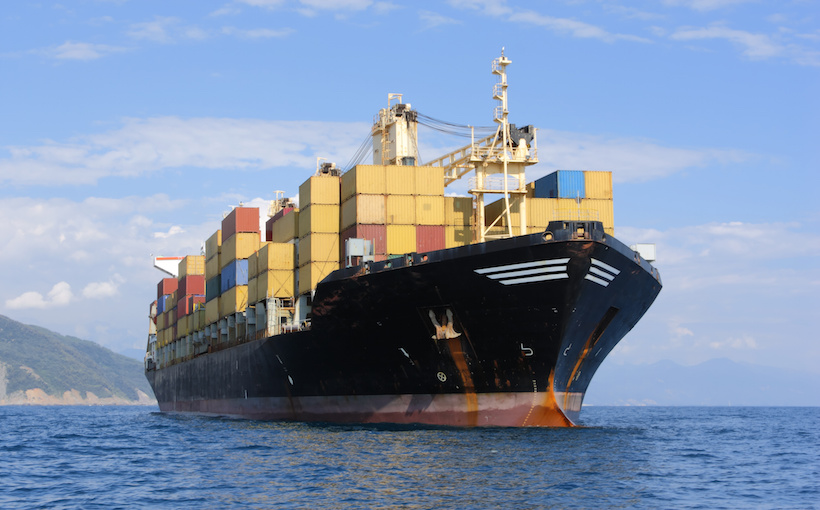

Seaports Sailing Smoothly, Continue to Drive West Coast Industrial Markets
Seaports are a vital economic engine for the U.S., and a huge driver of demand for industrial real estate. Research by Cushman & Wakefield in its “2017 U.S. West Coast Seaports & Industrial Market Report,” notes over the past few years, U.S. ports have undergone significant changes as the global shipping industry has rapidly evolved.
Yet, the ports of Los Angeles and Long Beach will remain fairly entrenched as the top ports in the country. While West Coast ports are naturally better suited to handle trends toward larger ships… thanks to deeper harbors… the recent expansion of the Panama Canal has created an opportunity for more cargo to shift to East Coast ports such as the Port of New York/New Jersey, as well as Savannah, Norfolk/Virginia and Charleston, S.C.
Cushman and Wakefield’s Rooney Daschbach says, “In all parts of the Los Angeles Basin, industrial vacancy rates have been declining to historic lows. Los Angeles County has consistently remained the tightest market in the region, and has the lowest vacancy rate of any major industrial market in the U.S., followed by Orange County.”
Other report findings:
– Imports represented 61.8% of the total loaded cargo volume through mid-year 2017 for the top 13 ports in the U.S., and West Coast Ports accounted for 51.3% of loaded imports at the top 13 U.S. ports
– The Inland Empire posted the highest leasing activity in the U.S. at mid-year 2017 with 21.8 million square feet, followed by Greater LA with 18.6 million square feet
– Explosive ecommerce growth has caused demand for industrial space in warehouse, distribution, and fulfillment centers to soar, and propelled U.S. net absorption to 115.3 million square feet at mid-year 2017.
For comments, questions or concerns, please contact Dennis Kaiser


