National CRE News In Your Inbox.
Sign up for Connect emails to stay informed with CRE stories that are 150 words or less.


Report: Look for Construction Labor Shortages in 2022
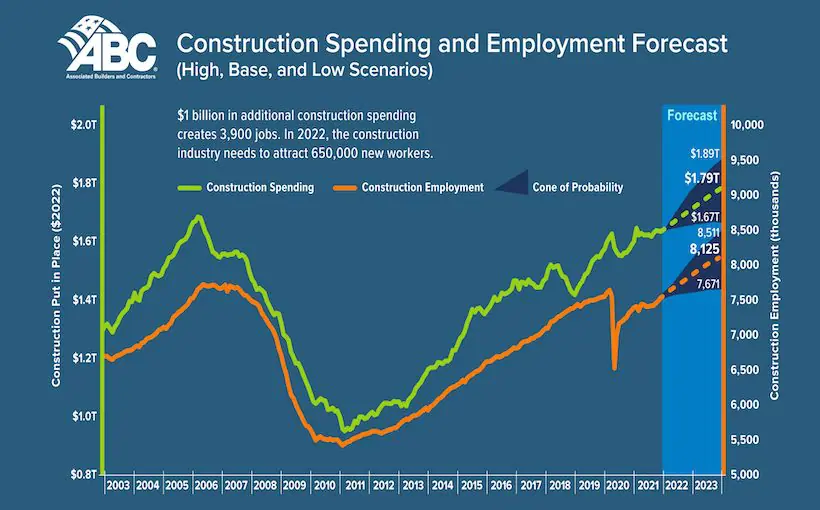
If your 2022 plans include of any kind of real estate development, it would be a good idea to build “air” into your deadlines. A recent report issued by the Associated Builders and Contractors (ABC) indicated that the construction industry will face a workforce shortage of 650,000 in the coming year. Nor will the pain be lessened going forward; ABC analysts are forecasting that the industry will need to attract close to 590,000 new workers, on top of what’s already out there, to meet industry demand.
ABC analysts produced these numbers by examining historical inflation-adjusted construction spending growth and payroll construction employment. From that, researchers converted anticipated construction outlay increases into anticipated demand for labor. This was added to the level of current above-average industry job openings, while also adding in anticipated dismissals and retirements.
“An added concern is the decline in the number of construction workers ages 25-54, which fell 8% over the past decade,” said ABC Chief Economist Anriban Basu. “Meanwhile, the share of older workers exiting the workforce soared. According to the Centers for Disease Control and Prevention, the industry’s average age of retirement is 61, and more than 1 in 5 construction workers are currently older than 55.”
And because of increased regulations and less worker freedom, those vacant jobs will be harder to fill, according to ABC President and CEO Michael Bellaman.
The fall-off of labor is coming as demand is increasing. Though construction spending was sluggish during the COVID-19 pandemic, Basu anticipates that boosted demand and spending will come from both the private sector and notably, from the passage of the Infrastructure Investment and Jobs Act of 2021.
And even if those 650,000 workers can be hired without a struggle, they “must quickly acquire specialized skills,” Basu said. “With many industries outside of construction also competing for increasingly scarce labor, the industry must take drastic steps to ensure future workforce demands are met.”