



National CRE News In Your Inbox.
Sign up for Connect emails to stay informed with CRE stories that are 150 words or less.

RentCafe Says Adaptive Reuse on the Rise, YoY Growth is 17%

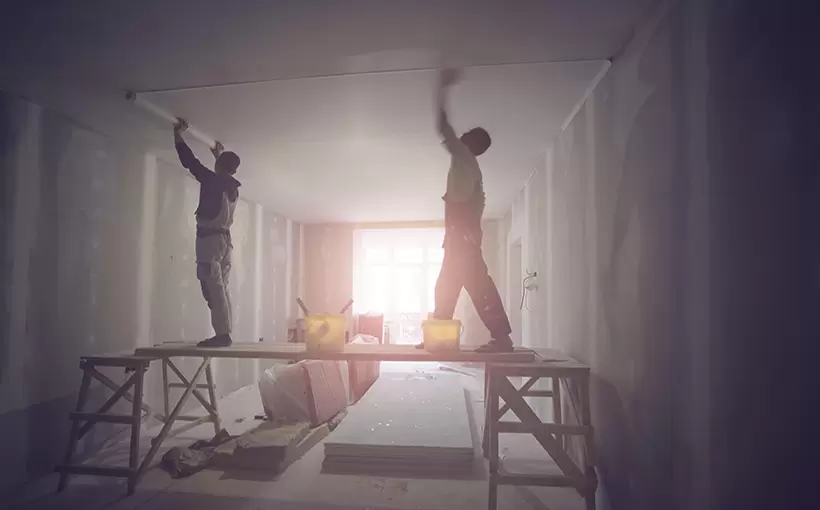
A recent article from RentCafe reported that adaptive reuse projects gained steam in 2023. Specifically, 17.6% more apartments were converted from outdated buildings than in 2022. The conversions – totaling 151,000 units – are “approaching the high activity levels of 2019 and 2020,” the RentCafe report noted.
Doug Ressler, senior analyst and manager of business intelligence with Yardi Matrix (which owns RentCafe), told Connect CRE that the trends continuing to drive such conversions include a move toward a hybrid workplace model, a continued increase in office vacancies and ongoing demand for more housing units, especially multifamily. “In the year that ended in the first quarter of 2024, the number of housing units occupied by owners climbed by 546,000, while the number of units occupied by renters rose by 907,000,” he added. “The overall growth in households provides further evidence of the impact of a migrant surge over the past three years.”
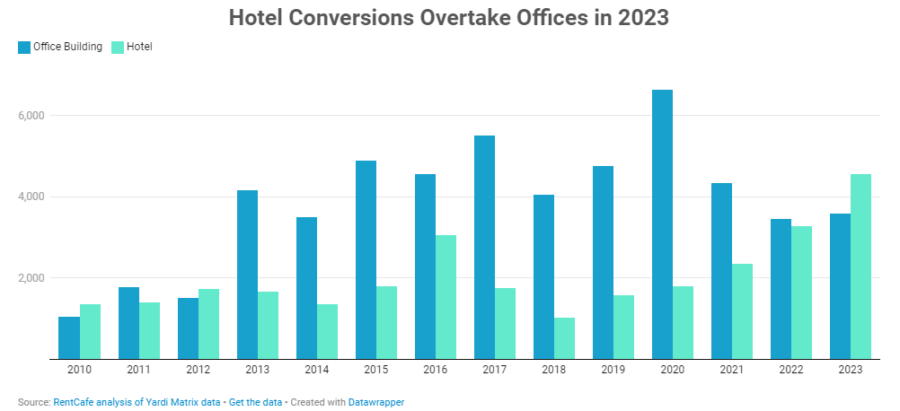
The report also noted that hotel conversions accounted for over one-third of the adaptive reuse projects in 2023. In fact, hotel conversions overtook office conversions during the year. While 28% of conversions were from office buildings, 36% came from hotels.
Manhattan led conversions, with 733 units created through adaptive reuse. The report indicated that most of these converted apartments involved repurposing a former hotel building at 525 Lexington Ave. Another interesting mention from the report was that secondary and tertiary markets like Richmond, VA, Alameda, CA, Charlotte, NC and Lawrence, MA were the cities with the most converted apartments in 2023.
Meanwhile, Albuquerque, Richmond, Hialeah, FL and Overland Park, KS were among the top cities with the most converted apartments from hotels.
Ressler explained that there are stranded assets in real estate throughout multiple markets, some of which are alternative assets for conversion in secondary and tertiary markets. Some states also focus on incentives to convert outdated assets into housing.
“In Dayton and Columbus, incentives for conversions are available, aiming to repurpose underutilized office spaces,” Ressler explained. “These include tax abatements, tax incentives and cash grants.” Meanwhile, a proposal has been introduced in Wisconsin for developers to receive no-interest rate loans of up to $1 million if they convert or replace empty stores or office buildings with housing,” Ressler said.
Furthermore, the Biden Administration supports conversions of “high-vacancy commercial buildings” to apartments with help from financing, technical assistance and federal property sales.
“The plan is to support such conversions into residential use, especially affordable and energy-efficient housing near public transportation,” Ressler added.
- ◦Development


