



National CRE News In Your Inbox.
Sign up for Connect emails to stay informed with CRE stories that are 150 words or less.


Q&A with MetroGroup’s J.D. Blashaw: The Rise of MOBs & the Future of Lending Within This Asset Class
As medical office buildings (MOBs) garner more hype and media attention as “the darling” of current investment portfolios, Connect spoke with J.D. Blashaw, VP at MetroGroup Realty Finance, a commercial mortgage banking firm specializing in debt financing and capital advisory services, to gain insight into how these projects are financed, the new normal of conversion, and the viability of this asset moving forward.
Q: What qualifier makes the medical office sector a strong and stable asset for investors? And what about the events of the last two years has strengthened the viability of this asset moving forward?
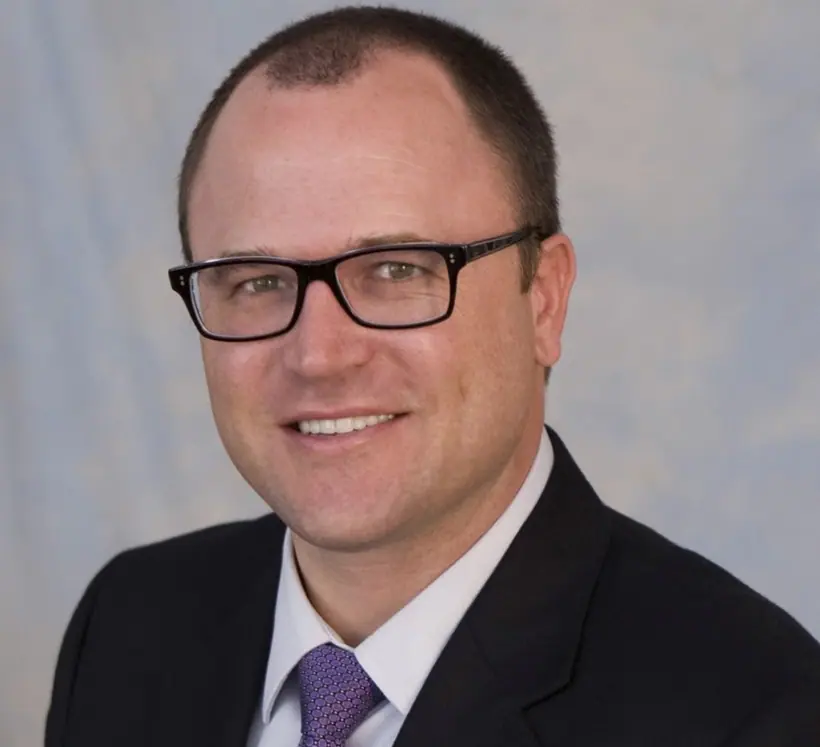 A: The medical office sector has seen strong occupancy rates and consistent rent growth over the last decade and has been catapulted into the spotlight for its performance during the pandemic. In a recent study, 90% of CRE firms stated that between 2020 and 2021, the occupancy of their medical office portfolios either remained stable or increased from the year prior. According to Revista, medical office landlords collected 95% of rents owed in 2020, compared to traditional office landlords who received less than 85%.
MOBs offer opportunities to create complimentary tenant mixes and typically involve longer lease agreements. The MOB tenants, compared to multifamily or traditional office assets, typically want to stray from expensive build-outs and strenuous relocating costs, which cushion their stability as an investment.
The reshuffling of cultural values from the events of the past two years has signaled the collective need for greater healthcare, health practices, and public health research. This focus and emphasis on the healthcare industry, coupled with the country’s aging boomer population, have greatly strengthened the viability of this asset for future market conditions and sparked investor appetite for MOBs. In fact, in 2021, investments in MOBs set a record, rising to $17.4 billion from $11.9 billion in 2020.
The need for physical healthcare facilities is a constant, and incredible innovations in biotech are heightening the demands for these spaces. Historically, oversupply has been rare in this sector, and COVID completely overwhelmed the somewhat frugal precedent. Additionally, medical office developers are known for being thorough and pragmatic, creating ecosystems of healthcare tenants that complement one another, then building out from there. In other words, MOBs have never been financed or developed on speculative terms, strengthening their reliability for investors.
Q: Which geographic markets and subsectors of MOB are seeing the greatest demand and why? Who is lending on these properties and transactions?
A: Based on migration patterns, the large aging population of the Boomer generation, and the geographical hubs of promising healthcare start-ups, we are seeing MOBs heat up throughout southern California, specifically in Los Angeles and San Diego—which remains one of the country’s top healthcare and life sciences hubs—as well as high-growth markets like Phoenix and Charlotte, which have been attractive markets to investors across asset types.
There is also the need for convenience when considering the future generations of tech-savvy and health-conscious Millennials and Gen Z. The attention economy has translated into the medical setting as patients seek a local one-stop destination for examinations, labs, and procedures. This trend, also similar to the new retail landscape of mixed-use and the urban planning concept of the 15-minute-city, has provoked a shift in medical office space away from their hospital campus to outpatient facilities.
We are seeing an increase in REITs turning their attention to MOBs, as well as large healthcare real estate firms. Other private equity firms, like KKR, announced their plan to invest more than $1 billion in medical office assets in the next few years. Most firms are implementing recapitalizations of assets in order to finance these projects.
For many MOBs, the fee interest needs to be clearly defined. For example, with on-campus MOBs, which are growing in popularity, the hospital system can be enmeshed with the MOB from an operational standpoint—creating a layer of nuance to the lender’s collateral. Typically, the hospital system owns the land, then enters into a ground lease with developers who provide the capital to build the property which the system leases space in. Alternately, most off-campus MOBs are fee ownership by either investors or owner-users. In short, it’s extremely important for lenders do their due diligence when structuring these deals.
Q: What does the conversion of a traditional office or retail asset to MOB look like? How are investors financing these redevelopments?
A: We’re seeing an influx of capital into MOBs, and many investors—experienced and new in the sector—are aggressively seeking acquisitions. That said, due to lack of supply, acquisitions have been constrained; hence, conversions.
These assets share more in common with retail juxtaposed to traditional office space. Like retail, medical office is driven by patient (or consumer) demographics, proximity to healthcare and hospital network, accessibility, and tenant mix. In fact, we haven’t just seen conversions from traditional office to medical office, but from retail center to medical office or outpatient healthcare facility. This phenomenon results from a smoother fiscal transition a retail space provides for MOB conversions.
Lastly, medical office tends to be more capital intensive than traditional office, so from financing standpoint, it is important for these projects to have lending partners that understand the level of capital necessary for each project and a nuanced understanding of the shifting-yet-resilient healthcare industry.
Q: How does the cost of conversion compare to ground-up development, when a medical office requires specialized and upgraded infrastructure? Is there greater “curb appeal” to new construction than conversion as far as tenants are concerned, or does this depend on the development?
A: Cost of conversion compared to ground-up development can be tricky. It depends on a multitude of factors including location, building infrastructure, and the demographics of the area to decide if conversion or ground-up would be smarter from a fiscal standpoint.
Even if a specific MOB requires specialized or upgraded infrastructure such as operating rooms or waiting rooms, the cost of conversion is usually still the better option. Further, recent green legislation, especially in states like California, favor the conversion model, as it reduces climate impacts compared to new construction and supports ESG measures—saving the investor time and money in the long run and opening up potential financing solutions. We are seeing carbon-mitigating solutions as a huge part of all conversions and construction projects going forward.
Further, there is sometimes the option for a building to be partially leased during the conversion—which you can’t do during new construction. The additional income from partial leasing can reduce project risks and increase income. When it comes to curb appeal, experts contend that physicians and other healthcare providers prefer open-air centers, as they provide good visibility, direct signage, and are usually placed in cheerful locations with amenities like restaurants and retail experiences close by. Easy access to parking and transit is another qualifier for healthcare providers, especially moving forward into this new paradigm of more experiential healthcare.
Many health facilities, from hospitals to medical offices, want to reframe their messaging. Instead of a stale and somewhat nerve inducing trip to the doctor’s office, the MOB’s of today should encourage ease and tranquility. Thus, building out spaces in an existing retail center or welcoming office complex to an MOB can be both cost effective and highly strategic.
Adaptive reuse is a competitive way for healthcare providers and investors to enter the MOB market and enhance their own curb-appeal through leading-edge conversions.
With the flow of capital strong in the MOB sector, conversions can give you what you need with less time, less money, and reduction in carbon emissions, as well as cater to the new trends of the healthcare industry.
- ◦Financing


