



National CRE News In Your Inbox.
Sign up for Connect emails to stay informed with CRE stories that are 150 words or less.


Q&A: The State of Multifamily Operating
Thirty Capital Performance Group recently released its 2023 State of Multifamily Operating Performance Chartbook. The Chartbook is a reference guide providing insights into the relative performance of the overall U.S. multifamily market, multifamily subtypes, and the 20 largest CMSAs over the past five years.
Connect CRE recently posed questions to Rob Finlay, CEO and founder of Thirty Capital, and Webster Hughes, Ph.D., managing director of analytics and economics for Thirty Capital Performance Group, to better understand the report’s key findings and what owners, operators, and investors need to know about the current state of multifamily operating.
Q: What drove the historically high growth in multifamily revenue, expenses, and net operating income in 2022?
A: The historically high growth in multifamily revenue, expenses, and net operating income (NOI) in 2022 can be attributed to a variety of factors. Inflation played a significant role, with macroeconomic measures surging to levels not seen since the early 1980s, resulting in higher costs across various aspects of multifamily operations. Tight labor markets led to increased payroll expenses, while high energy costs contributed to rising utility expenses.
The 2022 growth rates for revenue, expenses, and NOI were significant, standing at 9.26%, 9.20%, and 9.30%, respectively, compared to a five-year average growth of 4.38%, 5.09%, and 3.82%. These trends varied across subtypes and geographic regions, making it essential for investors to closely analyze expense contributions and regional disparities.
Q: Tell us about the performance differences among various multifamily subtypes, such as garden, midrise, and high-rise apartments.
A: Institutional-sized and small-balance garden properties together comprise approximately 80% of multifamily inventory. Institutional-sized garden properties outperformed national averages in 2022, demonstrating higher growth rates in revenue, expenses, and net operating income (NOI). Conversely, small-balance properties lagged behind the national averages in all three categories.
Among all property subtypes, high-rise apartments saw the most impressive 2022 NOI growth at 13.51%. This surge contrasted with 2021 when high-rises experienced a significant NOI drop due to COVID-induced outward migration. In contrast, senior housing had the lowest 2022 NOI growth at a mere 0.18%, despite healthy revenue and expense growth. This flat performance comes after a modest 3.06% NOI growth in 2021 and a drastic -41.33% decline in 2020, primarily attributed to the initial impacts of the COVID pandemic. Overall, the data demonstrates the significant impact of shifting trends and external factors on multifamily subtype performance.
Q: How did revenue and expense growth differ across regions?
A: In 2022, revenue and expense growth exhibited notable variations across different regions. Phoenix, Tampa, Dallas, and Miami all saw substantial double-digit growth in both revenue and NOI, with Phoenix and Tampa leading the pack at 15.82% and 15.67% NOI growth, surpassing the 9.30% average NOI growth for the entire U.S. multifamily market. Conversely, Minneapolis experienced the lowest NOI growth at -5.29%, primarily due to its 2.86% revenue growth and the highest 12.20% expense growth among the included CMSAs.
A significant contributor to the elevated expense growth was a 24.42% spike in utility costs. This regional divergence in growth rates demonstrates the importance of analyzing expense contributions and regional disparities in multifamily investments, particularly in light of the recent inflationary pressures.
Q: Why is a data-driven approach increasingly crucial for multifamily owners, operators, and investors?
A: Understanding the historical data allows owners, operators, and investors to benchmark the performance of their portfolio assets. It provides critical insights that help set budgets and form buy-sell decisions. For example, if we saw historically that revenue and expenses consistently came in between 3.5% and 4.5%, the investor could reasonably use a 4% benchmarking and budgeting assumption.
Seeing the significant differences in year-to-year, subtype-to-subtype, and CMSA-to-CMSA performance provides context and helps the investor sharpen their pencil and consider whether pressures and upsides will continue or abate. This becomes especially critical in the face of recent high inflation and the Federal Reserve’s efforts to slow down the economy through higher interest rates.
- ◦Financing

Apartment buildings for sale
Check out the latest properties available on apartmentbuildings.com
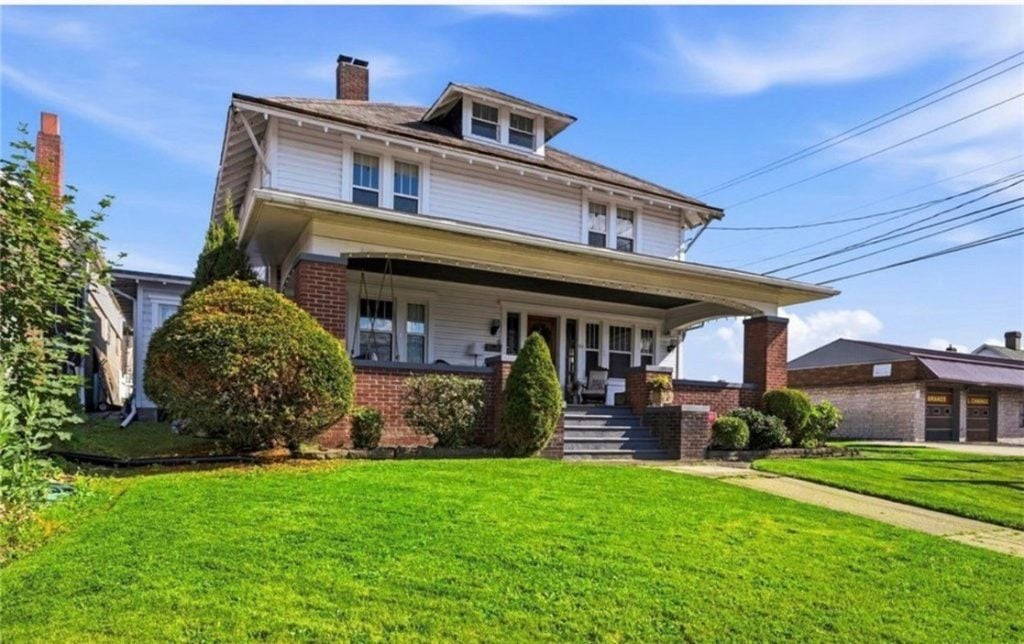
500 Broad Avenue
Belle Vernon, PANew York & Tri-State + Apartment Buildings
Learn MoreListing Status: Available Listing Type: Call for offers Price: $2,000 No. of Units: 1 Year Built: 1903 Opportunity Zone: No Price per unit: $2,000 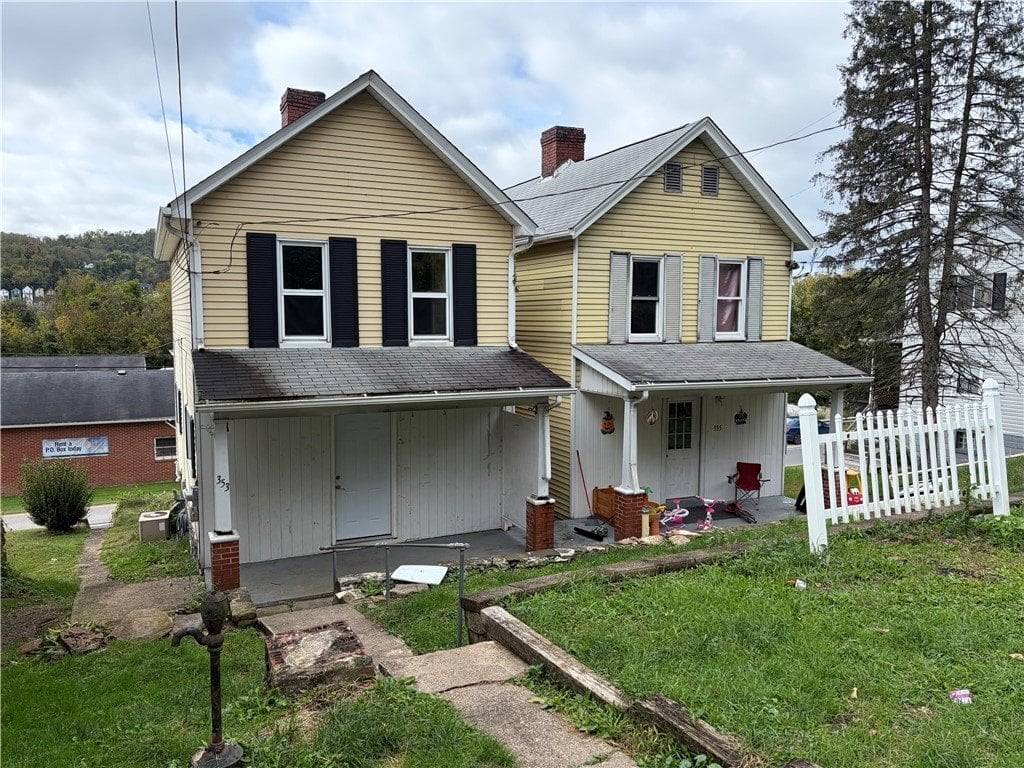
353-355 3rd St
Belle Vernon, PANew York & Tri-State + 2-4 Units
Learn MoreListing Status: Available Listing Type: Call for offers Price: $99,724 No. of Units: 2 Opportunity Zone: No Price per unit: $49,862


