



National CRE News In Your Inbox.
Sign up for Connect emails to stay informed with CRE stories that are 150 words or less.
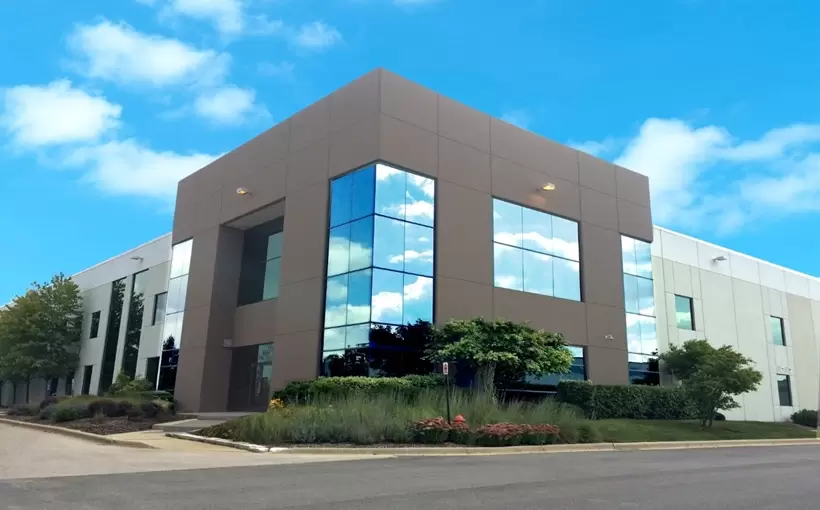

Prologis’ Suzanne Fallender on the Link Between Industrial, ESG and Tech
Although sustainable commercial real estate development may have the highest profile in the form of LEED Platinum-certified office towers, leading industrial owner-developers are also at the forefront of this movement. At the recent CREtech conference in New York, Connect CRE caught up with Prologis VP, Global Head of ESG, Suzanne Fallender, for insights into her company’s initiatives.
Q: What are some of the key themes in Prologis’ global sustainability initiatives and what role does technology play in achieving these initiatives?

A: The integration of sustainability into our core business and our strong customer focus are two overarching themes. As the global leader in logistics real estate, Prologis is building all our buildings to sustainable building certification standards. Additionally, we are increasing solar to give our customers greater access to renewable energy and building more electric vehicle charging infrastructure to support our customers’ mobility needs.
As part of our plan to reach our 2040 net-zero goal, our new sustainable building standards mean that every eligible building will have solar-ready rooftops, be EV charger-ready and have a lifecycle assessment conducted by a third party.
Technology plays a key role in each of these. By collecting, aggregating and analyzing building performance data, we can assess and optimize building performance as well as measure progress toward our net-zero goal. We also use technology to track energy generation and utilization in our solar and EV initiatives.
We also leverage technology in assessing and managing climate-related risk. We’ve developed an in-house tool that uses data from a leading global reinsurer, including a range of natural hazard factors and three GHG emissions trajectory scenarios. A proprietary dashboard helps Prologis leaders assess the potential impacts of more extreme climate conditions, including more frequent and intense natural disasters. Through our use of this tool, we can be more strategic in how we improve our assets to make them more resilient.
Q: Does Prologis rely primarily on outside proptech vendors or on in-house expertise?
A: Prologis uses a combined in-house and external approach to proptech. As a company, we have had a 5+ year data centricity initiative where we’ve collected and cleaned our data sets. We are in the process of implementing new technology systems and further automating our data collection processes, especially for our Scope 3 emissions.
We stay at the forefront of new proptech innovation through the work of our Prologis Ventures team. Since its launch in 2016, Prologis Ventures has invested more than $180 million in nearly 40 early- and growth-stage companies across three main verticals: supply chain transformation; digital buildings and infrastructure; and real estate and construction.The Prologis Ventures group is also making investments in various startups addressing energy and ESG-related needs, including tools to help track and report the related emissions from fleet vehicles in their operations and a solution to improve solar panel recycling.
Q: Among the benefits that technology provides when it comes to sustainability, which is the most important?
A: The main benefit is improved decision-making and prioritization of action. For Prologis, 99.9% of our emissions are Scope 3 emissions – and are primarily driven by customer energy use and construction. We use data-driven analytics to identify our baseline, then develop ways to achieve reductions. Examples would be looking at innovative companies exploring lower-carbon concrete and steel, or gathering energy use data from across our portfolio to identify those customers who would benefit the most from the addition of rooftop solar. Data analytics-driven investments factor significantly in our progress toward our net-zero goal.
Q: Has the use of technology resulted in progress that probably couldn’t have been achieved without it?
A: The global supply chain has been – and continues to be – transformed by technology. When you place an order for next-day delivery, think about the incredible number of technology-driven innovations that have enabled that company to have that product in a warehouse near you, locate that product within the warehouse, get that product out of the warehouse onto the correct delivery vehicle, and have it delivered to your doorstep.
Prologis’ role is to make this entire process more efficient. We locate our warehouses close to population centers; we provide our customers with logistics Essentials such as racking, forklifts, and now, increasingly, things like solar energy and EV charging. With the scale of our global operations – 1.2 billion square feet across 6,600 buildings in 19 countries – having technology systems to track and analyze the building attributes, performance, and energy and EV systems is critical. Technology is a massive driver of all of this. It makes things possible today that we could only have dreamed of a decade ago.
- ◦Development


