



National CRE News In Your Inbox.
Sign up for Connect emails to stay informed with CRE stories that are 150 words or less.
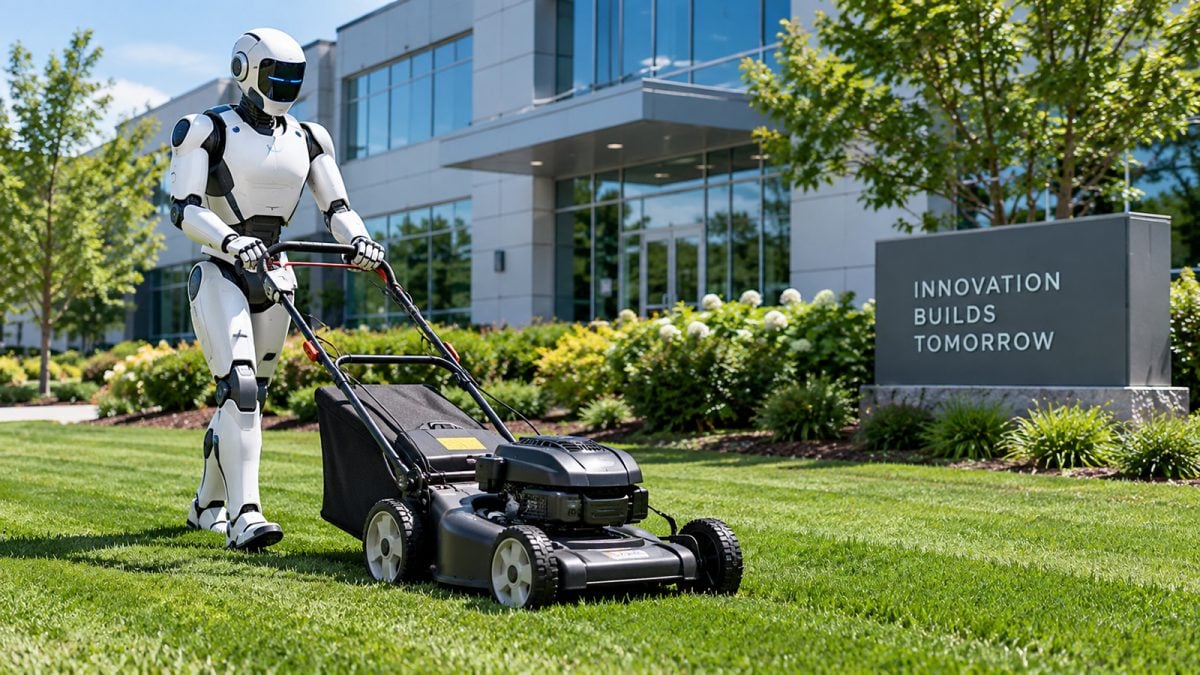

Physical AI Could Make Today’s Buildings Obsolete Tomorrow
Once upon a time, robotics were the purview of future scenarios or of limited applications on manufacturing lines and in fulfillment centers.
According to a recent JLL report, that could be changing, thanks to artificial intelligence. The technology means that robots can move from executing predetermined, repetitive tasks to understanding the environment, learning new tasks and responding in real time.
“The concept of physical AI, the integration of sensors, cameras, and machine learning in systems that perceive, decide and act to perform physical work in the real world, is quickly entering the mainstream.”
It’s also entering the commercial real estate industry.
The first wave is already underway in facilities management. Robots are being tested for cleaning, landscaping, security and maintenance. In other words, repetitive, physical and often difficult-to-staff tasks.
“Choosing to pilot robotics early will build operational knowledge, vendor relationships, and site-specific data that are needed for successful adoption as physical AI products mature,” the report said. “This accumulated knowledge not only benefits FM, but also broader investors and occupier operations.”
JLL sees the evolution occurring in three stages. In the first five years, robots will increasingly handle individual tasks, with humans overseeing their work. Over the following five to 10 years, fleets of robots could work together under AI-driven orchestration systems, changing the facilities-management business model. Beyond 2040, JLL envisions “self-improving” assets in which sensors, robots and AI continuously monitor and optimize building operations.
That middle stage could be particularly disruptive to the FM industry. Instead of simply managing people and contractors, facilities teams could find themselves managing machine fleets. New roles could emerge around robot monitoring, maintenance and orchestration, while robots take on more dangerous or difficult work.
When it comes to real estate, robot fleets need places to charge and space for repairs. Buildings will also require enough power, connectivity and pathways for the machines to move.
As a result, robotics readiness could eventually become another component of asset quality.
But right now, the technology still needs work. A robotic vacuum used in an office saved time by allowing cleaning staff to focus on other work, while robotic mowers reduced operating costs across more than 130,000 square feet of lawn. A robotic floor scrubber, however, wasn’t yet reliable enough to generate savings after accounting for the human work still required.
Additional challenges for deployment include a lack of autonomy, data scarcity, safety and stability and battery life.
While robotics isn’t in full swing just yet, JLL recommended that investors examine occupier industries within their portfolios, assess interior compatibility with power and space needs in owned assets, and even factor robotics-readiness into valuation and underwriting.
The occupiers should plan for fitouts, power and space demand, generate strategies for human oversight and fleet management and research technology requirements for specific use cases across asset types.
In short, “buildings designed or retrofitted today must accommodate autonomous systems, or risk obsolescence in a market where tech-enabled space already commands a premium,” the report said.
Photo: AI Generated
- ◦Lease
- ◦Development


