



National CRE News In Your Inbox.
Sign up for Connect emails to stay informed with CRE stories that are 150 words or less.

Opportunity Zone Impact Expected to be Localized
Part two of a three-part series
By Dave Sorter
Opportunity Zones may be the hot topic of discussion in the commercial real estate world because of the juicy capital-gains tax breaks. But, the effects of this new incentive will likely be limited to the immediate locations of the zones themselves.
“Will Opportunity Zones juice the entire United States economy?” asked Darin Mellott, CBRE’s director of research-America, rhetorically. “No. But they could be transformative in some of the local areas. It could be the extra spark some of these areas need to redevelop.”
Treasury Secretary Steve Mnuchin told The Hill that Opportunity Zones could bring up to $100 billion in investment to these poverty-stricken areas. But, Mellott warned, “this is a highly speculative exercise. I don’t expect this to impact growth in the aggregate.”
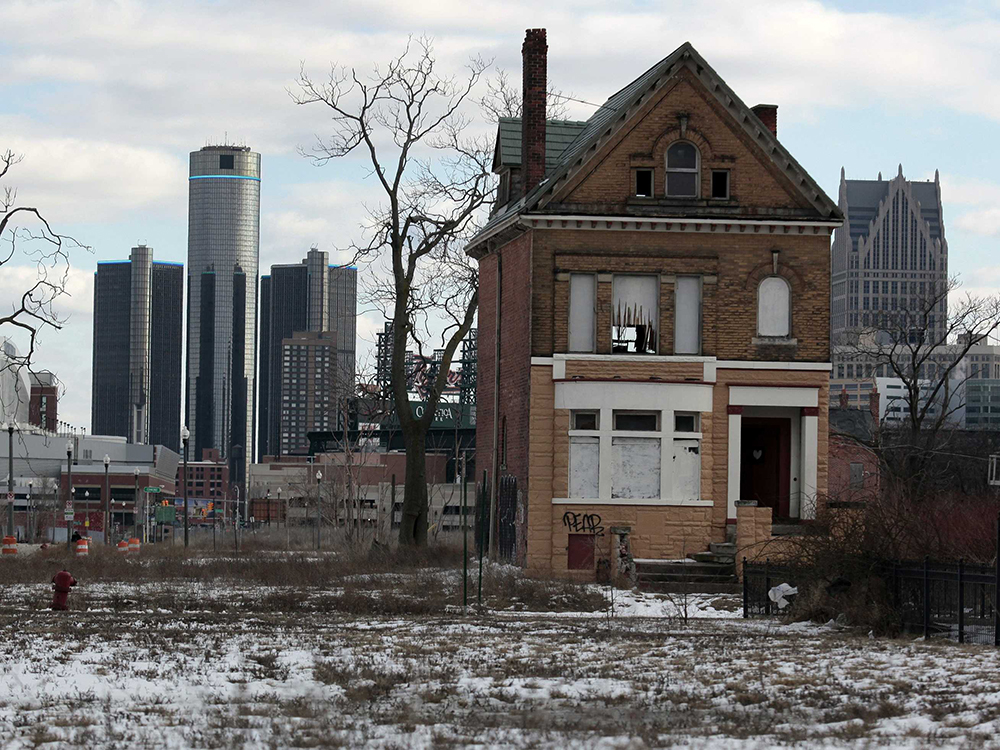
But transforming poor, blighted and underdeveloped areas is the whole point of the Opportunity Zone program, passed by Congress in December 2017 as part of tax-reform legislation. Census tracts designated Opportunity Zones must have a poverty rate of 20% or more, and the median income in the tract can’t be more than 80% of the metro or state level.
Mellott, who co-authored a basic guide to Opportunity Zones for CBRE with fellow researchers Spencer Levy, Matt Vance and Robert Kramp, said investments in Qualified Opportunity Funds (QOF), which fund development in Qualified Opportunity Zones (QOZ), really began to take off when the U.S. Treasury Department issued its guidance concerning the rules of Opportunity Zone investment.
“Treasury did say in its guidance of Oct. 19 that it can be used by investors if they use it in good faith,” Mellott said, even though it was subject to a 60-day comment period and the Treasury Department is expected to issue more regulations in January. The department clarified several rules that benefited investors, such as stating that only building value, not land value, is subject to value-add requirements, and that only properties purchased after 2017 are eligible for Opportunity Fund investment.
While some funds are already at work on various industrial, multifamily and other projects, Mellott said it’s too early to tell which CRE sectors might be dominant in QOZ development.
“There’s been nothing discernible,” he said. “It will be dependent on location. There are Opportunity Zones in close proximity to CBDs that could be good for office development. There are some that are close to distribution networks” that would be conducive to warehouses and other industrial uses. Zones in blighted residential neighborhoods could be ripe for redeveloping or repurposing buildings into affordable apartments.
Then, there are a couple of Opportunity Zones in a completely different ballpark. Literally.
One zone in the Tampa suburb of Ybor City just happens to include the site on which the Tampa Bay Rays would like to build a new stadium, and an Opportunity Fund has been created for just that purpose. Another Opportunity Zone includes the site of the Oakland-Alameda County Coliseum, which could be razed in favor of a new ballpark for the Oakland Athletics.
Further guidance from Treasury will be needed to determine if QOF money can be used for stadiums; rules already prohibit development for “sin businesses” such as golf courses, massage parlors, casinos, race tracks, liquor stores, tennis clubs or skating facilities.
But, the majority of Qualified Opportunity Zones are in the inner city – even if one zone in Pine Hill, NJ includes the Trump National Golf Club Philadelphia, and another includes property owned by presidential son-in-law Jared Kushner. Some 78.15% of zones are in metropolitan areas, according to a study by the Metropolitan Housing and Communities Policy Center. The median household income is $33,345, and the homeownership rate is 44.62%.
As with the types of real estate to be developed, it’s too early to tell which specific geographic areas will succeed and gentrify because of Opportunity Fund investment.
“Not every Opportunity Zone will be flooded with capital,” Mellott said. “But it could be the little extra push some areas need. Time will tell.”
Read Part 1: What is an Opportunity Zone and where are they located?
Next: Trump action could boost Opportunity Zones’ future viability.


