



National CRE News In Your Inbox.
Sign up for Connect emails to stay informed with CRE stories that are 150 words or less.


November’s Negative Multifamily Rent Growth
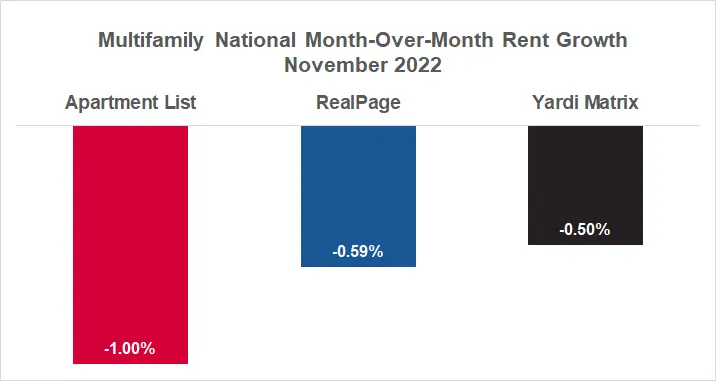
Uncertain consumer sentiment, seasonal norms and overall economic headwinds drove national multifamily rent growth into negative territory in November 2022. Depending on the source, month-over-month rent growth dropped from 0.5% to 1.0%. The most recent Apartment List National Report explained that while this is the time of year during which rents typically fall, “its magnitude has been notably sharper than what we’ve seen in the past, suggesting that the recent swing to falling rents is reflective of a broader shift in market conditions beyond seasonality alone.”
The month-over-month drop also exerted pressure on year-over-year multifamily rent growth. According to RealPage Analytics’ analysis, the effective rent growth drop is “the lowest since June 2021, and down from the peak of 15.7% in March 2022.”
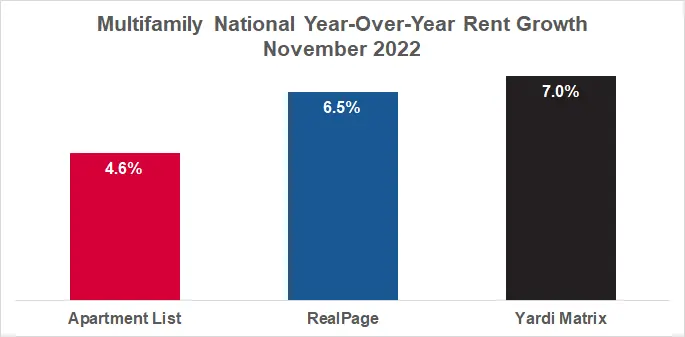
But according to Yardi Matrix’s recent Multifamily National Report, the rent growth pullback wasn’t unexpected, nor is it a sign of a deep recession. Rent increases have far exceeded normal growth patterns for nearly two years,” the most recent Yardi Matrix report said. “Average asking rents increased by 22% nationally between January 2011 and October 2022,” which would be unsustainable.
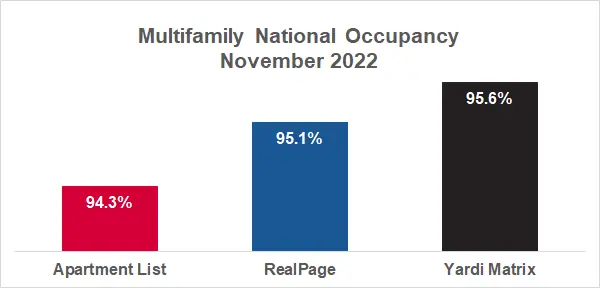
Yardi Matrix also pointed out that occupancy was still “solid,” while RealPage pointed out that the metric fell “a bit below pre-pandemic highs due to weak new-lease demand.” All three sources noted that weakening consumer sentiment, economic headwinds and increased supply (especially in the Class A sector) are the reasons for the current numbers.
For the outlook, all three sources suggested that rents will continue to dip in the coming months, “as we move through the winter slow season for the rental market,” Apartment List noted.
Yardi Matrix and RealPage both believe that renewal rates might be impacted by decreasing rent rates as occupants find other, less expensive options in other places. “That’ll be especially true in Class A apartments competing for higher-income renters, with the historic surge of new supply competing construction,” RealPage added.
- ◦Lease
- ◦Economy


