



National CRE News In Your Inbox.
Sign up for Connect emails to stay informed with CRE stories that are 150 words or less.
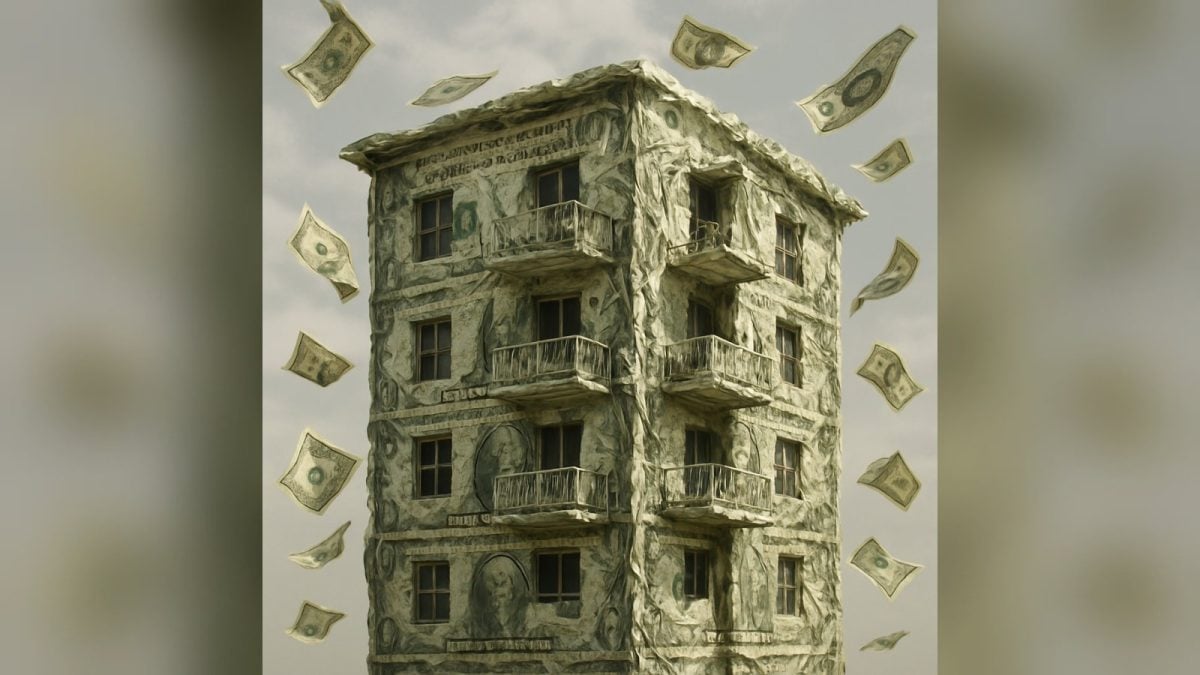

Multifamily Refinancing Squeeze: 41% Higher Costs, $6.8B Equity Gap
Multifamily owners with loans coming due are faced with higher refinancing costs. While this isn’t news, Newmark put numbers to the issue, indicating that loans maturing in Q3 2026 carried an average interest rate of 4.04%, compared to 5.69% on new loans at an average cap rate of 5.5%, resulting in negative leverage.
At the same time, the 165-basis-point gap could increase interest costs by about 41% on the same loan balance.
Shrinking Spreads
Multifamily borrowers have benefited from support and liquidity from Fannie Mae and Freddie Mac, which have allowed them to pay smaller premiums above benchmark rates than borrowers in other sectors, Newmark noted.
But now, there’s little room left for them to compress, meaning that borrowers have limited protection against further benchmark rate increases.
At the same time, much of that debt has yet to re-price. “Roughly 81% of securitized multifamily debt maturing before 2029 carries an interest rate below 5%,” Newmark said.
Enter Equity?
In a separate analysis, CRED iQ estimated that borrowers with multifamily loans maturing through 2028 would need to put up about $6.8 billion in new equity to refinance.
In its analysis of every agency and CMBS loan maturing between October 2026 and December 2028, CRED iQ found that 23% of those loans, representing 31% of the balance, required fresh equity to refinance. “The median shortfall is 15% of the loan, or about $25,000 per apartment,” CRED iQ said.
Nor is the rise in SOFR helping; when it increased from 3.62% to 3.85% in September, 178 loans with $4 billion in balance fell below a 1.25x debt service coverage test, adding $846 million to the equity gap, CRED iQ said.
“Each further 25 basis points adds roughly $1.0 billion more,” according to CRED iQ.
“Two more hikes would leave 39% of maturing multifamily debt short of a refinance.”
Additionally, loans originated in 2021 and 2022 with a median coupon of 3.35% are facing refinancing rates approximately two to three percentage points higher. “Some 46% of them, and 57% of their balances need new equity,” according to CRED iQ
Prices, Not Distress
While there is the ongoing narrative about a wave of maturities triggering distress, that hasn’t really happened.
What’s being impacted are the property prices.
Newmark said that approximately 39% of multifamily properties sold traded below their previous inflation-adjusted purchase price, up 6% from late 2021.
“We expect that share to remain elevated as borrowers refinance and adjust to the higher interest rate environment,” Newmark said.
The Ongoing Normal: Higher for Longer
That higher-interest-rate environment is now a reality.
Recent CBRE research indicated that the 10-year Treasury yield has stayed near or above 5% since early September, marking its highest level since 2007.
“The pressure is greatest on multifamily and industrial asset pricing, where cap rate spreads to the 10-year Treasury yield are historically compressed at less than 100 bps,” CBRE noted, adding that cap rates are expected to increase by at least 40 to 60 bps in the near term. “Rent growth likely will not offset the higher cost of debt capital,” the firm observed.
At the same time, CBRE expects long-term rates to stabilize and begin drifting lower in 2027, prompting the Federal Reserve to cut short-term rates in 2028.
“All of this underpins our thinking that following a few slower quarters, investment volumes should pick up in H2 2027, barring any macroeconomic shocks,” CBRE said.
Source: AI Image/Shutterstock
- ◦Financing
- ◦Policy/Gov't


