



National CRE News In Your Inbox.
Sign up for Connect emails to stay informed with CRE stories that are 150 words or less.
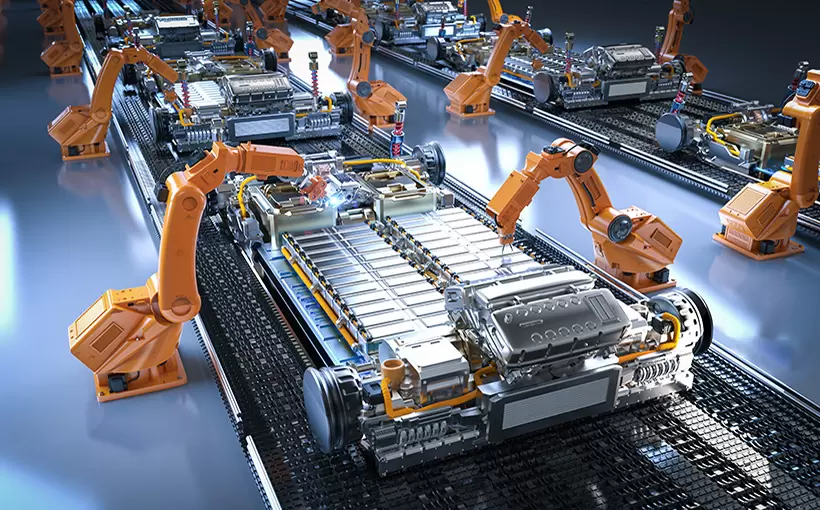

Manufacturing Continues its Comeback

At one point in the not-so-distant past, the United States and North America were supported by “service” and “knowledge” economies. Goods production was automated, with most jobs coming from professional services and information technology.
The pendulum is shifting back, however. Savills’ recently released Manufacturing Report noted the following:
- Manufacturing announcements and jobs slowed in 2024 but are still historically high
- Market conditions are softening while labor and real estate costs stabilize
- Clean energy projects have the lion’s share of manufacturing announcements
According to Mark Russo, Savills’ Vice President, Industrial Research, a couple of surprises in the report included increased manufacturing announcements and activity in Eastern Canada, with Stellantis, Volkswagen, Ford, Honda and GM developing electric vehicle and battery manufacturing in this region. “When you look at the scale of these investments, Ontario is right there alongside the U.S.’s so-called “battery belt” hubs that have been dominating the headlines,” Russo told Connect CRE.
Surprise number two is the recent uptick in clean energy-related announcements. “We’ve seen them more than double compared to 2022 while new announcements related to EVs and semiconductors have actually started to slow down,” Russo said.
The Geographic Appeal
The ever-present real estate adage focuses on “location, location, location.” This is true of the current manufacturing situation. The report noted that eight states accounted for 47% of new manufacturing jobs, over 6.3 billion square feet of industrial space and 197 million more under development. Mexico is also experiencing growth thanks to nearshoring strategies and lower labor costs.
Russo explained that infrastructure, labor, power, real estate and incentives are at the forefront of site-selection decisions. “States with availability of land, lower costs of living, strong logistics connectivity and business-friendly governments are seeing the most traction,” he said.
Other geographic selling points for various companies are:
- Proximity to automotive facilities for EV production
- Partnerships with universities for semiconductor and chip production
Furthermore, “power availability is rapidly moving up the list of top concerns, as those manufacturing sites are now competing for resources, not just with each other, but also with data centers,” Russo commented.
What the Future Holds
The report’s 2025 outlook focuses on the following trends:
- An increase in U.S. protectionist policies should continue to drive reshoring efforts. This is likely the case, no matter who wins the presidential election, as both candidates support protectionism in manufacturing.
- Mexico retains the advantage in manufacturing growth thanks to location and labor advantages.
- There will be plenty of positive real estate market impacts from large-scale projects.
Russo explained that while manufacturing has slowed since its 2022 peak, reshoring is just starting. “Over the long term, as North America shifts toward producing more and importing less, supply chains will evolve,” he added. This trend could mean more manufacturing hubs while potentially reducing the dominance of traditional port markets.
This requires the real estate industry to take note. It also means local governments should prepare. “Beyond offering incentives, focusing on infrastructure, utilities and workforce development is crucial,” Russo pointed out. Skill training programs help prepare the local workforce.
Then, there is the need for more workforce housing. “Manufacturing growth often brings population growth,” Russo said. “Communities should be proactive in zoning, planning and advocating for housing to support this expansion.”
- ◦Development
- ◦Economy
- ◦Policy/Gov't


