



National CRE News In Your Inbox.
Sign up for Connect emails to stay informed with CRE stories that are 150 words or less.

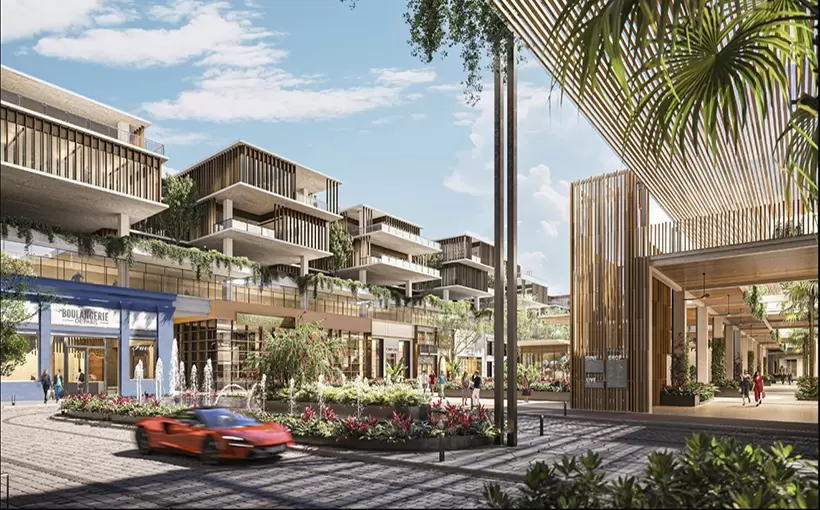

Mall Revitalization 2.0: Q&A With RDC’s Sean Slater
Pictured: The Glades, Boca Raton, FL. Mall redesign by RDC.
Shopping malls have been in the news for several years as either dead or revitalized. Connect CRE posed a series of questions to architect Sean Slater, RDC’s Senior Principal, about the need to consider community with mall revitalizations.

Connect CRE: You’ve mentioned the importance of community engagement when discussing mall redevelopment. What exactly does that entail?
Sean Slater: To answer that, let’s discuss a little history. Several factors fueled the mall boom of the 1960s through the 1980s. One of those was a tax law signed by Congress in 1954 that allowed for greatly increased depreciation schedules for new construction. As soon as a new freeway interchange or major housing project was built, mall developers built a mall, immediately depreciated value and moved to the next major interchange or housing development.
This left communities susceptible to white flight and, in more inner-city and complicated areas for development, prone to failing malls and eventually a complete divestment on the part of the original developer. These so-called dead or dying malls were a hole in the fabric of the demographically changing neighborhoods and left little ability for these communities to use the land for social spaces, housing or public service facilities like libraries, schools, medical facilities and houses of worship.
However, a complete transformation can occur by engaging directly with the often diverse and vibrant communities surrounding these sites.
Connect CRE: How does this work?
Sean Slater: We advocate using the public infrastructure and the edges of the mall sites to engage with the community. These malls have street addresses and are often surrounded by dense family neighborhoods, so why not engage at the street level? Instead of placing suburban multifamily housing in former parking lots, why not create lively and engaging urban experiences at the edges first? By slowly dissolving the memory of the mall, we believe that the community can evolve and occupy these sites in a way that reflects their demographics and is strong, long-lasting and engaging.
Connect CRE: Can your suggestions be used for all indoor and outdoor malls?
Sean Slater: No, not all malls are built the same, and many do not have the neighborhood adjacencies that lend themselves to community engagement. Many may evolve to be light industrial, logistics, server farms, or other uses rather than housing and smaller-scale retail. RDC did a study of 250 malls and their various characteristics, like ring roads that isolate the mall from the surrounding community. We learned that about half of those malls lend themselves to a more sensitive redevelopment strategy, as described here. But almost half of those did not and require a deeper evaluation of highest and best use.
Connect CRE: What is the takeaway?
Sean Slater: There’s a better way. Developers built malls for booming new communities. As those areas have evolved, the malls have often become a detriment to the growth of the community rather than an asset. Instead of recreating the “anywhere-ness” of the malls with cookie-cutter housing, we advocate studying and matching the growth patterns surrounding these sites with an eventual goal of dissolving all discernable boundaries between the two.
- ◦Development


