



National CRE News In Your Inbox.
Sign up for Connect emails to stay informed with CRE stories that are 150 words or less.
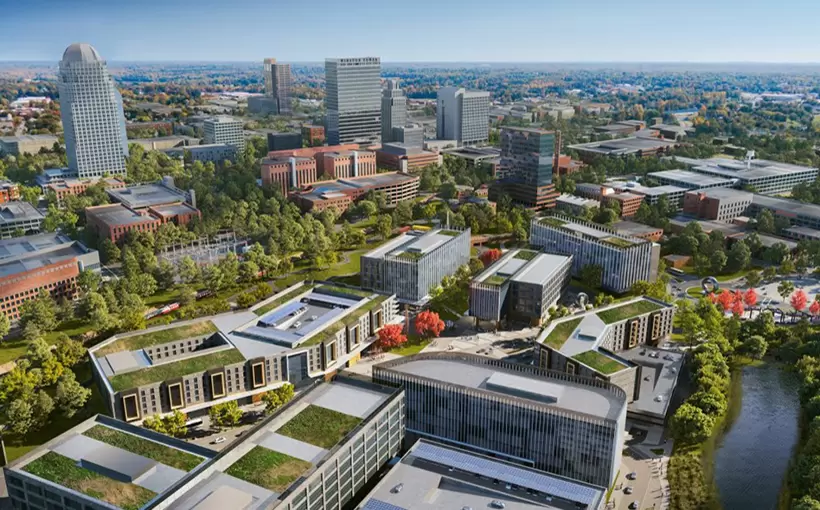

Making a Success of Innovation Districts
Pictured: Innovation Quarter, Winston-Salem, NC
According to a recent survey by the Association of University Research Parks (AURP) and Stiletto Consulting Inc., more than two-thirds of North American university-based research parks and innovation districts report developing or gearing up to create major building projects.
And according to a recent article in Urban Land Magazine, some of those development projects could fail, especially if they lack “the right funding, programming and governance.”
The article isn’t entirely grim, however. In researching the topic, experts from the ULI, The Brooking Institutions and the Global Institute on Innovation Districts provided suggestions to help move toward innovation district success.
But First, The Struggle
The article explained that part of the reason for an R&D park struggles can be placed on the current hybrid work structure. Specifically, “in the post-pandemic era, the isolated research park is dead,” the article’s authors pointed out. “Long commutes to lonely desks or lab benches have now been replaced by vibrant live-learn-work innovation districts.”
Another trend is that “siloed” university, government and industry research centers are a thing of the past.
Tips for a Flourishing District
The Urban Land Magazine article offered the following four tips to help create and maintain a thriving innovation district:
#1: Ensure an authentic identity
In other words, put a clear identity, mission, and focus in place rather than putting a bunch of research buildings in the same space and hoping for the best. For example, North Carolina’s Innovation Quarter focuses on regenerative medicine, while The Pearl (also in North Carolina) will be in place to guide equitable health outcomes.
#2: Balance planning, funding and governance
Many of the district leaders approached by the article’s authors explained that “strong private-sector leadership is essential for success,” even if public capital from universities and government agencies is involved. “The right funding and governance should consider the importance of creating covenants for continuing maintenance of the innovation district, including for PPPs, governance, and the district’s overall operating model,” according to the article.
#3: Ensure the right people, places and programming
In other words, be selective with occupiers, ensuring what the article called “an intentional mix.” Also important in a successful innovation center is a physical design that takes advantage of a viable urban locale, the addition of attractive spaces and amenities and cutting-edge infrastructure. Professional services, venture capital and other programs and services should be in place to attract and lure growing organizations to the location.
#4: Pay attention to social, economic and environmental impacts
Brooklyn Navy Yard in New York City offers an equity incubator focused on helping start-ups and businesses owned and operated by people of color. Also in New York is the New York Climate Exchange, focusing on green economy development and climate crisis solutions. “Leading districts focus their occupants, design, and programming to make an impact, including job and venture creation, workforce development, experiential learning opportunities for students, and applied research,” the article added.
- ◦Development


