



National CRE News In Your Inbox.
Sign up for Connect emails to stay informed with CRE stories that are 150 words or less.
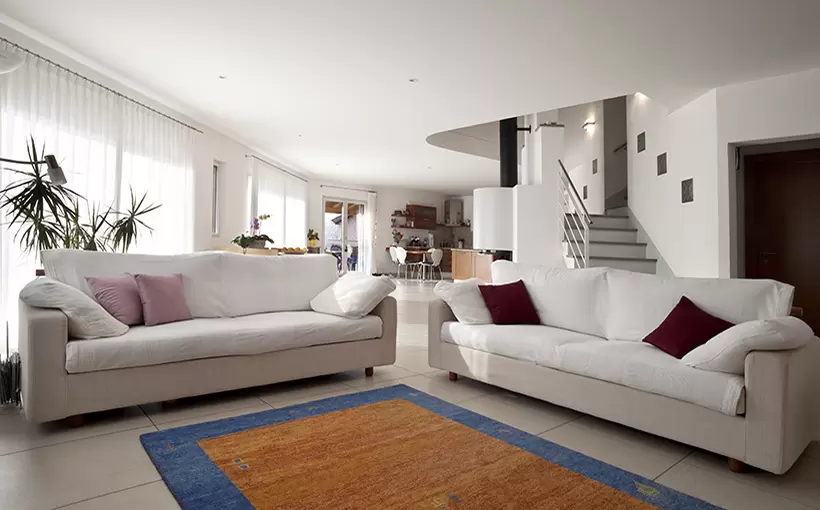

Large Apartments Make a Comeback

Smaller apartments are out. More space is in. At least according to a recent article published by RentCafe. The metrics say that the average size of U.S. apartments in 2023 stood at 916 square feet, following a “steep decline” to 899 square feet in 2022.
“This increase can be attributed to more spacious two- and three-bedroom apartments opening their doors last year as developers aimed to meet renters’ need for more space,” the article said. This is in contrast to 2022, “when the average size of apartments fell sharply due to a historically high surge in smaller units being built.”
Trends Drive Size
Alexandra Both, real estate writer and research analyst with RentCafe, told Connect CRE that hybrid work policies have been a trend driving more spacious apartments. “As people continue to work from home, they need extra space for desks, laptops and screens,” said Both, who authored the article.
Another driver of the race to space? “The limited supply of single-family homes, especially starter homes, and rising home prices,” Both said. Other factors, like high interest rates, “keep younger generations renting longer,” she added.
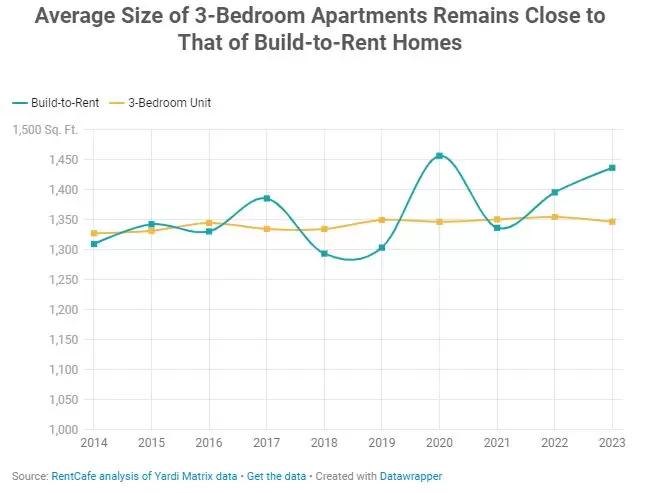
How large are these apartments? The article said that the average size of a three-bedroom apartment rivals that of a build-to-rent home.
Location Matters
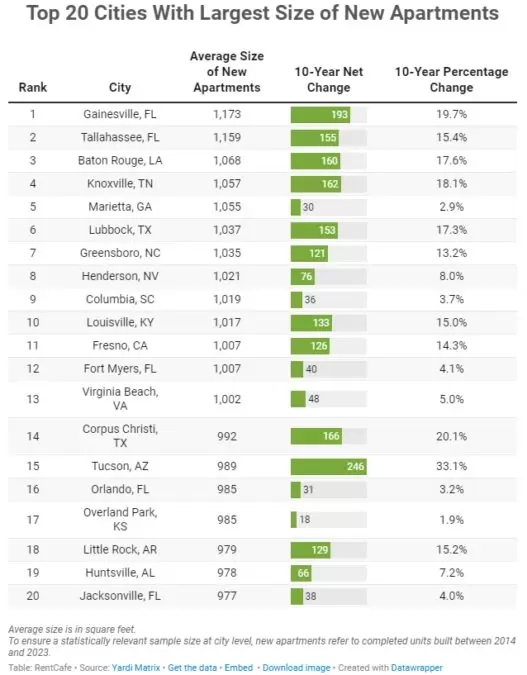
Another interesting fact from the article is that many of these larger units are being built in the secondary and tertiary markets. Gainesville, FL, topped the list of the top 20 cities with the largest new apartments, followed by Tallahassee, FL, Baton Rouge, LA, Knoxville, TN and Marietta, GA.
Both explained that this trend is due to space and regulations. Specifically, there’s more space in secondary and tertiary markets in the South and Southeast than in major coastal areas. “Zoning laws are also less restrictive in these southern locations, with fewer barriers to development,” she added. “This has allowed for smoother apartment construction and the ability for builders to ‘go big.’”
Then there is the high demand. Both pointed out that people are attracted to the Southeast and South because of affordable housing costs and quality of life. “Additionally, many cities building larger apartments have a strong college presence, with student housing that can accommodate roommates in larger units,” she said.
Smaller Units Stick Around
The increase in apartment size doesn’t mean the smaller studio and one-bedroom units are going away. Both explained that studios and one-bedroom apartments made up most deliveries in 2023. “These floor plans are excellent options for young renters starting their careers in dense job hubs,” she said. “Downsizing baby boomers and solo-renting boomers also drive demand for the smaller units.”
Will larger apartment units continue trending? Both said there’s no single answer to this question. “It depends on competing variables, like interest rates, construction costs, zoning and urban requirements for multifamily housing and shifting demographic needs,” she said.
Still, larger apartments will continue to be in demand as long as affordable houses are lacking. “They prioritize space and comfort, particularly after the pandemic,” Both observed. “This highlighted the importance of homes as central hubs for work, leisure and social activities.”
- ◦Lease
- ◦Development


