



National CRE News In Your Inbox.
Sign up for Connect emails to stay informed with CRE stories that are 150 words or less.
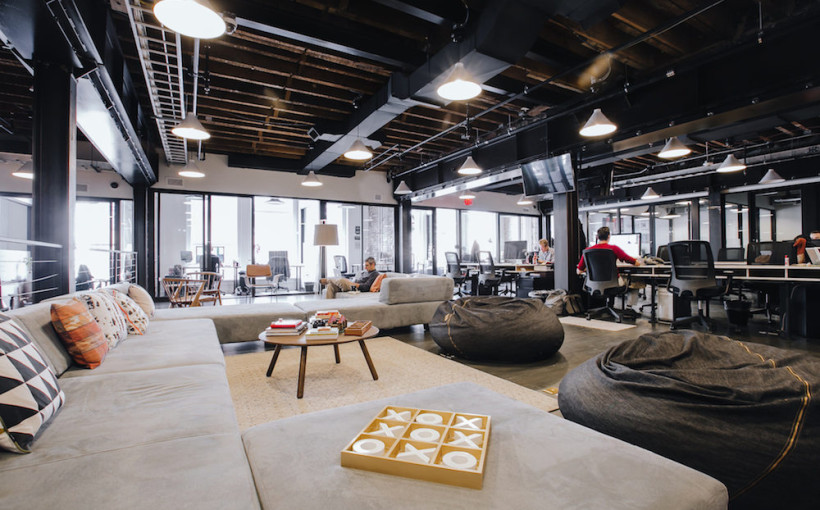

Is WeWork Watching You?
WeWork Cos. has made a huge name for itself as the leader in co-work spaces. And now, the New York City-headquartered company is working toward another revenue source: That of collecting and analyzing data about how people move and operate within offices. The data collection and analysis are part of WeWork’s effort to expand its consulting services and to help clients rely on data when it comes to office design and function. However, as with any kind of Big Data collection, privacy advocates are concerned.
Within the past year, WeWork acquired Teem, which makes software that provides data about conference room bookings. And more recently, in February 2019, the company acquired Euclid, which tracks smartphone operations in retail spaces. Finally, WeWork is testing thermal and motion-detector sensors, which analyze how workers intend to use spaces, versus how they actually do so.
At this time, WeWork is testing the technology on its San Francisco and New York City employees. It also ran pilots for several large clients, and used the data to help those clients make decisions about renovations and new office space.
While WeWork indicated that collected data is secure and anonymous, Michelle Miller with worker organization platform Coworker.org isn’t so sure. “The first intended use of a data set is not the only way a data set ends up being used,” she told Bloomberg Businessweek. ACLU civil rights attorney Jacob Snow agreed, pointing out that, thinking through how information can be combined with other information is important.
Furthermore, there are questions concerning Euclid, which was launched in 2010. In 2014, Philz Coffee dropped Euclid over privacy concerns, and how customer analytics might be deployed. This is because Euclid would passively detect smartphones with Wi-Fi enabled, collect the phones’ addresses, and use those unique addresses to draw “some conclusions based on other data, like how long you stay near, or in, a store, or even where you stand,” noted a 2014 TechCrunch article.
However, WeWork’s Shiva Rajaraman told Bloomberg Businessweek that it would be easy for people to opt out of Euclid’s tracking. He added that the data would be important as, for example, a tool to measure demand for private phone booths. The data, he said, is the only way to know for sure if there is a need for more of such booths, adding that “we don’t know, unless we analyze the situation.”
For comments, questions or concerns, please contact Amy Sorter


