



National CRE News In Your Inbox.
Sign up for Connect emails to stay informed with CRE stories that are 150 words or less.

Industrial Rents Just Keep Climbing
To gauge the disparities in performance of industrial during the pandemic compared to other property types, take a look at rent trends. Rents in many office markets declined, while apartment rents nationally began slipping 18 months ago before returning to year-over-year growth in late 2020 and into this year. For industrial, by contrast, the trend has been steadily upward all along.
Taking rents for new construction have increased an average of 24.3% since 2019 in such industrial hotbeds as the Inland Empire, Northern New Jersey and Dallas/Fort Worth, according to Newmark research. In some of these markets, the rent growth has nearly doubled during that period.
“Rents for modern warehouse product are surging, a trend acutely felt in the most desirable logistics locations (prime submarkets) across the country,” writes Lisa DeNight, director, national industrial research with Newmark. “In at least six of the nation’s prime industrial submarkets, average taking rents for new construction are poised to cross the $10.00/SF mark – or have already crossed it.”
The fastest growing of these prime submarkets in terms of taking rents for new construction is the Inland Empire, where the price per square foot has increased 51.6% since 2019 to $10.20. The priciest new construction is in Northern New Jersey, in the epicenter of the New York metro area, where taking rents on new industrial product now average $18.50 per square foot.
DeNight notes that a prime submarket is “often centrally located within a metropolitan area and offers access to critical infrastructure, including airports and seaports, major highways and rail lines – fundamental attributes for tenants focused on reducing transportation costs and transit time.”
With all of the new development that is occurring, the increase in supply hasn’t been enough to surpass demand and therefore dilute rent growth. “Supply, especially modern product, is typically limited in prime submarkets, contributing to outsized rent growth for new construction,” writes DeNight.
By and large, tenants have been willing to pay more on rent because they’re paying less at the pump. “The substantial savings on transportation costs achievable in these key locations allows occupiers to absorb escalating rents, which make up a smaller share of total operating costs,” DeNight writes.
Looking ahead, she notes, “given the combination of high rents and limited development, infill and redevelopment projects will become increasingly common in prime submarkets. Tenants that cannot find suitable space or are unable to pay elevated rents will continue to spill over into adjacent submarkets, helping to drive rent growth across market geographies.”
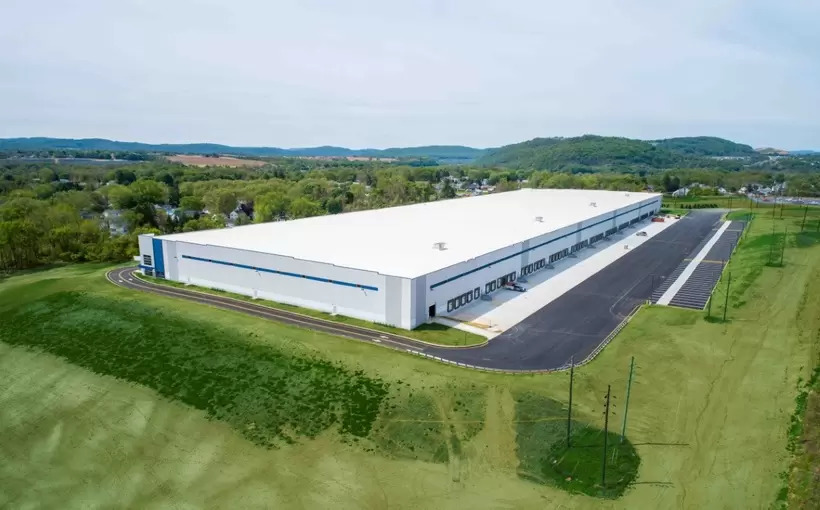
Pictured: Bridge Point 78 in Phillipsburg, NJ.
- ◦Lease


