



National CRE News In Your Inbox.
Sign up for Connect emails to stay informed with CRE stories that are 150 words or less.
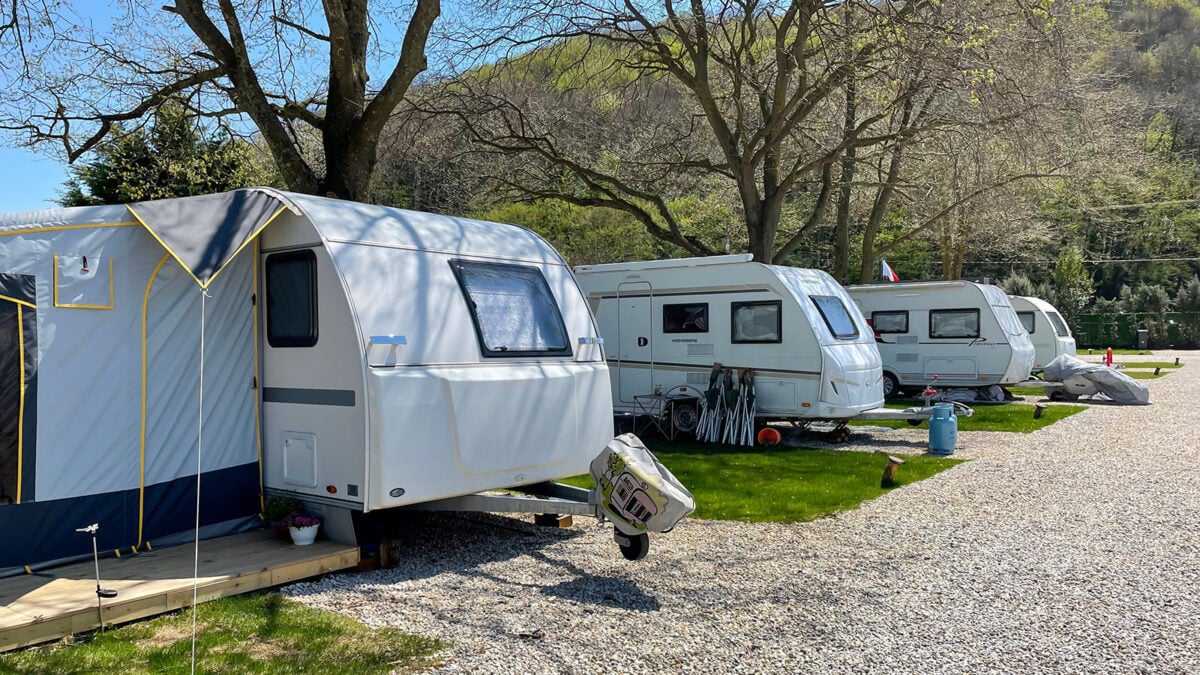

Housing Affordability Through RVs and Travel Trailers
Just about everyone connected with politics, finance, think tanks and real estate developers and owners has had the conversation about housing authority. The solutions have ranged from zoning reform and streamlined permitting to adaptive reuse, rental assistance programs and community land trusts.
A recent article in the Urban Land Magazine offered another solution: Travel trailers, recreational vehicles and tiny homes.
The idea offers a compelling solution to a growing problem. For one thing, the RV Association reported that approximately 486,000 people live full-time in an RV, twice as many as in 2021. While many people embrace full-time RV living for adventure, others do so because they can’t afford permanent housing.
However, the problem is that RVs and travel trailers aren’t compliant with the U.S. Building Code, meaning they can’t be used for year-round housing. They’re classified as vehicles, rather than housing, so not under the auspices of the U.S. Department of Housing and Urban Development. Furthermore, federal regulations require that RVs have a sticker stating they aren’t to be used year-round.
However, there are some RV communities in states such as Arizona, Florida and Texas where zoning laws are somewhat more lenient. They tend to be located in more rural areas under county jurisdiction rather than in cities. As such, they end up supporting park model homes, which are classified as RV semi-permanent dwellings permanently parked.
Additionally, the experts quoted in the article are advocating for removing the “no year-round” sticker on RVs and increasing the availability of very small homes at lower prices.
The article said that the International Code Council and the Tiny Home Industry Association are updating the International Residential Code’s Appendix AQ, which governs tiny home construction, to create a stand-alone standard for tiny home construction.
The article explained that park model homes designed for year-round use in states or municipalities adopting the new standard would be certified for year-round use. Sources also suggested that HUD and the Manufactured Housing Consensus Committee adopt standards that make it less cumbersome for tiny homes to be built to the HUD Code. This could help manufacturers achieve greater economies of scale in building park models or tiny homes.
- ◦Economy
- ◦Policy/Gov't


