



New York & Tri-State CRE News In Your Inbox.
Sign up for Connect emails to stay informed with CRE stories that are 150 words or less.


HFF’s Mikula on Today’s Debt Market
Connect New York is just around the corner on April 30! Click here to register and attend the event.
By Dennis Kaiser
With the current real estate cycle in its ninth year, there are many looming questions about the debt market and lenders’ reactions and behaviors. In our latest 3 CRE Q&A below, HFF Senior Managing Director Jon Mikula discusses the current activity the firm is seeing around the country as well as in New Jersey.

Mikula
Q: HFF placed more than $50 billion of mortgages in 2018, a record for the firm. Are you seeing lenders pull back this year based on how far along we are in the current cycle?
A: Not only did HFF have a record year in loan originations, but so did the industry with $549 billion of transaction volume in 2018. That said, there were winners and losers. The agencies and the insurance companies were up approximately 15% each from the previous year and both hit all-time highs. Bank and CMBS lending was down about 10% from the previous year, as competition was fierce. Debt funds and those with a bridge loan focus (i.e. insurance companies) are competitively chasing opportunities that banks would ordinarily win. Additionally, these bridge lenders are competing effectively with the traditional lenders on leverage and pricing.
One differentiating factor for our current cycle is the composition of lenders, which is significantly more diversified than it was in 2007 when CMBS business represented 54% of all loans. The bottom line is, while there is no shortage of liquidity in the debt space, the market remains inefficient for both pricing and structure, which creates great opportunities for borrowers.
Q: With all the construction of industrial and multi-housing in New Jersey, is anyone concerned about where the world will be in two to three years when these projects come on line with the prospect of higher permanent rates?
A: It is true that there is a significant amount of both industrial and multi-housing inventory currently in various stages of construction or lease up, and we have been fortunate to have been involved in the capitalization of many of these transactions. As of this writing, the yield curve has flattened, with the gap between short-term yields (one-month UST) and longer-term yields (10-year UST) compressing to only approximately eight bps. Meanwhile, 30-Day LIBOR is actually higher than the 10-year U.S. Treasury.
With rates at historic lows, many borrowers are looking to hedge the take-out of their construction loans via forwards, to take advantage of current all-in rates, lock in long-term yields and avoid the potential for a cash-in refinance should rates increase during the construction term. On a traditional, open-ended construction loan, if rates rise, there is an inflection point whereby a lender’s debt service coverage covenant could force a paydown. Similarly, many borrowers are also focused on securing construction-to-permanent financing, where they can lock in a fixed rate for up to 20 years, including the construction period.
Q: Industrial seems to be the darling at the top of everyone’s list. Do you think we are setting ourselves up for oversaturation?
A: I do not. We are a point in our economy that we have not seen before relative to e-commerce. New Jersey is the most densely-populated state in the union (approximately 15% more densely-populated than even the runner-up, Rhode Island). As a result, the need for e-commerce distribution is robust, especially as distribution centers continue to shift their focus from distribution to stores to distribution direct to consumers. New Jersey specifically, which is home to one of the most active ports in the nation and proximate to major population centers across the Northeast and Mid-Atlantic, remains unable to meet the demand for regional distribution and logistics facilities. We have seen markets like Piscataway transform from an afterthought into a location where national developers are building spec and leasing up before completion.
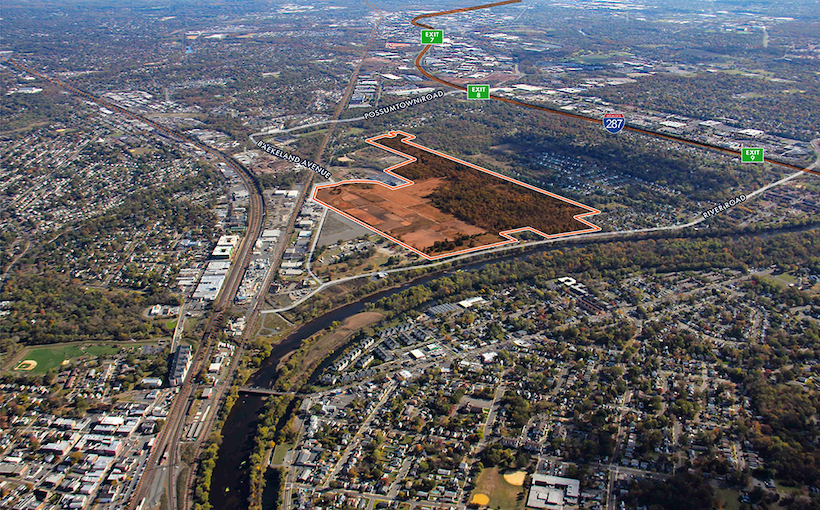
Recently, HFF assisted The Rockefeller Group in securing JV equity and debt for their 2.2-million-square-foot project in Piscataway. Five years ago, no one would have gone that far north on Interstate 287 to build state-of-the-art industrial. Today, not only has The Rockefeller Group seen success there, but so has LaSalle, Black Creek and others. The result of the supply shortage in the region is a run-up in land values and rents. We recently sold a vacant site adjacent to Newark Airport for over $100-per-square-foot FAR, a new record. Proforma rents for the project will be in the teens PSF. Lenders are seeing this dynamic and are now recognizing the new norm for our market, which is far from overbuilt.
For comments, questions or concerns, please contact Dennis Kaiser
- ◦Financing


