



New York & Tri-State CRE News In Your Inbox.
Sign up for Connect emails to stay informed with CRE stories that are 150 words or less.



GUEST COMMENTARY: NYC’s New Tenant Laws May Ultimately Only Benefit Wealthy Renters
By Maria Belen Avellaneda
The recently-passed Housing Stability and Tenant Protection Act of 2019 has become the subject of an intense amount of public debate, as its proponents believe it will protect tenants amid rising rent costs and wealth inequality, while opponents believe it will stymie landlords, the real estate industry and the city economy, ultimately hurting the renters it was meant to protect.
There are 5,500,000 people living in rental units in New York City and the real estate industry is foundational to the city’s economic growth and tax revenue. The fear is that if this industry is targeted by lawmakers and adversely affected by regulation, the market will become less competitive and investment will go to other, more inviting cities. This in turn will affect employment, income and product growth.
Less attention, however, is being paid to the way in which the laws will adversely affect low- to middle-income renters directly, while actually benefiting wealthier renters who never needed the law’s protection in the first place.
Rent-Stabilized and Rent-Controlled Units for the Wealthy
There are approximately one million rent-stabilized or -controlled apartments in New York City. The state’s first rent control laws date back to 1920, and the city’s began in 1943, the longest running in the U.S. The state’s current laws were passed in 1974 and have been extended and amended throughout the intervening years, but the 2019 act extends them permanently while making tenant protections stricter.
To prevent abuses, the law previously stipulated that rent-stabilized apartments would revert to being market-rate once the rates hit $2,774 per month and the tenant’s income exceeded $200,000 for two consecutive years. The latter point prevented high-income individuals form enjoying unfair benefits. However, the new law eliminates that provision, allowing high income earners to take advantage of units that could be rented by families being priced out of market-rate units. Meanwhile, with market-rate units, there is simply no differentiation between affordable rents, which again benefits wealthy tenants.
Landlord Exposure Will Hurt Lower-Income Renters
Application fees, including credit checks, are now limited to $20, with the rest of the fees to be paid by the landlord. While this seems to benefit the tenant, landlords will simply increase rents to compensate. It could also force management companies to cut personnel to cover the loss of revenue. The fees may not seem like much money, but it adds up. For condos and co-ops, for instance, a sublet package may require a $200 credit check, $180 of which will have to be covered by the owner. Instead of one-time fee, the increased rent will be in perpetuity.
When it comes to deposits, landlords and owners can only charge up to the amount of one month’s rent for the security deposit and advanced rent each. However, for individuals who are a major credit risk or who have no U.S. credit (e.g. foreign renters with no rental history in the U.S.), landlords cannot mitigate their risk. Under the new law, even pet deposits are illegal if they push the total above one month’s rent on either security or advanced rental deposits.
Even if a tenant is evicted (after up to one year of postponement) for violation of the lease, the burden of proof is on the landlord to recover damages. The landlord can eventually rent the property again, but only at market value or the previous tenant’s rate, whichever is lower. Once a new lease is signed, this terminates the old lease and is considered to have mitigated the damages against the previous tenant. This could equate to significantly more than a year of lost rental revenue. This will only further lead to increased rents on other units, and major cost-cutting in tenant services and further loss of facility management jobs.
This increased landlord exposure will hurt vulnerable renters, particularly those with no credit or rental history, as owners may simply not rent to them. This puts immigrants, young people and low-income renters in a precarious position, as they must seek out U.S.-based guarantors with annual incomes exceeding 80 to 100 times the monthly rent—unlikely among renters from low-income families—or third-party guarantor firms, which charge high annualized fees that, unlike security deposits or advanced rent, won’t be returned to renters as cash or a month of residence. Again, this puts renters with wealthier backgrounds at a major advantage as they compete with lower-income renters.
While the impetus behind the law—protecting vulnerable and low- to middle-income renters in an increasingly expensive city—is admirable, the state’s legislators simply did not look at all the potential effects, particularly how they can backfire on the very people lawmakers claimed to want to protect in the first place.
Maria Bellen Avellaneda is both a residential broker for Compass, specializing in family office and high-end developer clients, and a multifamily investor in New York City and Latin America.
Connect National Investment & Finance is coming to New York on Oct. 23. For more information, or to register, click here.
Connect Opportunity Zones will be presented for the first time on Oct. 23 in New York. For more information, or to register, click here.
For comments, questions or concerns, please contact Paul Bubny

Apartment buildings for sale
Check out the latest properties available on apartmentbuildings.com
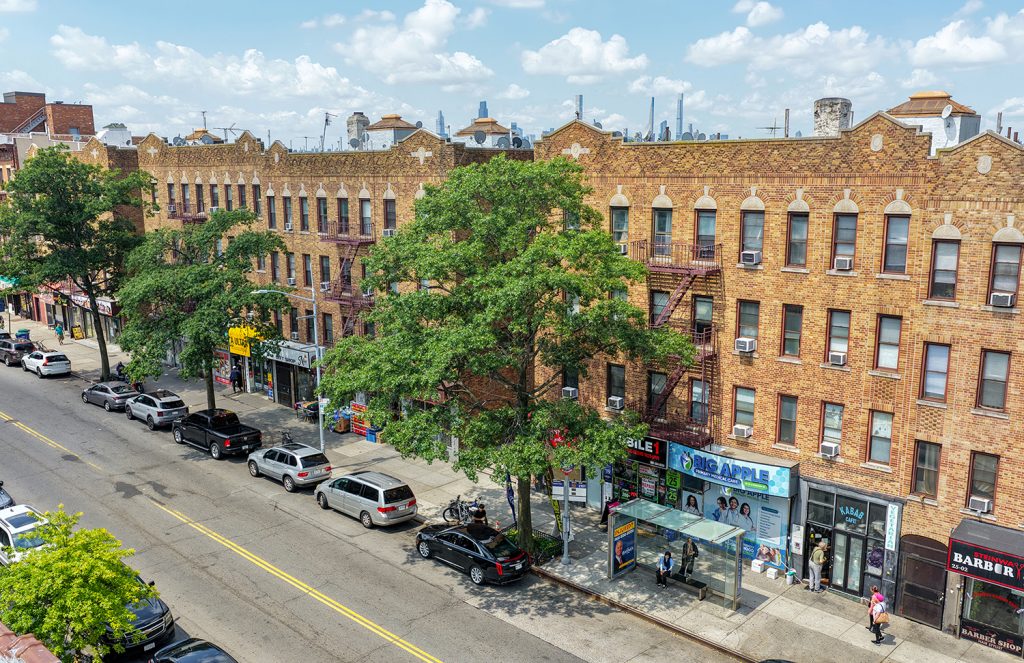
Apartment Property for Sale in Astoria at 25-12 Steinway Street
Astoria, NYNew York & Tri-State
Learn MoreListing Status: Available Listing Type: Distressed sale No. of Units: 37 Building Size: 30132 Sq ft Opportunity Zone: No 
REO | 76 Units Multifamily Property
New York, NYNew York & Tri-State
Learn MoreListing Status: Available Listing Type: Auction Price: $700,000 No. of Units: 76 Year Built: 1927 Building Size: 63750 Sq ft Lot Size: 21910 Acres No. of Stories: 5 Opportunity Zone: No Price per unit: $9,210


