



Chicago & Midwest CRE News In Your Inbox.
Sign up for Connect emails to stay informed with CRE stories that are 150 words or less.

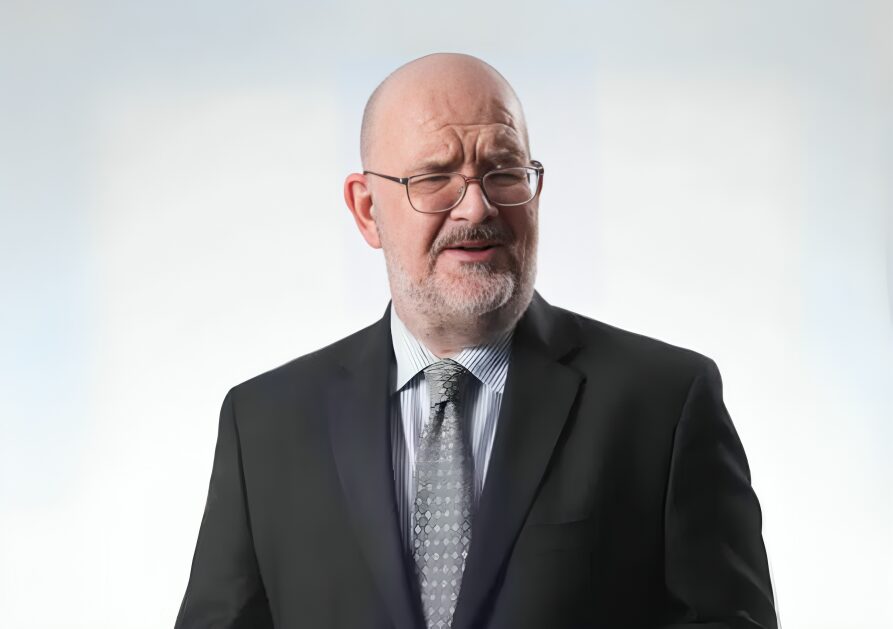
For NAIOP CRE Converge, NAI Hiffman’s Adam Roth Details “the Rule of 1.5”
NAI Hiffman EVP Adam Roth has a guideline for spotting trends and events in transportation that will influence the industrial real estate market: “the rule of 1.5.” In other words, that which affects transportation, positively or negatively, will impact industrial real estate about a year and a half later.
For NAIOP’s 2022 CRE Converge conference at the Chicago Marriott Downtown Magnificent Mile, Roth will make a presentation Oct. 11 titled “Inside the Boardroom: How Supply Chain and Logistics Drive Site Selection.” In advance of his presentation, Connect CRE spoke with Roth about how the rule of 1.5 has played out in the recent past and how it relates to industrial real estate in the near future.
The transportation sector has seen changes in recent years—both procedural and regulatory—that have made an impact on industrial at both the local and macro levels. In terms of procedural changes, the railroad sector in 2017 implemented PSR, or precision scheduled railroading, “which reduced the points they’re going to serve” and put more pressure on trucking firms to pick up the slack.
Concurrently with this initiative, the federal government implemented a requirement for electronic logging devices to monitor drivers’ hours, which Roth said reduced the pool of drivers by about 10%. Another 2017 regulation for the trucking industry, the establishment of the Drug and Alcohol Clearinghouse, further eroded the industry’s capacity when it went into effect in January 2020.
About a year and a half after the regulation took effect, the supply chain faced “a backup and a chain reaction” amid an uptick in production and demand after the supply chain recalibrated for lower cargo volume amid the pandemic, Roth told Connect in 2021.
More recently, geopolitical uncertainty has affected the logistics sector. “Corporations are focused on final mile,” said Roth. “Because of geopolitical concerns, they are focused on what’s called ‘China plus one.’ So if we used to be predominantly reliant on China, now we need other trading partners.”
Expect increased movement toward “reshoring” of manufacturing, albeit not necessarily to the U.S., said Roth. “In essence, we’re in the early stages of a new phase of some form of globalization,” he said. “This all bodes very well for industrial real estate in North America.”
- ◦Development
- ◦Economy

