



National CRE News In Your Inbox.
Sign up for Connect emails to stay informed with CRE stories that are 150 words or less.
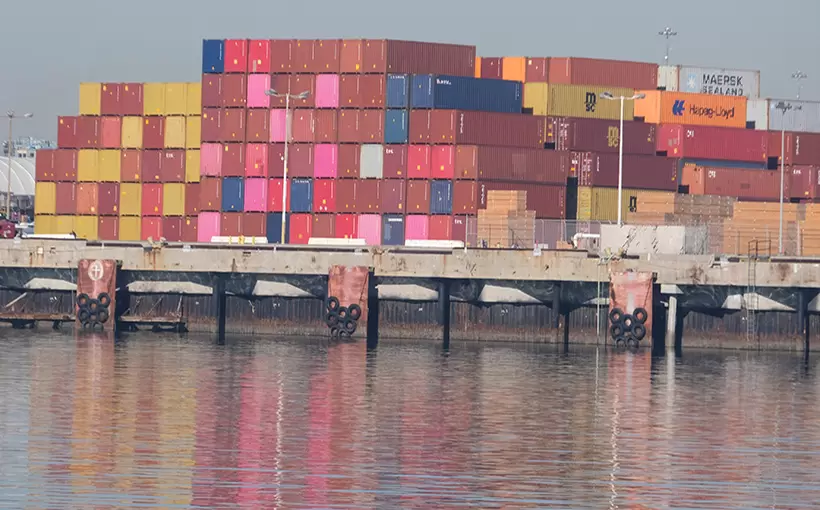

Economic, Logistics and Real Estate Impacts from the East Coast and Gulf Port Strike

On Oct. 1, approximately 51,000 International Longshoremen’s Association members walked away from their jobs at East Coast and Gulf Coast ports, unable to reach an agreement about salaries and other issues with the United States Maritime Alliance (USMX). This represents the port workers’ first work stoppage since 1977.
Though the port strike ended more quickly than anticipated, it will take awhile for things to get back to normal. There is a backlog of cargo, which could take awhile to clear.
Furthermore, the U.S. is just a handful of years away from the global post-pandemic supply chain stoppage, which resulted in the 9% inflation spike in mid-2022 and led to a 500-basis point increase in the Effective Federal Funds Rate by the Federal Reserve.

Inflation has fallen, the Fed has cautiously made its first rate cut in over two years, and the global supply chain is more or less back on course. But what might be the impact of a port strike, even a short one?
Experts tell Connect CRE that a short-term dockworker strike might have little negative effect, especially as shippers and others scrambled to get goods into the United States before the Sept. 30 contract deadline. Additionally, dock workers continue to handle cruise ships and military cargo, while a different union serves gas and oil terminals. As such, “the effects of a brief strike on the overall economy would be minimal,” said economist Ray Perryman, founder and CEO of The Perryman Group.

“Approximately 43% of all U.S. imports are handled at these ports, and according to Sea-Intelligence, a one-week strike would cause major slowdowns through much of November,” said Jason Price Cushman & Wakefield’s Senior Director, Americas Head of Logistics & Industrial Research.
DAUM Executive Vice President Anthony Bergeman put it another way. “Each day of stoppage equals one week of backlog,” he said.
The Logistical Effect
The pandemic revealed just how vulnerable the global supply chains were. This led logistics companies and others to introduce fail-safes and redundancies to help ensure the ongoing movement of goods from origin to destination.
Even a short strike can impact the movement of goods.

“A dockworker strike of any duration would impact the flow of a wide variety of products,” said attorney and global supply chain expert Barry LePatner. Those products range from fruits and wine to furniture and automobiles.
The logistical headaches of a port strike could also mean the following.
Higher prices to move cargo. A shorter strike has still meant a backlog of cargo, meaning shipping companies and importers might seek other methods to get the goods moving. Additional surcharges “might be imposed by carriers to cover the costs of rerouting and handling cargo through less-congested or alternative ports,” commented Tracey Ortiz, director, product management at SPS Commerce. Rather than writing off those surcharges, they could be passed on to consumers, resulting in higher prices according to José R. Cot, member with McGlinchey Stafford.

An increase in West Coast ports’ activity. Some shippers who don’t want to wait for their cargo to clear the East Coast and Gulf Ports might have better luck with West Coast ports. Labor and management on the West Coast concluded negotiations in 2023, and these ports remain open. Because of this, Los Angeles, Long Beach and other ports will likely see an uptick in demand for truckload and less-than-truckload (LTL) capacity.
But here’s the problem. “According to HSBC, ports along the West Coast have the capacity to handle only 18% of the cargo that would be diverted from the East and Gulf ports during the strike,” Price said. This would leave a considerable gap when it comes to port services.
Home for the holidays? The strike occurs directly before the onset of the holiday shopping season. Depending on how long it takes for the ports to re-open and the backlog of cargo to clear out, retailers might face a reduction in inventory at a time during which shopping increases. This could mean that “retailers might lose sales due to inventory shortages and delayed product arrivals,” Ortiz said. “This could impact overall revenue during the crucial holiday season.”
What About Inflation?

One fear resulting from the work stoppage on Oct. 1 was a potential return of inflation. The Federal Reserve spent two years using monetary policy to tame the recent inflation rise, and many cheered when the Effective Federal Funds Rate was cut in September.
The Federal Reserve hasn’t weighed in on anything related to the strike or the potential for higher prices. Furthermore, the U.S. added 254,000 jobs in September, exceeding analysts’ expectations. However, the upcoming jobs report could be complicated by strike-impacted layoffs and job issues resulting from Hurricane Helene.
Perryman said he believes the Fed’s focus remains on growth, with potential temporary price hikes not changing that direction. “I would expect that the response would be minimal and, at most, lead to a slight extension of timing for future rate increases,” he added.
The Effects on Real Estate
While the strike could impact the supply chains and goods deliveries, the experts explained that a short-term stoppage would likely not affect port-proximate real estate.
“The central issue is scarcity in construction materials, which could slow development and renovations,” Cot said. This, in turn, could mean higher prices not just for developers but for anyone connected with real estate, like investors, developers and tenants.
On the other hand, LePatner said that companies might be encouraged to build new factories and establish new supply chains in North America and put more effort into nearshoring. “This would free them from future reliance on overseas sourcing of critical products for the American economy,” he said.
This article was updated to reflect the end of the strike and the September jobs figures.
- ◦Development
- ◦Economy
- ◦Policy/Gov't


