



California CRE News In Your Inbox.
Sign up for Connect emails to stay informed with CRE stories that are 150 words or less.

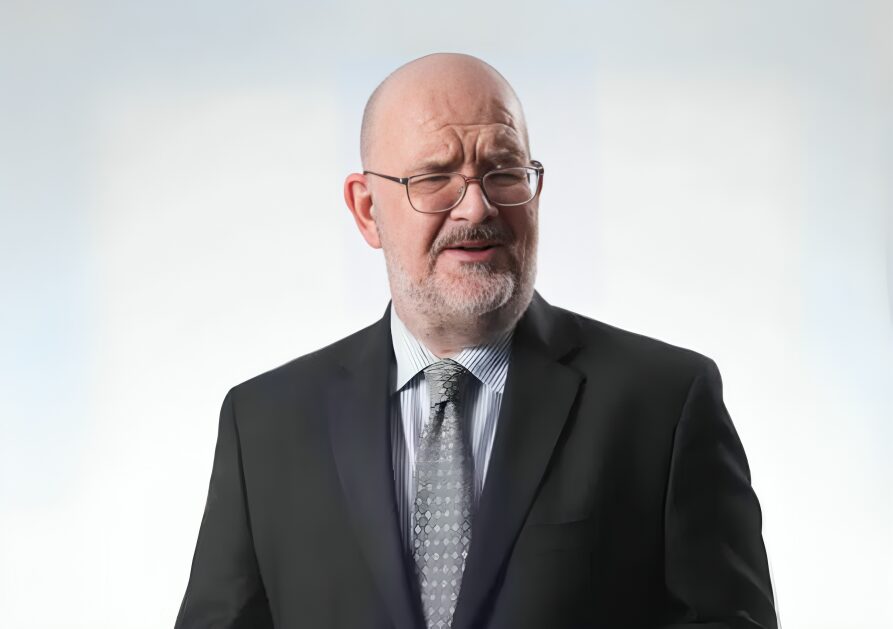
Cox Castle Podcast: Economist Ken Rosen Sees Positives and Negatives Heading into 2026
Heading into 2026, “there are some big positives coming out of this administration that will affect the real estate market, and there are three or four things that might be quite negative,” said Ken Rosen, chairman of Rosen Consulting Group, on the inaugural Coffee with Cox Castle podcast. Rosen, who also chairs the Fisher Center for Real Estate and Urban Economics at University of California Berkeley, cited the long-term impact of tariffs among the positives, in that they’re likely to spur a return of manufacturing to the U.S.
The extension of many key provisions of the 2017 Tax Cuts and Jobs Act, along with new provisions such as exempting tips from taxable income, is another boon. The most significant, Rosen told Cox, Castle & Nicholson partner Morgan L. Gallagher and partner & chairperson Mathew A. Wyman, is the removal of many regulations and capital requirements that were implemented in the aftermath of the 2008 global financial crisis.

“Financial institutions are going to have over $2 trillion more capital with reduced capital requirements for lending,” Rosen said. “That will help real estate.”
Conversely, Rosen cited impacts of the current administration that economists see as negatives. While immigration has long been “a big source of economic growth for real estate and the economy,” the flow of legal immigrants is now restricted and even reversed as immigrants who lack full documentation are subject to incarceration and deportation. Rosen noted that an estimated 1.5 million immigrants have self-deported.
“So this is disrupting immigrant communities all around the country and they’re important to our labor force,” he said. He added that this disruption will also lower demand for housing and retail in major cities.
Rosen predicted that economic growth will slow in 2026 to about 1.4%. He further predicted that the federal funds rate would reach 3.5% this year.
Noting that interest rates on 10-year treasuries are currently at about 4%, Rosen predicted that they’ll increase to 4.5%, due in part to the $2-trillion federal budget deficit, “which is going to put upward pressure on rates.”
He assigned a 30% probability to the U.S. economy tipping into recession and a 10% chance that we experience “the worst of all worlds for real estate and the economy, which is inflation and a weak economy.”
The conversation turned to commercial property types and their prospects in 2026. Rosen cited just one sector that is currently seeing very strong demand: data centers. “You just can’t get the resources to build them fast enough to get the power, and so it’s in a huge boom,” said Rosen.
However, other asset classes are roughly in equilibrium between supply and demand at the moment, leading to rent growth “at the inflation rate or somewhat higher.” Rosen cited coastal CBD apartments, Class AAA office properties and grocery-anchored retail as solid performers. He pointed to overbuilding in a few sectors, including Sun Belt apartments, logistics real estate and life science properties, “but new construction is plunging.”
Wyman used the word “bifurcation” to characterize the current performance gap among asset classes, and Rosen agreed. “The triple A office buildings are doing great, but the B and C buildings are doing very poorly,” he said. “Apartments in the coastal metropolitan areas are mostly performing really well, yet the Sun Belt and Mountain States [are seeing] declining rent and higher vacancy rates. So bifurcation is the big thing.”
- ◦Economy
- ◦Policy/Gov't

