



Chicago & Midwest CRE News In Your Inbox.
Sign up for Connect emails to stay informed with CRE stories that are 150 words or less.
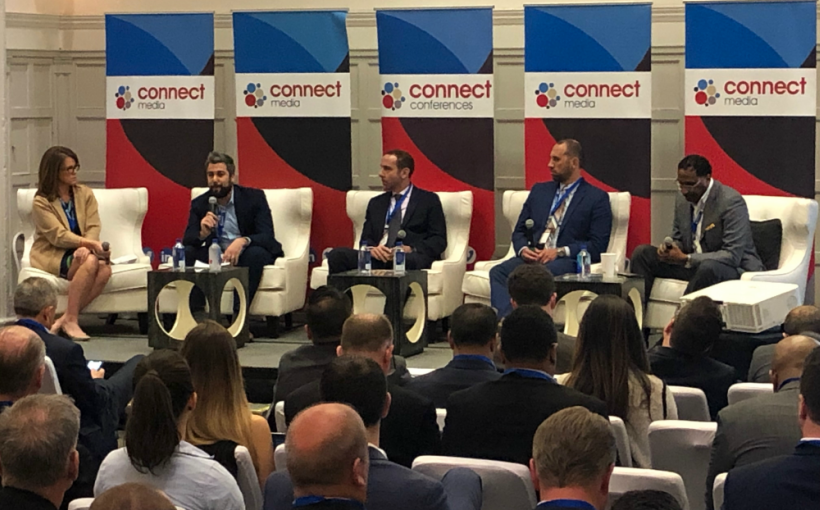

Connect Chicago: Making Opportunity Zone Investments Pencil Out
The top 10% of the nation’s 8,700 designated Qualified Opportunity Zones are in areas where investors have already expressed interest, DL3 Realty’s Leon Walker told the audience at the recent Connect Chicago event. Another 10% are in areas where investors might be on the fence about whether to make a commitment.
The remaining 80%, Walker said, are locations where “the Opportunity Zone designation is not enough to spur the flow of investment into those areas.” Almost all of Chicago’s QOZs fall into that 80% tranche, he added.
Conversely, panelist Tony Lindsay of North Wells Capital noted that his firm’s current investment in a project on the city’s South Side probably wouldn’t have made economic sense if it weren’t for the QOZ designation.
Before Walker, Lindsay and Hunt Real Estate Capital’s Joshua Messier delved into the how’s and why’s of making QOZ deals pencil out, moderator Molly Phelan of Siegel Jennings Co. turned to Wipfli LLP’s Josh Graham to provide an update on recently-issued guidance from the IRS. The new guidelines, he said, provide enough clarity that would-be investors will be more comfortable moving ahead.
That isn’t to say that the new guidance is easily digested, though. At well over 150 pages, the IRS’ proposed regulations would require a few hours to fully explain.
Over the course of 10 minutes, Graham discussed some of the high-level themes contained in the guidance document. He noted that debt-financed distributions will be allowed, for example, and that the new guidance provides more clarity about the circumstances under which leased property is considered a qualifying asset.
The guidance also clarifies what types of real estate investments would qualify for inclusion in the QOZ program, and sheds more light on strategies for multi-asset funds, among many other points on which there was previously uncertainty on how to proceed.
When it comes to financing for QOZ transactions, Messier said his firm would look to Fannie Mae and Freddie Mac. Unlike their allocations for multifamily lending, the GSEs aren’t capped on how much capital they can provide for QOZ investors, and therefore can offer “significant pricing breaks,” he said.
At a local level, the panelists offered ideas on potential spurs to investment—especially given that most of Chicago’s 133 QOZs occupy the aforementioned 80% bracket. Walker would like to see a closer link between local QOZ activity and the city’s Neighborhood Opportunity Fund, which allocates funds from development fees on downtown projects to disinvested commercial corridors on the South and West Sides.
Lindsay pointed out that the city could further the cause with investments into infrastructure and accessibility around the census tracts that have been designated as QOZs. “A lot of these Opportunity Zones are hard to get to,” he said.
Summing up, Walker said, “Opportunity Zones make the promise for a business case for making the investment.”
 Get Chicago News in 150 Words
For comments, questions or concerns, please contact Paul Bubny
- ◦Financing
