



National CRE News In Your Inbox.
Sign up for Connect emails to stay informed with CRE stories that are 150 words or less.

Completing Complex Deals is in Berkadia’s DNA
Now one of the largest and most prolific commercial mortgage, investment sales and loan servicing organizations in the U.S., Berkadia arose from the ashes of a predecessor company, Capmark, in the aftermath of the global financial crisis. On a recent episode of the company’s Inside the Deal: a CRE Podcast by Berkadia® podcast series, hosted by EVP—Head of Production Ernie Katai, CEO Justin Wheeler took listeners back to the company’s origins and charted its growth as it added more capabilities—and more talent.
Katai described the establishment of Berkadia as “my favorite deal of all time.” It wasn’t a deal that could be completed in a quick turnaround. Following the 2009 bankruptcy of Capmark, putting together what would eventually become a 50/50 joint venture of Berkshire Hathaway and Leucadia (now Jefferies) took nearly a year. “It was a very, very complicated deal in bankruptcy,” Wheeler recalled.
It was during a conference call with Warren Buffett, early in the history, that the company’s long-term vision was crystallized. “The very first thing out of [Buffett’s] mouth was, ‘hey, are you guys as excited about Berkadia for the next 10 years as I am?’” recalled Wheeler. “And it was like a lightning bolt went off where I was. Here’s maybe the greatest capital allocator in the history of the world. And he’s thinking about Berkadia, which is a very transactional company, in terms of a decade or more.”
Out of that came the realization that “this intermediary transactional business should never be a public entity,” Wheeler said. “It should be a private entity with long-term thinking, with patient capital and being able to make decisions not on how they impact the next quarter’s earnings, or the next year’s earnings, but how they impact the relevance of the company to its client base and to the industry for five, seven, ten years out.”
From its headcount of 50 producers at the outset, Berkadia has grown to more than 380 producers while expanding beyond its middle-market lending focus. The company is now engaged in property sales—both middle-market and institutional-level—loan servicing and, through an alliance with UK-based Knight Frank, working with ultra-high-net-worth investors.
Wheeler noted that the caliber of people who come to work for Berkadia, and stay with the company for years, is one of the keys to its success. “Whenever I’m on a pitch, and we bring ample teams to pitches, I’m just amazed by not just the number of years of experience that we have, but by our producers who’ve really solved problems and provided solutions to clients in a creative way that added real value.”
As a case in point, another recent edition of Inside the Deal: a CRE Podcast by Berkadia® focused on a financing transaction that compensated in sheer complexity what it may have lacked in dollar volume. The financing was a $20.3-million HUD 221(d)(4) acquisition loan for Sunrise Affordable Housing Group to convert a Clearwater, Florida apartment tower, originally built as low-income seniors housing, from market-rate back into housing for low-income families. Making that transition entailed “an incredibly complicated structure,” said Sunrise Affordable partner Sam Caspert.
Tim Leonard, Senior Managing Director with Berkadia Affordable Housing, spelled out the deal’s complexities on the podcast, starting with the 10-year rule. “In order for a property to be eligible for Low Income Housing Tax Credits (LIHTC) based on the acquisition cost, it has to be held for ten continuous years without a transfer in title,” Leonard said. With the property having been acquired by a real estate private equity firm in the past few years and converted to market-rate, the rule didn’t apply.
There are workarounds for properties that don’t adhere to the 10-year rule, such as this one. The trick was finding one that applied in this situation.
The second biggest challenge, said Leonard, was “negotiating with the seller the time it would take to go straight into a new tax credit transaction, which Sam successfully did.” It just took 16 months.
Caspert noted that given the seller’s asking price, “it only really made sense to come in, further increase rents, and do another value-add program. And here we are, coming in with a plan: ‘Hey, we’re not going to increase rents. We’re not going to keep them the same. We’re going to decrease rents, but we’ll get to your price. You’ve just got to give us the time to get there.’”
Among the deal’s “15 or 20 moving parts,” Leonard said, was educating HUD on exactly what he and Caspert were seeking to do. “Once we educated HUD, they were all in,” he said. “HUD loves transactions where there’s local and state support.” The agency came aboard with financing for a transaction that entailed substantial rehab on a 1970s-vintage high-rise, along with tenant displacement as Sunrise made the transition from market-rate.
Leonard credited the savvy of all the participants in the deal with making it work. “I’d say outside of places like New York, I’ve yet to run across this level of sophistication of financing, unanimous public support, intelligent stakeholders on all sides,” he said. “This is rare to see outside of a place like New York, which invented affordable housing.”
- ◦Financing

Apartment buildings for sale
Check out the latest properties available on apartmentbuildings.com
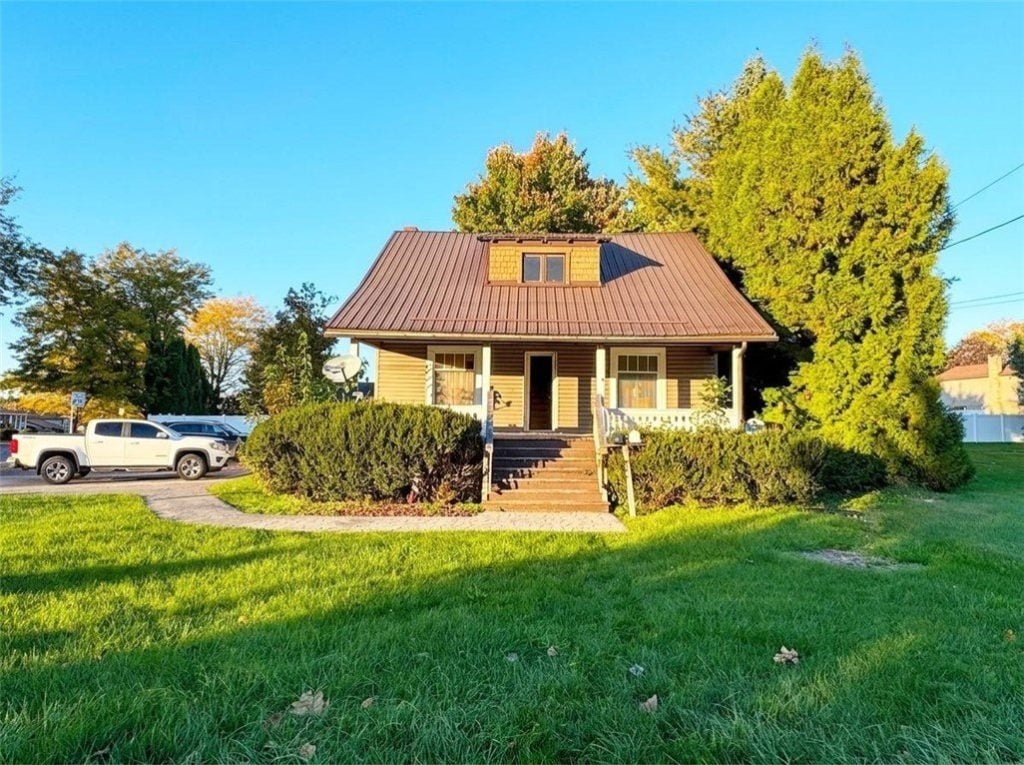
2663 Bedford Street
Richland School District, PANew York & Tri-State + 2-4 Units
Learn MoreListing Status: Available Listing Type: Call for offers Price: $110,000 No. of Units: 2 Year Built: 1914 Opportunity Zone: No Price per unit: $55,000 3411 W Walnut Street
Johnson City, TNAtlanta & Southeast + Apartment Buildings
Learn MoreListing Status: Available Listing Type: Call for offers Price: $720,000 No. of Units: 6 Year Built: 1965 Opportunity Zone: No Price per unit: $120,000


