



National CRE News In Your Inbox.
Sign up for Connect emails to stay informed with CRE stories that are 150 words or less.
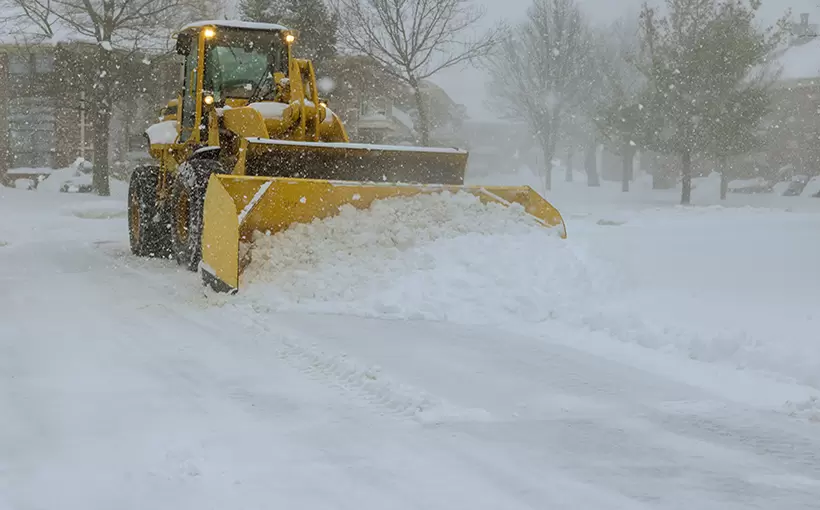

Cold Weather’s Impact on Real Estate and Infrastructure
Write-ups and podcasts concerning climate-change-related hazards focus mainly on heat-related factors. However, extreme hurricanes, destructive wildfires and devastating droughts have made headlines in recent years.
A recent report from the Urban Land Institute, “Cold Snap: Extreme Cold and Real Estate,” said that cold snaps and winter storms can be just as destructive as blistering heat waves and dangerous hurricanes. The winter storm fronts and freezing temperatures impact infrastructure, “causing tremendous damage, disruption and loss of life,” according to the report. In quoting information from insurance and reinsurance company Munich Re, the ULI report said that damages from five of the costliest winter storms between 2013 and 2022 totaled nearly $50 billion.
Global Warming and Cold Snaps
Climate change continues to raise the Earth’s temperature. It also increases cold weather and wetter, heavier shows. Part of the reason is that the Arctic’s rapid warming could be impacting the jet stream, which, in turn, can bring colder weather—and cold-weather storms—to locations that aren’t used to it. In fact,
“In fact, among natural hazards affected by climate change, scientific certainty in attributing the likelihood of hazard events to human-caused climate change is highest for extreme cold and higher for extreme snow and ice than for wildfires, cyclones, and other severe storms,” the report noted.
In addition to impacting buildings and their occupants, winter storms and extreme cold could lead to power outages and loss of income from closures and disruptions. Hazards can include roof, or building collapses from heavy snow and ice, damage from high wind-driven ice or freezing rain, damage to landscapes and burst water pipes. “Building to local code may be insufficient to protect properties,” the report said. Insurance might also not protect property owners and landlords from exposure.
There Are Solutions
The ULI grouped cold-weather protection strategies into five categories:
Improving envelope strength and performance: Anchoring attached structures, improving snow load, preventing ice dam formations, using steep and simple roof design.
Developing energy resilience: Retrofitting fossil-fuel-based systems into all-electric, enhancing ventilation systems, installing backup on-site power, installing microgrids, and utilizing secondary heat sources.
Utilizing green infrastructure: Constructing windbreaks, protecting/restoring soil help, selecting resilient plants for landscaping, trimming weak trees and other vegetation.
Developing and executing preparedness and operational plans: Developing a business continuity plan, maintaining the HVAC system, repairing/maintaining roofs and gutters.
Protecting water systems: Repair leaks, installing freeze protection on plumbing, providing secondary sources of potable water.
- ◦Development
- ◦People

