



National CRE News In Your Inbox.
Sign up for Connect emails to stay informed with CRE stories that are 150 words or less.
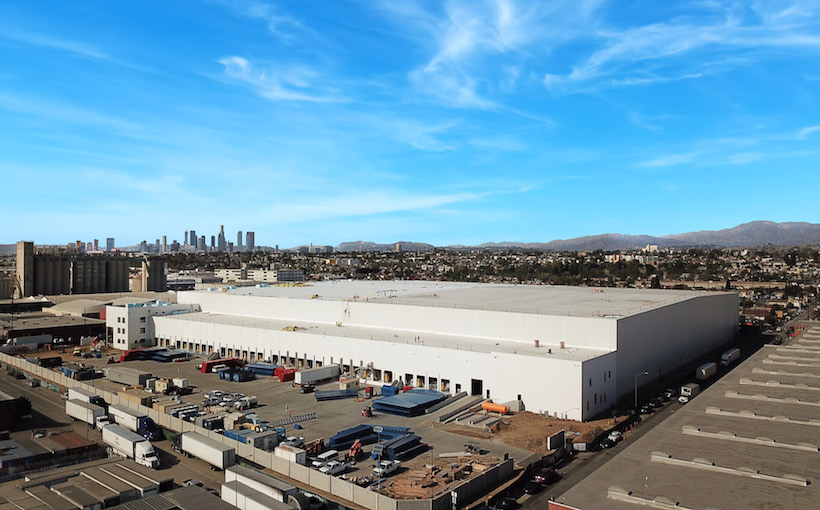

Cold Storage: A Real Estate Perspective
By HFF’s Alex Haley

Industrial real estate has emerged as one of the most sought-after property types by institutional investors due to historically strong market fundamentals and the boom in e-commerce. Increased investor demand has led to a historically low cap rate environment, leaving many investors feeling priced out of the primary coastal markets.
That’s leading investors to expanding to secondary markets, and looking at non-traditional industrial assets in an effort to deploy capital into the space. The appetite for yield in the industrial sector is driving the investor demand for cold storage assets, from both the equity and lending community.
“We are big believers in the cold storage space,” said HFF Senior Managing Director Scott Pertel, who is the co-office head of HFF’s San Francisco office and one of the company’s leading experts in cold storage properties. “The consumer is becoming more conscious about what and how they eat. As demand for healthy, fresh food increases, the requirement for storage of fish, poultry, meat and produce increases. Couple that with the demographic shift to more urban locations and the ever-increasing population, the need for more PRW’s [Public Refrigerated Warehouses] or cold storage buildings is a natural evolution.”
“Historically, we’ve seen a 150 to 200 basis point spread in cap rate between dry warehouse and cold storage,” Pertel added. “With the recent rise in investor demand, we’ve seen that spread compress to 100 to 150 basis points, and, in certain cases, 75 basis points for Class A product located in gateway markets like Los Angeles, New Jersey or the East Bay. We view this as evidence that institutional capital is warming up to the cold storage asset class and anticipate further compression of cap rates.”
The value metric of cold storage warehouses is based primarily on the number of pallet positions per cubic feet. This is evidenced by the newest cold storage buildings being constructed with clear heights far exceeding dry warehouse buildings (as high as 110 feet). However, rents are cited on the basis of square footage, and can be nearly double the cost of dry warehouses. Operators like Preferred Freezer will enter into a full-building lease for up to 30 years, and lease out pallet positions to smaller users. Due to the higher cost of rent and the steep cost of construction ($250 to $350-per-square-foot), investors have to pay a high price per-square-foot to acquire newer, Class A buildings. As such, investors look for opportunities with approximately 15 or more years of lease term to mitigate risk and provide a steady cash flow stream to buy down their basis.
Refrigerated storage has become an integral part of the supply chain when it comes to transporting and storing temperature-sensitive products. Proximity to population centers, population growth, changing consumer preferences and consumer spending are the primary drivers for cold storage facilities. The steady demand through various economic cycles mitigates the potential risks to owning and operating cold storage facilities.
Most companies in need of refrigerated storage services outsource these functions to industry operators to avoid the substantial costs associated with operating these facilities. While privately-operated facilities can provide companies a greater deal of control and flexibility over their product, the substantial start-up costs deter many smaller companies from entering the space. As a result, this form of vertical integration has generally been limited to large-scale food producers like Nestle and Kraft controlling their storage facilities.
Due to the high cost and restrictive government food grade storage regulations, there is virtually no speculative development market in the cold storage industry. Instead, developers will partner up with cold storage operators to perform build-to-suit projects for them.
Rising demand from food producers and the adoption of cost-cutting technological advancements, such as radio frequency identification (RFID), have caused profit margins in the cold storage logistics industry to expand over the past five years. Industry operators continue to develop innovative cost-reduction solutions by utilizing cutting-edge technology, such as voice recognition and the above-mentioned RFID in material handling activities.
Due to rising construction and labor costs, coupled with the technology and infrastructure required to build new cold storage facilities, many service providers are renovating existing buildings with new equipment and technology. Additionally, operators are increasingly looking for innovative ways to automate their processes.
E-commerce is reshaping the customer experience and is impacting virtually every industry. E-grocery delivery has been on the rise over the last few years, and is being led by companies like Amazon, Albertsons and Target.
The Connect Industrial conference will take place July 11. For more information, or to register, log on here.
For comments, questions or concerns, please contact Dennis Kaiser


