



Texas CRE News In Your Inbox.
Sign up for Connect emails to stay informed with CRE stories that are 150 words or less.


Capital Market Insights: Q&A with Red Oak’s Gary Bechtel
Obtaining commercial real estate financing for developments and investments has been challenging for a while. For a better understanding of what’s going on, Connect CRE recently posed questions to Gary Bechtel, CEO of Red Oak Capital Holdings. Bechtel, a speaker at the upcoming Connect Texas Multifamily 2023 conference, discussed changes in CRE funding, growing opportunities for private lending and the possible impact of pending debt maturities.
Connect CRE: Real estate financing has been difficult as of late. How is the capital stack changing for CRE investors?
Gary Bechtel: The CRE finance market so far in 2023 has been choppy for sure. But it would be unfair to categorize it as a complete disaster. The opportunities that exist, despite the Federal Reserve’s continued interest rate hikes and volatility, has also created opportunities for bridge lenders to fill voids.
Right now, investors seeking capital for projects have to contend with several challenges including soaring inflation and lingering fears of a recession. Also problematic has been chaos in the banking industry following the collapse of several regional banks. These banks had been a key source for commercial real estate financing. All of this caused capital markets to retreat, reassess, or stop lending in Q1 2023.
The comfort zone for lenders tends to be caution and conservative underwriting. But the volatility and pullback caused spreads to widen across a range of lending groups from debt funds, banks and CMBS. Speaking of which, CMBS issuance essentially evaporated, which was reflected in spreads widening from 200 to 300 in March 2023.
Connect CRE: You mentioned opportunities for bridge lenders. How is this occurring?
Gary Bechtel: There was a general contraction across the financial markets, which worked to benefit well-capitalized balance sheet lenders. The constrained credit market meant borrowers had to find other options for debt financing. That’s what is creating the opportunities we’ve seen in Q2 for bridge lenders, who are filling gaps in the capital stack.
Private debt is suddenly a growing investment target. It provides an opportunity to invest in tangible, income-producing assets at a 25% to 35% discount to valuation, which gives a margin of safety for pricing compression. As LTVs continue to be compressed, capital sources with dry powder are being overwhelmed with lending opportunities on high-quality assets in strong growth markets. That provides a tremendous opportunity for the firms that adopted a creative approach with their operations. There are large amounts of capital on the street looking for private debt opportunities. Stronger managers with expertise in this niche will stand out in the market.
According to a recent CBRE survey, CRE investors continue to be attracted to real estate debt because they can find relative certainty within a favored alternative investment class. Despite economic uncertainty, debt tied to real estate, such as multifamily or industrial assets, delivered higher returns compared to other investment classes. Debt is attractive because it provides short-term capital and a higher interest rate environment, thus provides opportunistic capital.
Connect CRE: Let’s talk about debt maturities. What will be the impact of these on CRE financing?
Gary Bechtel: The year ahead will likely include a period when traditional lenders retrench, and new capital finds a home in what is considered a “lenders market.” This is a growth opportunity for private lenders who reserved cash and were operating without leverage. High-quality borrowers are finding more opportunities among bridge lenders. As a result, quality loan submissions are increasing for bridge lenders while LTVs have decreased, due to debt service coverage constraints.
That said, the market continues to shift with select property types falling out of favor, which is a key reason to move with caution. Borrowers facing looming loan maturities in 2023 won’t likely find many allies, either. Trepp reports that there will be more than $60 billion in fixed-rate loans that will soon require refinancing at higher interest rates. And Goldman Sachs reports that there’s more than $140 billion in floating-rate CMBS loans maturing in the next two years. So interest rate hedges must be extended at much higher costs, delinquencies are expected to rise, and everyone will naturally be a bit nervous.
Still, returns for debt funds are expected to exceed those achieved during the period of 2019-2022, as capital markets face headwinds and the Fed’s continues its attention on driving down inflation through higher base rates.
Leverage on new loans is nowhere near historical averages. This places lenders in more advantageous positions in the capital stack now compared to where they may have been following the Great Financial Crisis. Ultimately, the risk-reward tradeoff found in the current market is likely better than what lenders experience in typical cycles. So during the second half of 2023, sponsor and borrower financing could likely include a bridge loan solution to carry them into 2025.
Connect Texas Multifamily 2023 will take place on Aug. 22, 2023 at Virgin Hotel in Dallas. Click here for more information and to register.
- ◦Financing
- ◦Economy

Apartment buildings for sale
Check out the latest properties available on apartmentbuildings.com
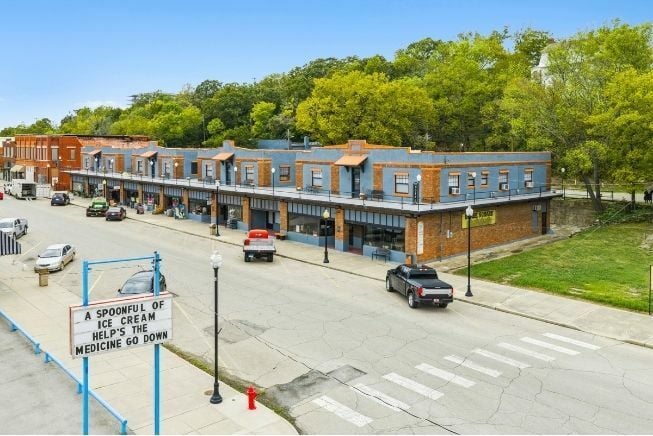
707 Kihekah Avenue
Pawhuska, OKTexas + Apartment Buildings
Learn MoreListing Status: Available Listing Type: Call for offers Price: $900,000 No. of Units: 28 Opportunity Zone: No Price per unit: $32,142 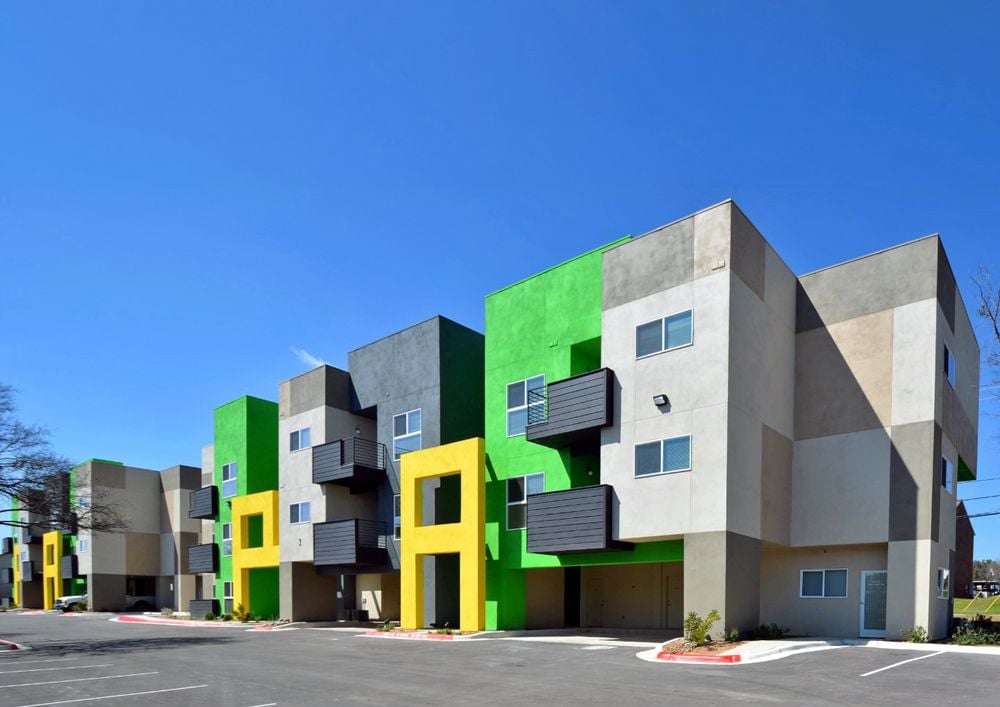
1654 Post Road
San Marcos, TXTexas + Apartment Buildings
Learn MoreListing Status: Available Listing Type: Call for offers No. of Units: 32 Year Built: 2016 Lot Size: 4.49 Acres Opportunity Zone: No

