



National CRE News In Your Inbox.
Sign up for Connect emails to stay informed with CRE stories that are 150 words or less.
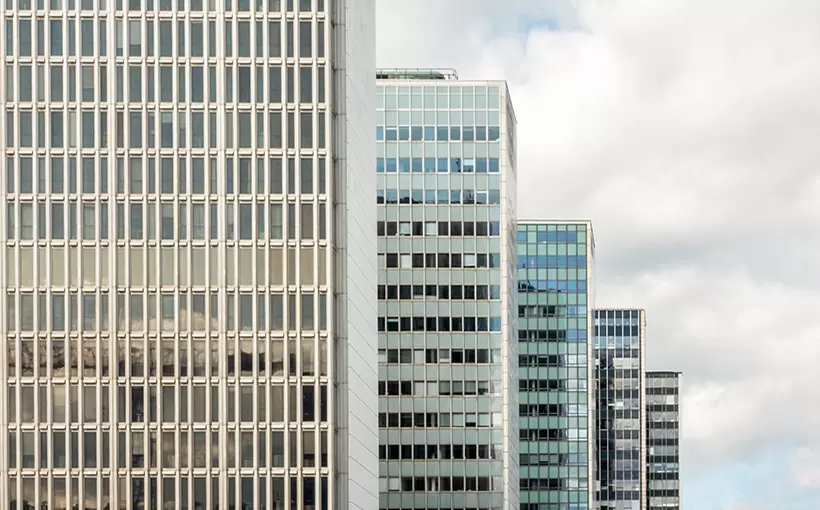

Buildings are Aging. Here’s How to Handle the Challenges
One incontrovertible fact of life is that all structures grow old and lose usefulness. But in a recently released article, “Opportunity through Obsolescence,” JLL authors shared insights and advice on addressing the challenges of aging buildings to provide both value and returns.
“The commercial real estate landscape is at a turning point as property owners and cities look to establish long-term viability of existing buildings and districts, in the face of evolving experiential and spatial preferences, increasing regulatory pressures, climate risk and changes in real estate demand,” said Cynthia Kantor, JLL CEO, Project & Development Services in a release announcing the research. “By proactively assessing and addressing outdated and at-risk buildings, owners can unlock significant value, create a more sustainable, resilient built environment and drive future returns.”
The article’s main point is that dealing with obsolete buildings requires the following three overlapping factors for proactive success in such an endeavor.
Age and Design
For owners, the article suggests that an asset’s future viability, market demand, and spatial dynamics should be considered. Furthermore, “age aligns strongly with existing engineering, technological and climate adaptation capabilities as well as the ability to retrofit them at pace,” the authors noted.
Meanwhile, the article suggests that municipalities examine long-term strategic planning to “rebalance land use and implement placemaking schemes in locations at risk of obsolescence.”
Monetary needs also need to be considered. The article explained that 322 to 425 million square meters of the 776 million square meters of existing office space in 66 key global markets will likely require high levels of capital expenditure to be viable. “This equates to $933 billion to $1.2 trillion (USD) in spending, roughly 2.2 to 3.1 years’ worth of dry powder in the entire United States,” the article’s authors said.
Sustainability and Regulatory
Decarbonization and sustainability continue to pressure owners to retrofit aging buildings. The article suggested that owners adjust portfolios with the assumption of tighter ESG and building standards. Meanwhile, municipal leaders should “scale up regeneration efforts in geographic clusters of potentially stranded assets,” especially in areas where climate and land-use balance require intervention.
The authors explained that the top eight markets of regulatory stranding risk have more than 86 million square meters of office product that will require near-term capital expenditure due to tightening compliance standards. On the positive side, that expenditure will lower operating costs while appealing to growing tenant demand for low-carbon, energy-efficient buildings.
Location Considerations
This category considers the “need to create cohesive, amenitized and balanced destinations that encourage residents, workers and visitors alike to utilize and enjoy,” the article said. Mixed-use environments are good examples of such destinations, moving away from primarily business-heavy districts to adding retail, residences and streetscape improvements to these areas.
“Public authorities making conscious efforts to focus on both high-level regeneration and small-scale reparative approaches are already beginning to prove advantageous,” according to the authors.
Getting Rid of Isolation
The article said, “The full potential to create value through higher-quality, sustainable and resilient buildings and precincts can only be achieved through collaborative engagement between stakeholders and planning that considers how multiple forms and levels of obsolescence interact.”
Owners should determine how their portfolios’ age and physical factors affect issues such as locational preferences, development regulations and sustainability. Meanwhile, public authorities should work toward catalyzing new non-commercial developments while offering financial incentives to help reduce retrofitting costs.
- ◦Development
- ◦Policy/Gov't


