



National CRE News In Your Inbox.
Sign up for Connect emails to stay informed with CRE stories that are 150 words or less.
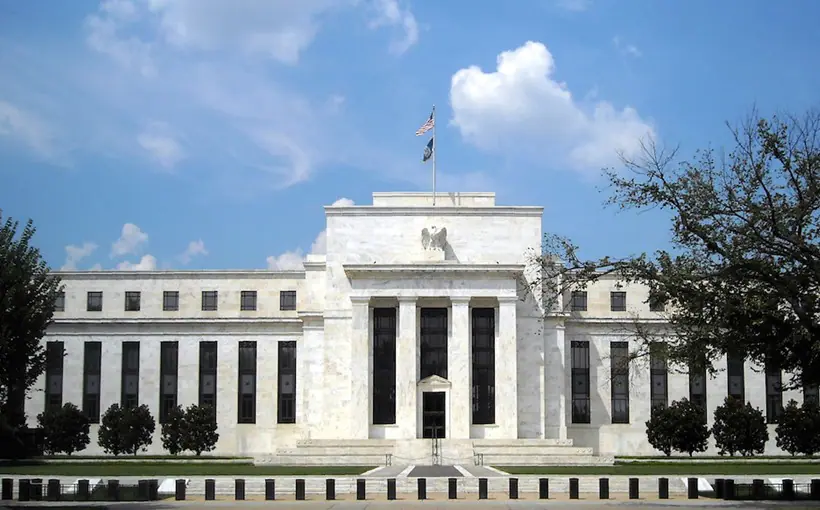

Between Growth and Inflation, the Fed Remains Stuck in Neutral
The Federal Reserve left its benchmark rate unchanged at 3.50%–3.75%, extending its wait‑and‑see stance even as internal divisions over the 2026 path remain stark. Stephen Miran again broke with the majority, casting his fifth straight vote for a 25-basis-point cut.
Most policymakers still project at least one quarter‑point reduction this year, but seven of 19 see no cuts at all, while five are looking for 50 basis points or more in easing. The Fed’s latest projections keep the policy rate at 3.4% at the end of 2026, drifting to 3.1% in both 2027 and 2028, with a longer‑run estimate of 3.0%.
“An unchanged monetary policy stance means that the economy will likely remain on its current uneven path for some time,” Bryan Jordan, chief strategist at Cycle Framework Insights, told Connect Money, who pointed to jobless claims, credit spreads and equities as key barometers of whether support is fading.
Others argue the bar for cuts has risen. Core Industrial Realty’s Noel Liston noted that earlier optimism for multiple reductions has given way to a backdrop where it’s “extremely unlikely” the Fed moves unless the data clearly demands it.
The projections sketch a still‑resilient macro picture. The FOMC now pegs 2026 real GDP at 2.4%, edging up its outlook through 2028 and marking longer‑run growth at 2.0%. Unemployment is seen hovering in the mid‑4s. But inflation progress looks bumpier. Core PCE is now expected to end 2026 at 2.7%, versus 2.5% previously, before easing back toward 2% by 2028.
For markets, it’s about patience and data dependence. “If Chairman Powell has shown anything up to this point, it’s that he’s going to wait for the actual data to speak as opposed to making decisions based on the ‘what ifs,’” Tom Briney, president and CIO of Origin Credit Advisers, told Connect, who believes the numbers are tilting toward a weaker economy but not weak enough yet to force the Fed’s hand.
Briney flagged softer fourth‑quarter GDP revisions and less‑robust jobs data, layered on top of war‑driven uncertainty around oil, as reasons policymakers are effectively moving “meeting‑to‑meeting.”
Real estate investors see the pause as predictable but not painless. “There is a growing consensus that commercial real estate’s fundamentals remain sound… and still stymied by the gridlock of higher capital costs,” said Marion Jones, principal and executive managing director of U.S. Capital Markets at Avison Young, adding that additional cuts could unlock “significantly more transaction activity.”
HSF Kramer partner Justin Quinn said lenders will be watching labor momentum and recent job‑growth revisions closely, given their influence on both financing conditions and deployment across sectors.
“Following the Fed’s decision to leave rates unchanged, real estate market participants will certainly be paying close attention to the broader economic signals that will influence the Fed’s thinking for the remainder of the year,” Quinn said.
Wealth advisors are reading the decision as a bid to preserve flexibility. The labor market is “gradually cooling” but hasn’t shown sharp deterioration, giving the Fed room to stay patient, said Juan Xavier Sánchez, head of wealth strategy at Activest Wealth Management. Holding steady, he argued, signals a continued focus on guiding inflation toward target while keeping an eye on risks from higher energy prices or tariff‑driven pressures.
Others warn that upside inflation risks are far from contained. Charles Goodwin, head of bridge and DSCR lending at Kiavi, pointed to a “difficult position” for the Fed, with a softening labor backdrop on one side and Producer Price Index data suggesting “stubbornly persistent” inflation on the other—plus the lagged impact of the Iran conflict on headline price measures.
Against that backdrop, some see a wider distribution of outcomes. “We are not anticipating a rate cut until at least June, while also recognizing there is now a growing and non‑zero chance that the next rate move may actually be up,” said Trent Scott, CCIM, if new inflation shocks linger.
Still, there are scenarios in which the easing narrative could reassert itself. If the Iran war “winds down in the next 4 weeks,” Thryve Wealth Management CIO Randol W. Curtis said he expects oil to fall back below $80, “opening the possibility of one or two rate cuts later in the year.”
- ◦Economy
- ◦Policy/Gov't


