



National CRE News In Your Inbox.
Sign up for Connect emails to stay informed with CRE stories that are 150 words or less.

Billion-Dollar Disasters Spur Mitigation Funding
The announcement this week that the de Blasio administration would allocate $110 million to addressing sea-level rise and storm surge that together pose a threat to New York City’s historic Seaport District is only the latest example of a burgeoning trend. At all levels, governments have been increasing funding for disaster prevention and preparedness, writes Mary Scott Nabors, president and CEO of Strategic Partnerships, Inc.
This follows last year’s “pattern of destruction” in all regions of the U.S. Even as the COVID-19 pandemic took the spotlight, there were 22 different natural disasters nationwide in 2020, all with estimated damages exceeding $1 billion.
This year has brought more of the same. For example, there was the massive Dixie Fire, which on its own consumed more than one-third the total acreage that burned during the 2021 California wildfire season; and Ida, a tropical cyclone whose swath of destruction extended from Louisiana, where it made landfall, to the Northeast, where remnants of the storm brought about catastrophic flooding and damages that have been estimated at up to $24 billion.
With this as a backdrop, Nabors cites local, state and federal allocations toward disaster mitigation that have been made this year. They include the following:
In Pittsburgh, the mayor’s capital budget and six-year plan for 2022 include a multi-year, $22.9 million project to address the onset of landslides across the city. The project will direct funds toward “corrective action” against the public safety risks relating to hillside destabilization.
Michigan’s governor released an itemized state budget for 2022 that a included more than $14 million in funding to shore up statewide preparedness for damages from flooding, coastal erosion, and related disasters. It also allocated $19 million for repairs and replacement parts for the Michigan dam system. This latter initiative resulted after a rainstorm in 2020 caused two critical dam failures that brought about statewide flooding.
California’s state government will launch a broad wildfire prevention program across the state. The California Department of Forestry and Fire Protection will supervise the program with a goal of reducing size and severity of the state’s wildfire incidents. The program was allocated $138 million in funding for over 100 different fire prevention programs. Ten days later, Gov. Gavin Newsom unveiled a climate initiative with more funding for wildfire prevention.
National allocations have included revenue from Federal Emergency Management Agency (FEMA) grants for mitigation measures in vulnerable areas. Recently, these grants have been distributed through two notable FEMA programs: Flood Mitigation Assistance and Building Resilient Infrastructure and Communities.
“Projects such as these have been emerging — almost on a cycle — at every level of government,” Nabors writes. “Even so, it seems this type of funding will only become more common as climate concerns swell in urgency. Weather-related disasters have created high demand for property cleanup, temporary housing, and new construction in the past. Now, the highest demand is for disaster mitigation work and funding is available for all types of mitigation projects.”
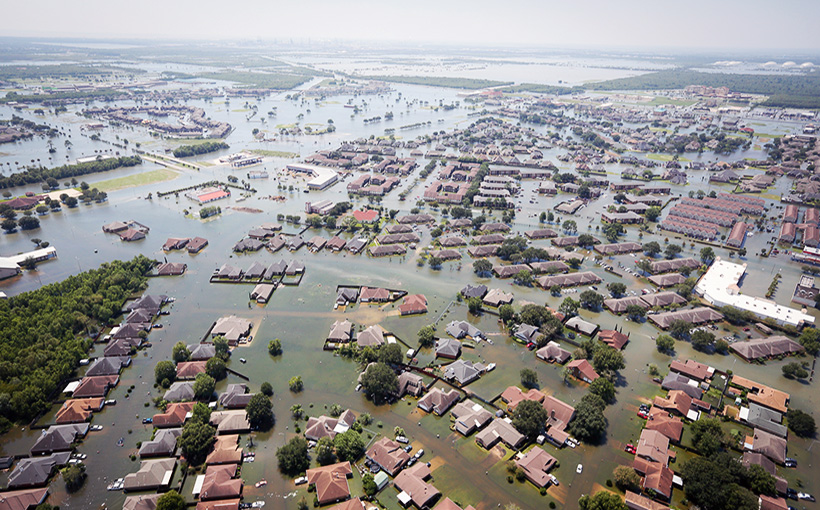
Pictured: Houston-area flooding from Hurricane Harvey in 2017.
- ◦Financing


