



National CRE News In Your Inbox.
Sign up for Connect emails to stay informed with CRE stories that are 150 words or less.
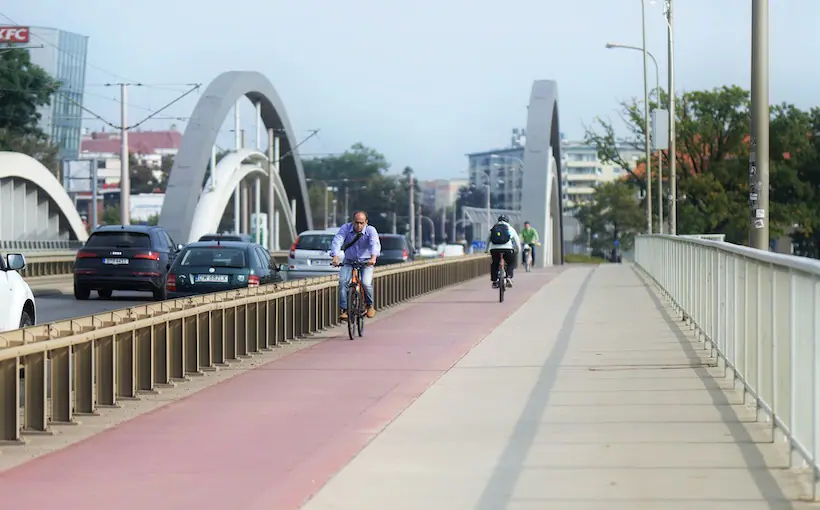

Beyond the Bicycle Lanes
Traditional bicycle infrastructure takes the form of bike lanes, which are designated by pavement markings and signage on roads traveled by motor vehicles. Then there are “sharrows,” shared lane markings meant to advise both cyclists and drivers to stay in their specific lanes.
The problem is that neither of these does a very good job of protecting bicyclists, because they require that bikers and autos share the road.
In their report entitled “Why U.S. Cities Are Investing in Safer, More Connect Cycling Infrastructure,” Urban Institute analysts Olivia Fiol, Yonah Freemark and Yipeng Su explained that protected infrastructure, in the form of off-street trails, protected and buffered bike lanes and cycle tracks is a far better solution.
Protected bike lanes and cycle tracks physically separate bike and auto traffic by way of planters, medians, curbs or other dividing elements. Meanwhile, buffered bike lanes include a designated space that separates a bicycle lane from the adjacent motor vehicle traffic lane.
And they are proven to be effective. The Urban Institute analysts note that New York City injury rates for drivers, pedestrians and cyclists decreased by 40% to 50% in areas where protected bike lanes were used. Protected bike lanes in Montreal yielded 28% lower injury rates than on other streets.
In addition to reducing accidents, protected bicycle infrastructure can also improve the economy. In 2013, Salt Lake City converted nine blocks to a protected bike lane. Store sales along the bike lane increased 8.8%, compared to the 7.0% increase reported citywide.
The researchers noted that protective cycling infrastructure is increasing in many cities, though indicated that the investment, and types, differed. While Austin, New Orleans, Portland and Seattle focused on buffered lanes and off-street trails, most new lanes in Atlanta, Kansas City, Los Angeles and Nashville were not protected.
Fiol, Freemark and Su concluded their report by pointing out that well-thought-out biking infrastructure helps improve community health, while promoting safety and economic benefits.

