



National CRE News In Your Inbox.
Sign up for Connect emails to stay informed with CRE stories that are 150 words or less.
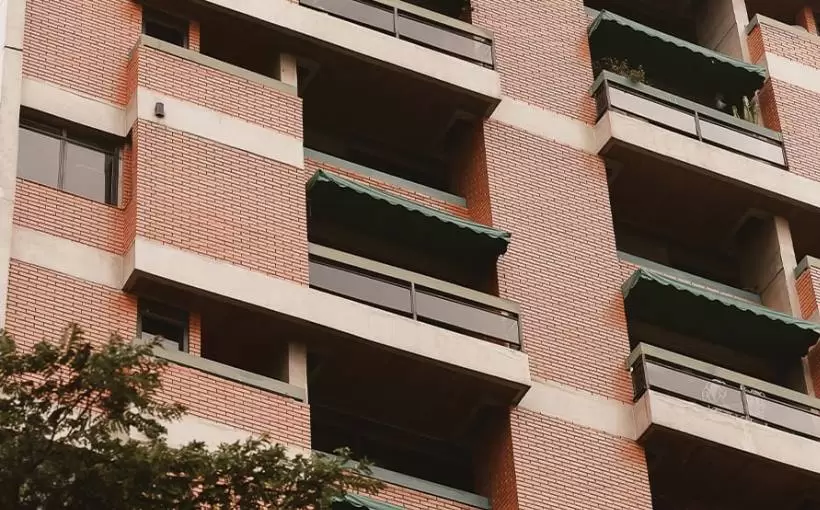

Berkadia’s Mary Ann King: “Affordable Housing is a National Problem”
In the multifamily space, there can be few subjects gaining more attention—or, in many instances, generating more controversy—than affordable housing. And whether it’s related to rezoning, rent caps or inclusionary mandates, government involvement arguably plays a greater role in the affordable space than in any other class of development. To help multifamily owners, investors, and developers sort out the risks and rewards, Berkadia has scheduled a webinar titled, “The Politics of Housing Affordability.”
The conversation will cover both national and regional ground, with Sharon Wilson Géno, President of the National Multifamily Housing Council, offering perspective on the current housing crisis and the impact of rent control on the national housing market and Berkadia’s Co-Head of Institutional Solutions, Mary Ann King, moderating a discussion focused on the bellwether state of California. To set the stage for the webinar, Connect CRE spoke with King on the state of affordable housing.
To begin with, King pointed out that “affordable housing” is a very broad term that encompasses a wide range of housing products. There’s “affordable with a capital A,” which usually refers to projects built with LIHTC tax credits and other public subsidies; there are projects that combine market-rate and rent-restricted units; and there’s workforce housing, which often starts out as market-rate product which over time has become affordable to a clientele of more modest means.
A key federal tool for enabling the development of Capital A “affordable units” is the Low-Income Housing Tax Credit (LIHTC) program. “You get the subsidy in exchange for an agreement to restrict rents,” said King. “So, it’s both a carrot and a stick, and they work together.” We are all hopeful that the LIHTC program will be expanded as the affordable housing crisis “has become more in the forefront.”
A greater allocation of LIHTC tax credits is especially important given rising development costs for low-income housing. King cited per-unit costs of over $650,000 in Chicago and over $750,000 on the West Coast. “One of the things that is the conundrum in our industry is that it often costs even more to build affordable housing than it does to build market rate housing because of the fees paid to attract multiple capital providers and customary requirements to use prevailing wage labor. Although you can save some very minimal costs on value engineering finishes, it is difficult to save material amounts of costs in building affordable vs. market rate housing.
“Your countertops may be a little bit different, or other finishes may vary, but it doesn’t cost materially less to build affordable housing than it does to build market rate units.”
On the subject of the West Coast, King pointed out that California has been “a bellwether of many new trends, good as well as bad. However, over time we have become a very blue state and California has been the poster child for a variety of flavors of regulation,” which are often lumped together under the umbrella term “rent control.”
Unfortunately, she continued, “many of these regulations that restrict a landlord’s ability to collect his or her contract rents have resulted in an increasing unwillingness to invest in housing in our state. In turn, that means that these regulations will not increase the supply of affordable housing. Rather, they will restrict the capital that we need in our state to build the affordable housing we so desperately need.”
However, the rent control issue isn’t limited to California. King said that among the points that Wilson Géno will make in her presentation is that in 2023, “there were 70 bills that were introduced in state legislatures,” seeking either to introduce rent control or tighten existing law.
“This doesn’t count the hundreds of measures that were introduced at the county level. And even the federal government is considering regulating rents on mortgages backed by Fannie Mae and Freddie Mac.”
She concluded, “Affordable housing is a national problem. We need to work together to create policy solutions that will increase the supply of housing at all levels, as opposed to the “quick fix” solutions like rent control that will reduce the supply of capital to our sector and challenge the health and welfare of our communities over the longer term. California may have been one of the first states, but it is now being joined by many states across the country. So, this is a national problem that we need to deal with, together. And that’s one of the purposes of our webinar.”
To register for the May 23 webinar, click here.
Don’t miss the Lifetime Achievement Award Presentation and Keynote Interview with G. Joseph Cosenza, Vice Chairman of The Inland Real Estate Group, LLC and President of Inland Real Estate Acquisitions, LLC at Connect Midwest: Multifamily, Affordable, Student & Senior Housing Trends on June 4, 2024, at the W-Chicago, City Center Hotel, Chicago, IL. Register Today to network with your peers!
- ◦Development
- ◦Policy/Gov't

Apartment buildings for sale
Check out the latest properties available on apartmentbuildings.com
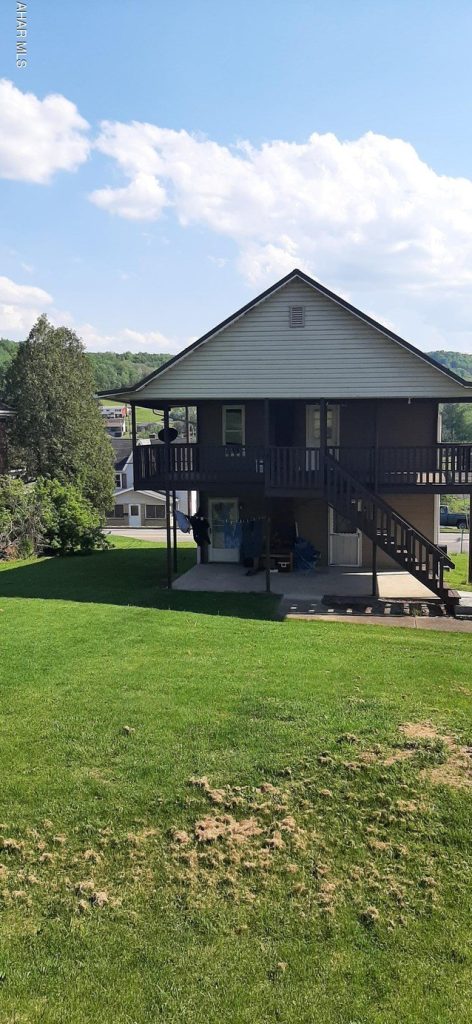
2209 Philadelphia Avenue
Northern Cambria, PANew York & Tri-State + Apartment Buildings
Learn MoreListing Status: Available Listing Type: Call for offers Price: $110,000 Year Built: 1900 Lot Size: 1440 Acres Opportunity Zone: No 2784 Us 70 Highway
Swannanoa, NCAtlanta & Southeast + Land/Development
Learn MoreListing Status: Available Listing Type: Call for offers Price: $4,250,000 Lot Size: 26.21 Acres Opportunity Zone: No


