



National CRE News In Your Inbox.
Sign up for Connect emails to stay informed with CRE stories that are 150 words or less.


Berkadia Webinar Focuses on Affordability and the Threat of Rent Control
The potential repeal in November of California’s Costa-Hawkins Rental Housing Act, which has barred local governments from instituting radical rent control since 1995, has implications beyond the Golden State, according to Sharon Wilson Géno, president of the National Multifamily Housing Council (NMHC), who spoke during Berkadia’s Beyond Insights webinar, “The Politics of Housing Affordability.”
Géno pointed out that nearly 40 states have some form of rent control preemption. She noted, “what we’re facing in California, in terms of a repeal of the preemption, is something that could be faced across the country.”
Just as California isn’t unique in having a rent control preemption law, neither is it an outlier in terms of attempts to repeal that law. Berkadia’s Co-Head of Institutional Solutions, Mary Ann King, who moderated the May 23 webinar, cited an NMHC white paper reporting that 70 bills were introduced in state legislatures nationwide last year. These measures sought to either adopt statewide rent control, overturn the existing preemptions, or tighten the laws.
“This doesn’t even count the hundreds, and I suspect maybe even thousands, of measures that were introduced at county and municipal levels in 2023,” King said. “Even the federal government considers, from time to time, regulating mortgages backed by Fannie Mae and Freddie Mac.”
Some states have tried workarounds to the rent control preemption laws, Géno said. Rent control had its origins in the Second World War, when there was a housing shortage. Today, some U.S. lawmakers make the argument that the levels of homelessness in many areas represent a comparable housing emergency.
“In the apartment industry, we certainly understand and appreciate the severity of the affordable housing problem in our country today,” said King. “But most of us feel that the problem stems from a lack of supply. We looked at the math, and to us it seems simple. If you compare the total number of households formed since 2010 with the total number of housing units built since that same date, you’ll see that we’ve built 30% fewer housing units than were needed to hold the households that were formed. So, we’re just not providing the amount of housing we need to accommodate the growth in our country.”
Géno said numerous studies have been done on the subject of whether rent control confers the intended benefits to communities. The consensus among these studies, she said, is that “rent control hurts the rental market overall. It primarily benefits higher income, older generations, and people of a majority race. It does not support minorities or others that need lower- or moderate-income housing. So, there’s a real clear line there. And then also it impedes quality; without a doubt, the quality of housing goes down in communities that imposed rent control over time.”
The webinar also focused on California as a bellwether state, with panelists including Thomas K. Bannon, CEO of the California Apartment Association; Barry Altshuler, EVP of investments at Equity Residential; and Jim DeBoo, former Chief of Staff for Gov. Gavin Newsom. These three men lead a group called Californians for Responsible Housing, which is spearheading the campaign to defeat the ballot initiative repealing Costa Hawkins.
The bottom line is simple – the industry as a whole has a responsibility to not only rally against bad public policy that does not solve affordability problems, but to also propose and support good public policy that benefits underserved communities that desperately need lower- or moderate-income housing.
When asked about policy solutions that have actually increased the supply of affordable housing, Géno said there aren’t quick fixes but rather more holistic solutions that require a multi-dimensional approach.
She noted that one state that has done it right is Florida, “they passed the Live Local Act which is a package of solutions – not just one – that passed on a huge bi-partisan basis.” The act pulled back some of the power of local governments to create exclusionary zoning that would reduce the opportunity for more multifamily housing, it put almost $1 billion into affordable housing, and closed the door on rent control.
Since it passed, Géno said investors are turning around and expressing interest in developing in Florida because there is now the support of the state behind them in working to break down barriers to increasing affordable housing. “We think that’s a model that can be used in different ways in different states.”
Another point of light is the collaboration of national organizations to confront the affordability issue.
“We’re currently engaged in partnerships with the National Apartment Association, the Mortgage Bankers Association, the National Association of Home Builders, and the National Association of Realtors to create some national education advocacy and messaging around the solutions that work and the dangers of rent control,” said Géno. “It’s called the Housing Solutions Coalition and it’s something we’re working on right now alongside efforts like the California Initiative. We’re trying to be a little more proactive in states where we know this issue is going to keep coming up.”
To register for on-demand replays of the webinar, click here.
- ◦Policy/Gov't

Apartment buildings for sale
Check out the latest properties available on apartmentbuildings.com
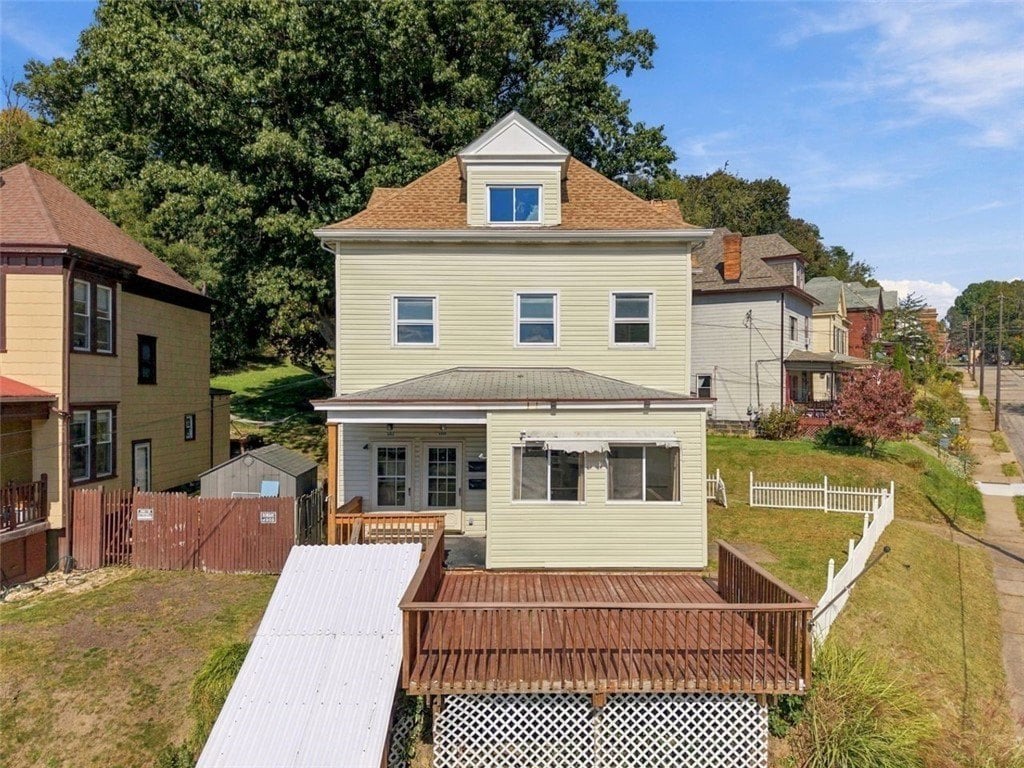
500-502 Tingley Ave
Bellevue, PANew York & Tri-State + 2-4 Units
Learn MoreListing Status: Available Listing Type: Call for offers Price: $235,000 No. of Units: 2 Year Built: 1904 Opportunity Zone: No Price per unit: $117,500 
1064 Sheldon Avenue
Kingman, AZPhoenix & Southwest + 2-4 Units
Learn MoreListing Status: Available Listing Type: Call for offers Price: $485,000 No. of Units: 2 Year Built: 2026 Opportunity Zone: No Price per unit: $242,500


