



National CRE News In Your Inbox.
Sign up for Connect emails to stay informed with CRE stories that are 150 words or less.
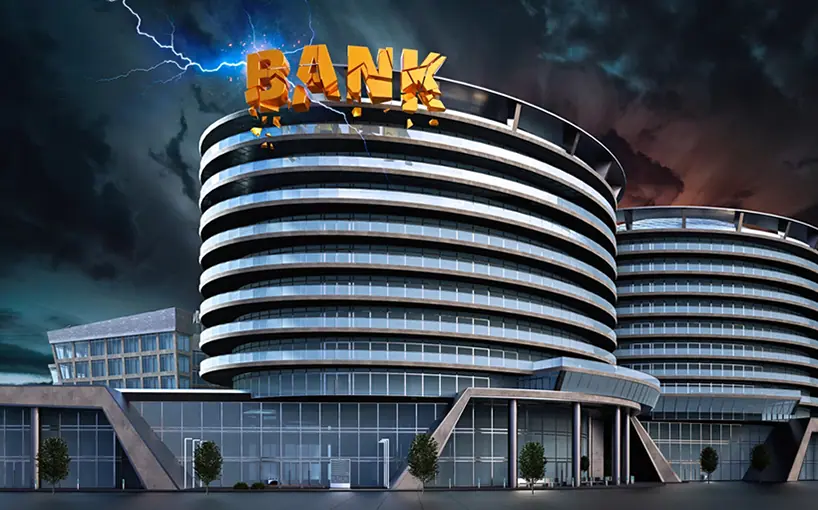

Are We Headed Toward Another 2008? Experts Say No
The mid-March 2023 collapse of Silicon Valley Bank and Signature Bank led to a great deal of volatility in the financial markets. The situation also generated concerns and uncertainty about how all of this might impact the overall U.S. economy. And 15 years after the failed banks that helped spur the Great Financial Crisis, there is the inevitable “now-and-then” comparison.

But experts tell Connect CRE that there are differences. Certainly there are concerns about empty office buildings and upcoming commercial real estate debt maturities. But while the March bank collapses were definitely troubling, they’re nothing like what caused the financial crisis of 2008. There were no bubble pops or sudden lack of liquidity that plunged the global economy into the Great Recession.
For one thing, when SVB Bank and Signature Bank failed, the Federal Reserve and FDIC moved quickly to stem any potential contagion to other financial institutions.
Additionally, things were more financially problematic during the aughts, versus what’s happening in the ‘20s. “Many attribute to the GFC to lenders overindulging in derivatives and the subprime market, which led to the bursting of the housing bubble,” said David Gottlieb, founder of GottsLaw LLC. “Our current crisis stems from a combination of COVID-19 consequences, plus a run-up in interest rates.”

And unlike the frozen credit markets of 2008, the current scenario “is more akin to a confidence crisis that will pass,” commented Tower Capital Principal Adam Finkel. “The situation is expected to calm down, stabilize and reveal a market that is fundamentally in a better spot than previously.”
Other differences between then and now are that banks, for the most part, set aside more capital for reserves than they did before the Great Financial Crisis. They also require more equity when issuing loans. On the other hand, with banks tightening lending standards, especially for commercial real estate borrowers, those borrowers went to other financing sources that weren’t as prevalent in the late 2000s.
“Investors turned to bridge lenders last year when they discovered debt capital funding was unavailable elsewhere, as the ultra-low interest rate environment disappeared,” said Gary Bechtel, CEO, Red Capital holdings.

And though they’re not lending as much as they did even three years ago, the banks are still issuing loans. Finkel pointed out that mid-size banks were the most active during Q1 2023; even with all the “stepping-away” hype, big banks didn’t completely shut down their loan production, either.
Still, “the biggest area of concern will be the period from April through the end of the year in the new credit extended category,” Finkel said. “The expectation is borrowers will be hard-pressed to get loans, unless they are willing to accept low leverage, higher rates, and more stringent lending standards.”
As a result, CRE borrowers will still have to work hard to obtain debt in what Bechtel called “a more constrained credit market.” “It will require time for the capital markets to adjust and determine what it feels comfortable doing,” he added.
Gottlieb, Finkel and Bechtel concluded with the thoughts that yes, there could be a market correction or even a recession. And yes, there is contraction in the lending markets. But we’re not looking at a 2008 scenario. “The GFC felt more self-inflicted than our current situation,” said Gottlieb. “Lenders learned many lessons from that time, resulting in more equity and tougher underwriting standards.”
- ◦Financing
- ◦Economy
- ◦Policy/Gov't


