



National CRE News In Your Inbox.
Sign up for Connect emails to stay informed with CRE stories that are 150 words or less.


Applying Themed Entertainment Principles to Maximize Urban Property Values
By ITEC Entertainment’s Bill Coan
A major challenge of maximizing property values in urban areas is procuring tenants to lease space on higher floors at comparable rates to those on the coveted first or second. Since developers with property in dense, populated cities are often tasked with building “up” instead of “out,” they must confidently convey to retail and restaurant tenants they will receive the same foot traffic and engagement at higher levels of the development. One way to improve property value on higher floors is to apply longstanding entertainment principles from the theme park and attractions industries. By focusing on experience-based design, developers can drive consistent foot traffic at all building levels, and increase the overall marketability of the property.
Making a Building into an Immersive Experience
While a cliché high-rise view from an observation deck may garner some public interest in visiting a city building or vertical mall, it will not be as effective as orchestrating experiences at every level that entices guests to interact with each floor, and be willing to spend more money in those locations. Theme park designers create these experiences through a dedicated process that begins with building a story that gives the property a reason to exist. From there, each element or activity of the complex is tied to the story – including tenant brands themselves. By weaving a story into the entire property, urban developers can help guests experience something new. For instance, a high-rise project in the Bronx could promote the diversity and history the area is known for, developing experiences that embody these unique identifiers. Moreover, an actual attraction could be implemented in a building similar to OUE Skyspace LA, which not only offers 360-degree views of the city, but a unique glass slide experience on the outside of the building.
Multiple Entertainment Touch Points
Encompassing both storytelling and attractions, a significant aspect of theme park design includes taking into consideration the number of comprehensive and immersive experiences per hour, which extend the length of stay or dwell time and increases per cap spending. Urban developments should consider multiple entertainment touch points throughout the building. A reasonable way to accomplish this in a more modest setting includes providing programmed experiences during different hours of the day and at various times during the week. For example, successful A-list malls often host weekly events, such as music performer series, and in-store competitions throughout the year, in addition to sometimes actually housing indoor theme parks.
These types of events give visitors more reasons to return to different levels of a building, feel attached to the space and its branded culture, as well as stay and spend beyond their retail needs. By incorporating theme park principles into urban mixed-use and commercial developments, developers can maximize property values through iconic and immersive experiences and entertainment touch points.
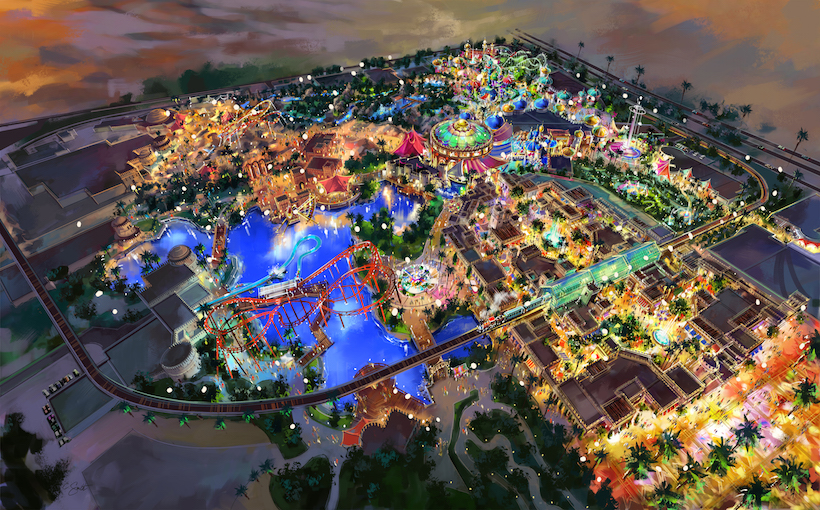
*Pictured Theme park-centric mixed-use development in Southeast Asia
For comments, questions or concerns, please contact Dennis Kaiser
- ◦Development


