



California CRE News In Your Inbox.
Sign up for Connect emails to stay informed with CRE stories that are 150 words or less.


America has Voracious Appetite for Food Halls
By Dennis Kaiser
With 190 food halls in the United States by the end of 2018 and a projection of over 300 by the end of 2020, food halls are establishing a permanent place in the commercial real estate space. Food halls are becoming increasingly important with the rise in demand for experience-driven retail. There are several successful examples of food halls across the country; and where they are successful, tenants are paying a significant premium in rent due to their substantial sales-per-square-foot.
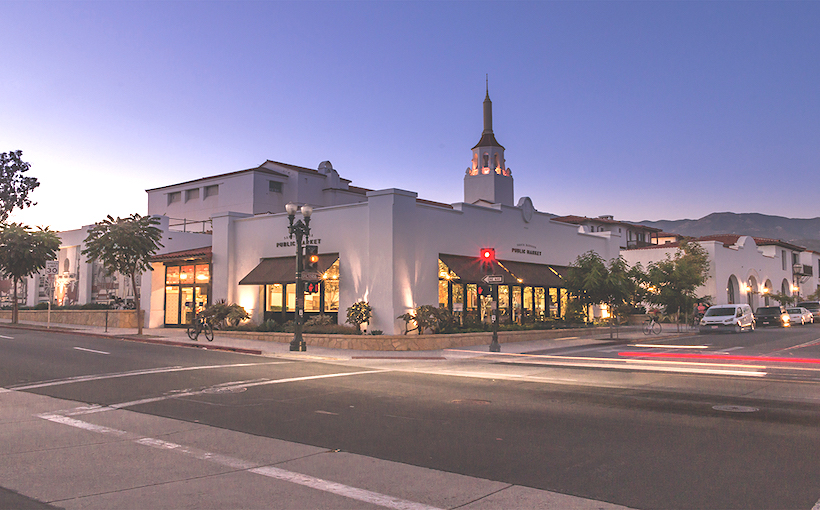
Food halls are an emerging trend in the retail space and are capitalizing on the consumer trend of wanting high quality food in an experiential setting. An example of this trend in California is Santa Barbara Public Market, a 19,867-square-foot, LEED Certified, state-of-the-art artisanal food hall that recently came up for sale in in Santa Barbara’s historic downtown district via JLL. The two-story, LEED Gold property is home to a curated list of popular food and beverage tenants. JLL Executive Vice President Patrick Toomey shares why food halls, which bring in diverse food artisans – in some cases celebrity chefs – in a hip, socially engaging experiential environment, are Instagram hits not only for the food but also the crowd that they attract. Toomey anticipates a continued upward trend for this product type as it matures, and discusses with Connect Media why this trend is here to stay in our latest 3 CRE Q&A.

Patrick Toomey
Q: Why should investors be looking at food halls?
A: Investors should be looking at food halls because they represent the “next thing” in retail real estate. Research regularly shows that the retail dollar is finding competition in food, tech and experiential activities. Smart phones take up a bigger part of one’s budget – it’s the new normal. Additionally, people are valuing, and spending money on, quality food and experiences. Food halls offer that quality food and a social, hip experience, and the formula is resonating with the public, which explains the growing success of the concept. Food halls still maintain a high-risk profile due to the start-up nature of most of the businesses, but as the tenants stabilize, the investments will be more and more popular. The tenants at the food halls are typically former sous chefs or chefs who have always had a unique idea of a concept of something that they’re passionate about, and create a following based on this concept without a significant investment in a full-service restaurant. While there is a still a need for a great deal of start-up capital, the payoff in a food hall can be huge.
Q: What should investors and owners consider when developing a food hall?
A: Demographic, density and disposable income are primary drivers for a food hall, as well as proximity to other draws, such as office space or retail centers. A developer would want to have a food hall that is situated in a community with higher-income demographics, as well as density to support the concept. Simply put, people not making enough to dine out will likely not frequent a food hall. Additionally, being at a location with a daytime draw such as a shopping center or office complex is beneficial. So, knowing your customers and what they want is vital. For example, Marge Cafarelli, the California developer behind Urban Developments and who opened the Santa Barbara Public Market, spent five years developing the food hall into the successful and stabilized business that it is today. Initially opened with a mix of food and grocery tenants, she pivoted the retail property from a European-style public market to become a true food hall. She has commented that developing the Santa Barbara Public Market was one of the hardest and one of the most gratifying projects she has ever done. Her goal was to create a place for Santa Barbara to come together under one roof – a place that locals have embraced and now call their own.
Q: How does the food hall trend play into the overall retail story happening in the United States?
A: Food halls fill the experiential retail gap while simultaneously showcasing local identity, serving nearby office and residential communities and promoting local industries and small businesses. According to JLL research, more than 300 food halls will be operating in the U.S. by the end of 2020, which is monumental. So, food is continuing to be the new and preferred anchor for retail assets. Why? Because shoppers who dine at a property stay, on average, 35% longer and increase transactions by 25%. Food-anchored assets continue to drive investor demand. Additionally, unique spaces are becoming home for food halls, and in some cases, are becoming anchor tenants to large mall vacancies.
For comments, questions or concerns, please contact Dennis Kaiser

