



National CRE News In Your Inbox.
Sign up for Connect emails to stay informed with CRE stories that are 150 words or less.


A New Use for Unused Buildings: Self Storage Facilities
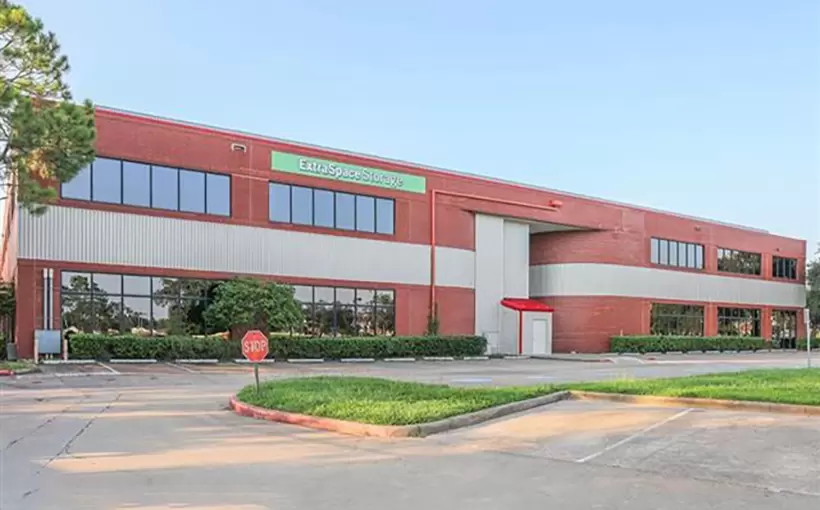
Pictured: 555 Bay Area Blvd., Houston. Originally an office building, the facility was converted to self storage in 2018. Photo courtesy of YardiMatrix.

Much has been discussed and written about adaptive reuse, with stories focused on converting office buildings for residential and hospitality purposes. A report from StorageCafe, “Out with the Old, In With Self Storage,” discussed another form of adaptive reuse: converting former industrial structures and large retail spaces into self-storage facilities.
The report unveiled these facts:
- 191 square feet of U.S. self storage inventory (approximately 9% of the total supply) resulted from adaptive reuse
- About 78% of conversions were previously industrial buildings, while 16% represented former retail space
- Converted properties tend to offer more affordable rates in 49% of the cities with purpose-built and adaptive reuse self storage
Analyzing the Costs
The report noted that expensive land and stringent zoning laws can make it challenging for ground-up storage construction in many cities. On the other hand, “converting an existing building into self storage is often more cost-effective than new construction,” StorageCafe’s Real Estate Editor Maria Gatea told Connect CRE.
Gatea, who authored the report, said that repurposing a building’s existing foundation, walls, and roof means fewer materials are required to build it. “Labor costs are generally lower as well, as there is less need for complex construction and heavy machinery,” she added.
However, only certain buildings lend themselves to self storage repurposing. Gatea said structural integrity, ceiling height and layout matter, with high ceilings and open floor plans ideal for conversion. She also explained that industrial buildings are ideal for meeting these requirements. “Upper floors in self storage facilities require load-bearing capabilities of at least 125 pounds per square foot,” Gatea said. “Industrial buildings are more likely to meet these structural demands from the start, whereas retail and office spaces often require additional support modifications.”
All About the Location
The report explained that many converted facilities are easily accessible, as they’re within city limits. Additionally, the converted self storage facilities typically offer lower prices than purpose-built stores. “In almost half of the 1,100-plus cities we analyzed, converted facilities offer better rates, making them a smart choice for budget-conscious renters,” the report said.
Gatea said that another benefit regarding location is fewer zoning challenges, especially compared to new developments. “Many areas allow more flexibility for repurposing existing structures, even where new construction is restricted,” she explained. “This means investors can locate self storage facilities closer to where people live and work, addressing demand directly.”
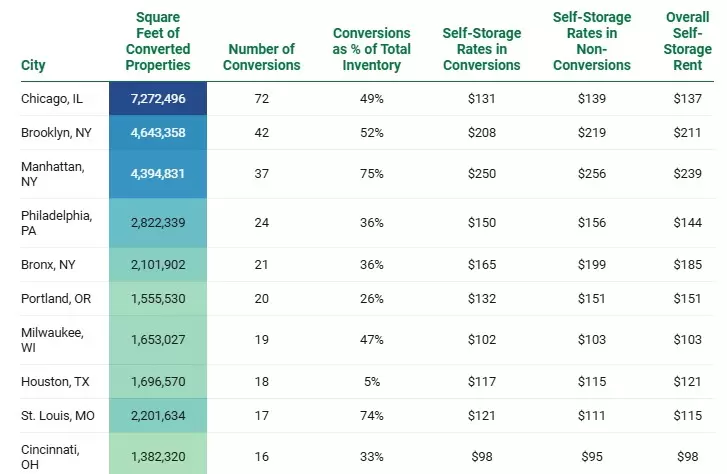
The report said that Chicago leads the way in self storage adaptive reuse, with 7.3 million square feet of space converted into storage space. Meanwhile, New York City boroughs, including Brooklyn (ranked #2), Manhattan, the Bronx and Queens, contribute to the self storage conversion trend.
Conversions to Continue
Urban areas will likely grow denser while land becomes more scarce. According to Gatea, this means a strong future regarding self-storage conversion. “Adaptive reuse allows developers to tap into the growing demand for self storage in urban areas without the need for new land,” she explained.
With over half of self storage conversions occurring from 2014 to 2023, Gatea doesn’t see the momentum decreasing. “It will persist as converting older buildings meets both market needs and community goals,” she added.
- ◦Development


